|
|

|
Here's My Workshop!
By Tai Sines
Woodland, CA
|
|
|
|
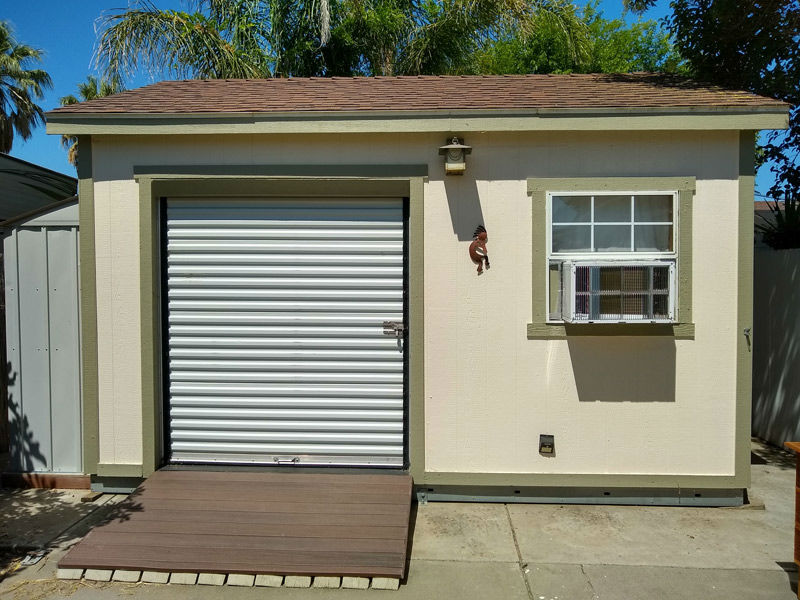
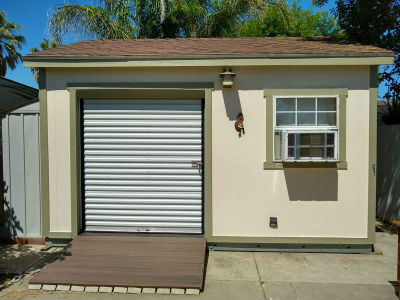
Street view of the shop. Note roll-up door and and
utility shed on the left.
|
Can you have a usable wood shop in 112 square feet? That was the space I had
available to me. For several years I got by with a Shopsmith and it served me well
but I came to a point where I wanted the advantage of more specialized
woodworking tools. When I toured a WWII submarine moored in San Francisco, I
was impressed by the tiny engineering station that was squeezed aboard in very
tight quarters and it got me to thinking.
I could visualize how to create a shop in my small space except for one tool: a
table saw. Even a portable contractor's saw needs outboard sheet supports to be
really usable. I just couldn't devote that much space to a single tool, so the
challenge became to create a usable shop without a table saw.
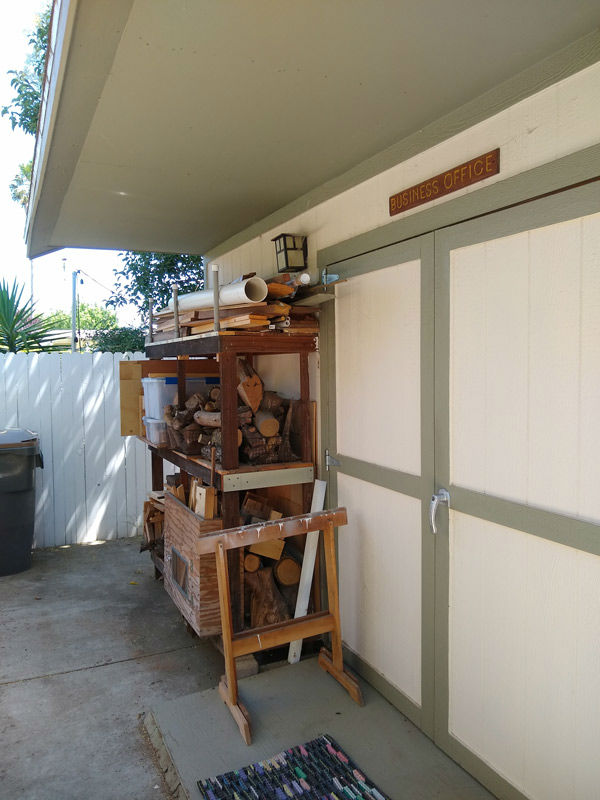
The floor space of the workshop is 8x14 (112 sq. ft.) but the
roof profile is 14x14 which provides a 6 foot overhang on the back side where I
have my wood rack. Since I do woodturning, I have lots of chunks of tree on my
rack rather than lumber. My well-used Krenov sawhorses are in the foreground.
Also note the double doors which are exactly opposite the roll-up door on the
front. When both doors are open I can process long material 'through' the shop.
|
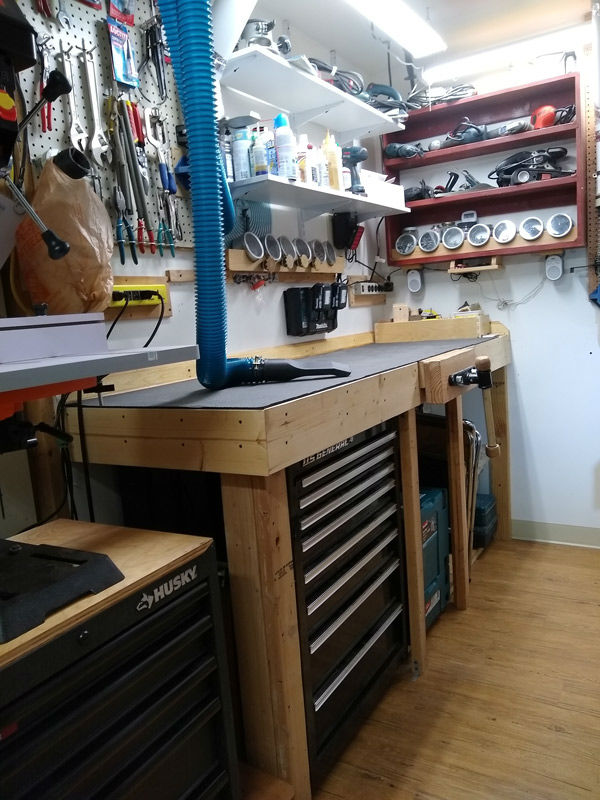
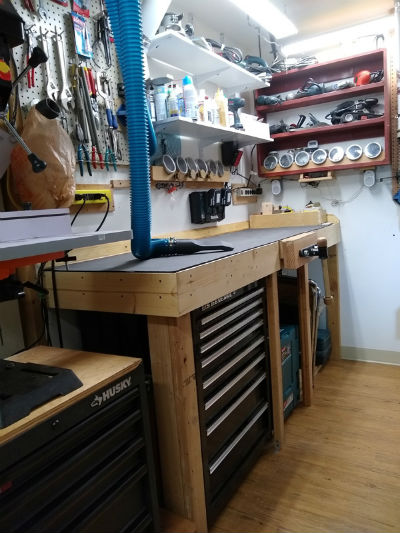
Permanently mounted 7 foot bench and vise. Wall storage is utilized
throughout and dust collection is available on all four walls. The blue
hose shown
is 'stretchy' and can reach anywhere in the shop.
|
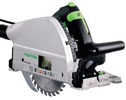
I bought a 36V Makita track saw and found that it exceeded my expectations in
every way. Though not as convenient as a table saw for repetitive thin rips and
other tasks, it was still pretty convenient – and it was a joy to operate. I concluded
that I could accomplish my goal with that, a band saw and a large capacity miter
saw. So I donated my excellent Shopsmith to the local High School Industrial Arts
group and never looked back.
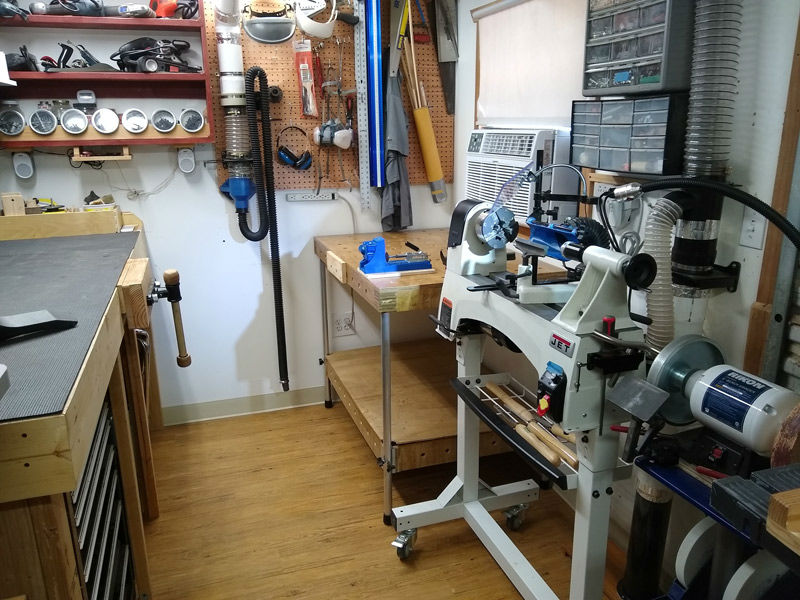
The lathe has lockable casters and can be rolled out of the way if working with sheet goods or larger
pieces. The sharpening grinder slides easily on the 'luxury vinyl' flooring and the
Dan Pattison Multi Purpose Table collapses into the table top for space creating
options. The Heater/Air Conditioner shown is an 8,000 BTU unit (highest capacity
at 120V) and is a must have here in California's Central Valley. The floor sweep is
barely visible behind the lathe.
Shop built floor sweep has baffles to keep material from collecting
in the back corners. Biggest 'wow factor' for shop visitors is witnessing a big pile
of shavings disappear into the sweep.
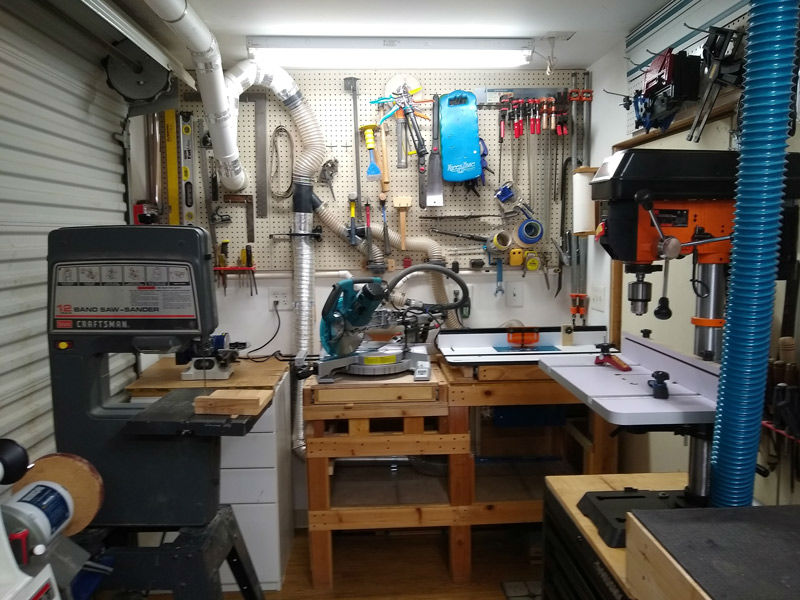
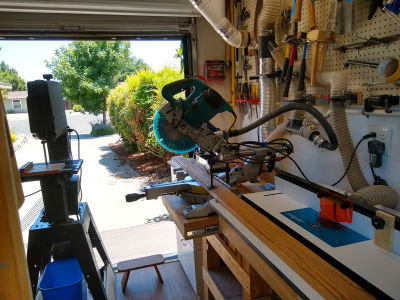
The above view of the other end of the shop shows the band
saw (which also has lockable casters), drill press, miter saw and router table. The latter two items are mounted on
heavy duty drawer slides which allow them to be pulled away from the wall when
used. They also have the same table heights so can support stock that is being
processed on either one.
|
|
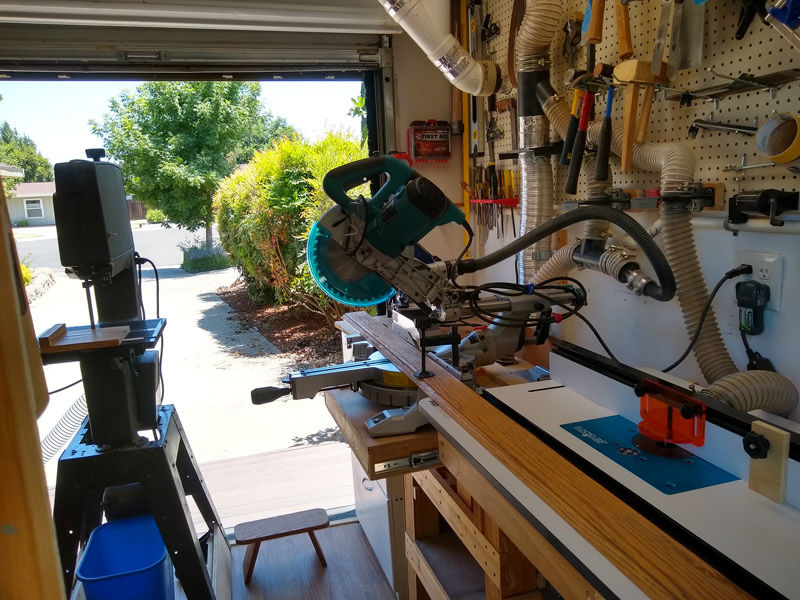
With the door or doors opened, the setup can handle long stock.
|
|
|
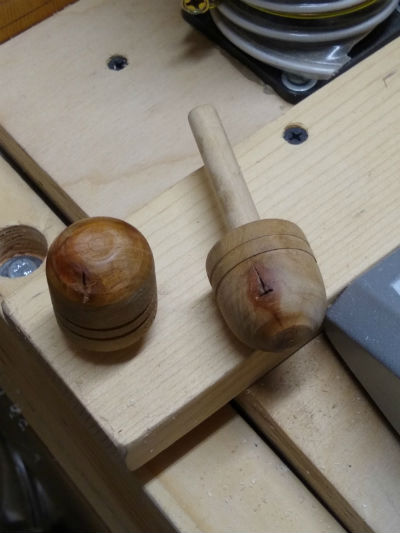
The pins used to lock the miter saw in the deployed position.
|
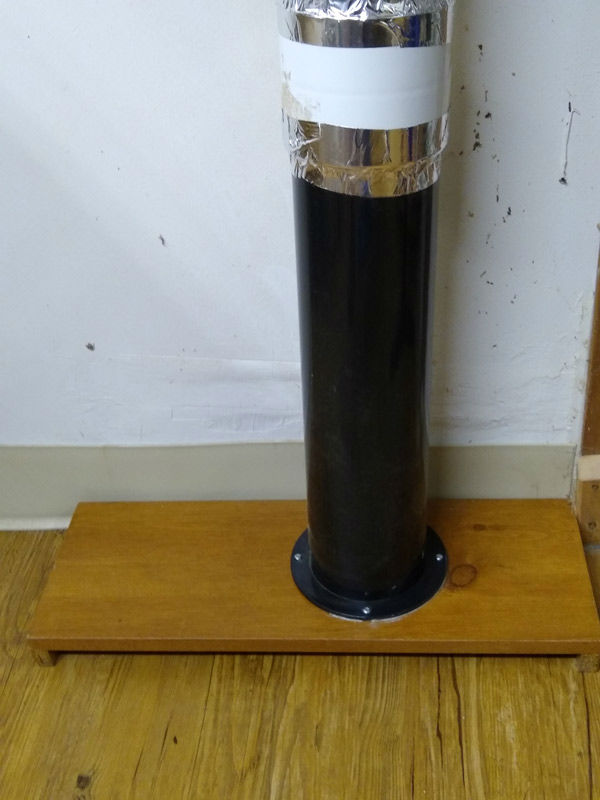
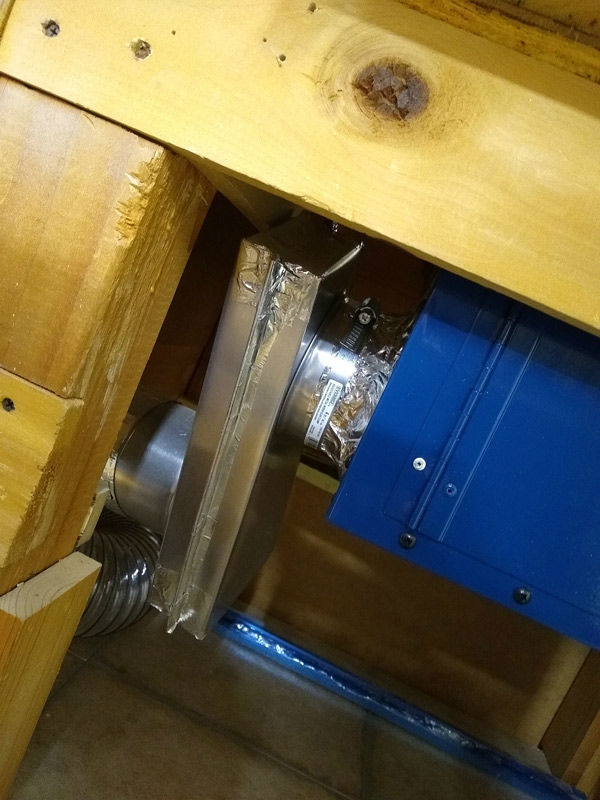
Because of tight quarters under my bench, I had to modify the
connection to the dust collection box. This was accomplished by caulking in an
ordinary 4" coupler and attaching a dryer vent. The vent pivots at both of the
hose connections so it actually changes angles between the stowed and deployed
configurations. The adjustable vent was rather leaky so I taped everything. This
also necessitated running an additional 2-1/2" hose to the bit pickup at the top of
the router table.
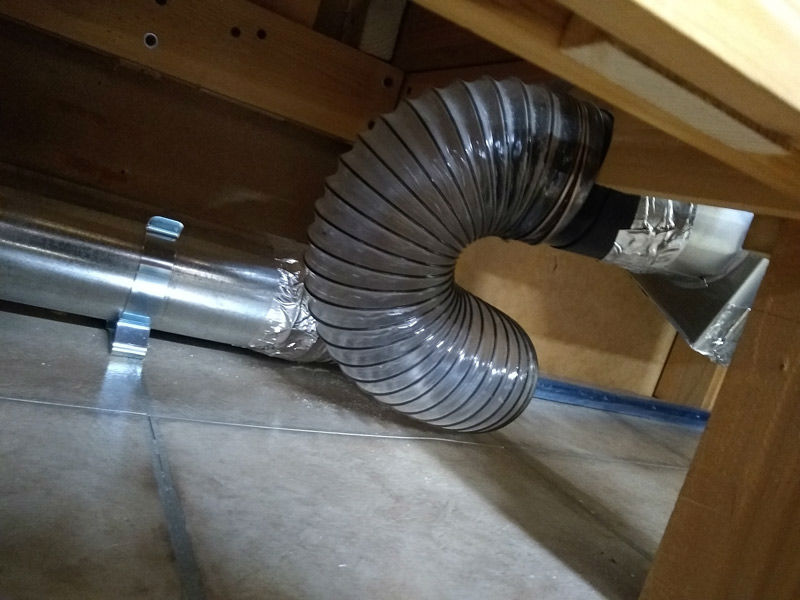
Normally I would avoid such a curlicue connection but I left this in
for various reasons related to accessibility. When in operation, I open up the 4"
gate to the box and a 2-1/2" gate to the bit pickup. It actually is one of the more
efficient dust collectors in the shop in spite of all the 'warts'. Note the cutout in
the former shelf support to allow the hose to mate up with the dryer vent.
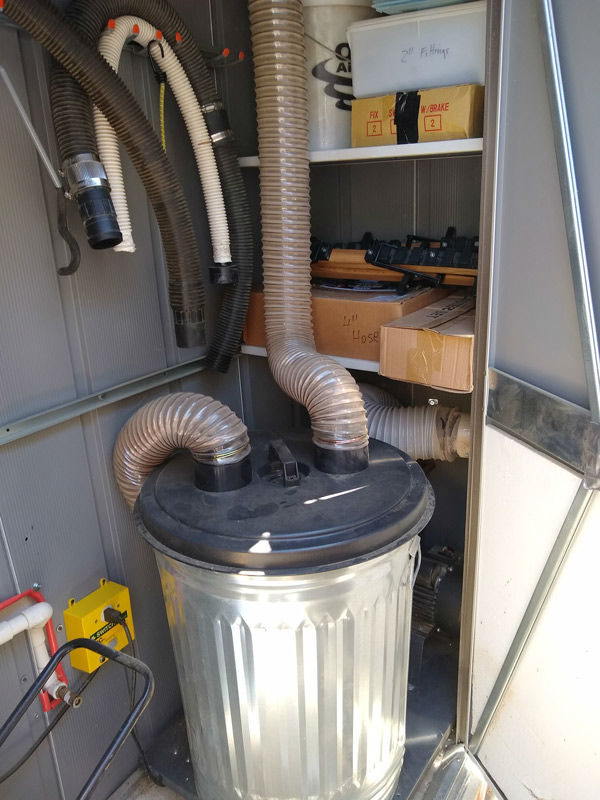
The skinny utility shed outside the main building offers
additional storage and houses a compressor for pneumatic tools and the dust
collection turbine and cyclone connector. Having these noisy items outside the
shop makes a more pleasant working environment.
|
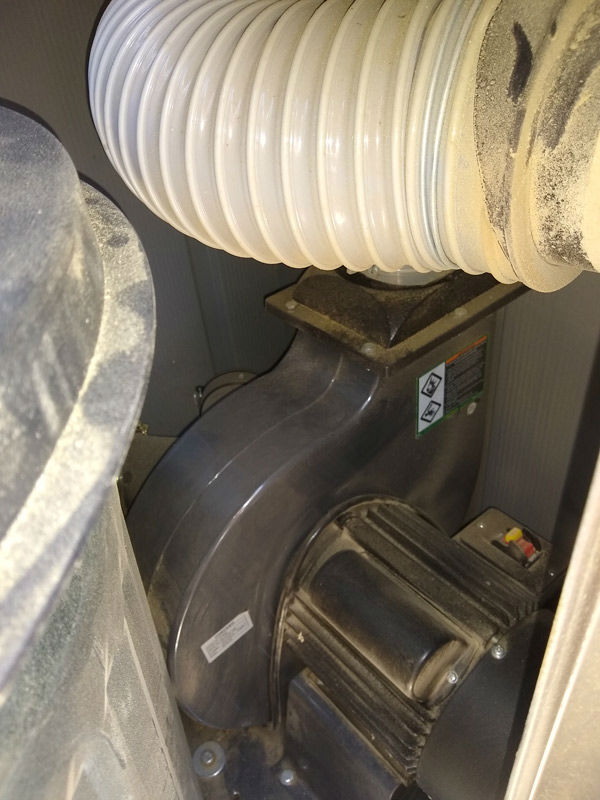
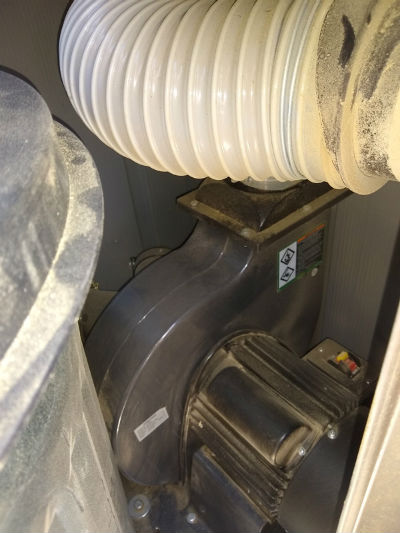
A closeup of the 2HP dust turbine. After passing through the
cyclone
can, any additional superfine particles are vented outside.
|
I now have my very modest dream shop which is entirely appropriate to my needs as a woodworking hobbyist.
Tai can be reached directly via email at
whiterobin327@gmail.com
.
Return to the
Wood News Online
front page
|
|
|
|
|