|
From rather humble and somewhat tentative beginnings, the
Lost Art Press
has evolved
to become one of the principal, if not
the
principal, publishers of quality books on
woodworking. Its finely bound, American-made books began with a heavy emphasis on
hand tool craftsmanship and woodworking traditions at the brink of extinction. While
these remain a particular specialty for LAP, recent volumes have branched farther afield
to apply the emphasis on high quality to a wider range of woodworking applications.
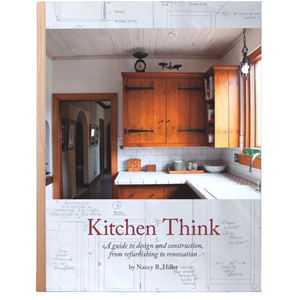
The subject of this review, Nancy Hiller’s
Kitchen Think
, is a prime example of putting to
work the LAP’s emphasis on high quality.
Kitchen Think
is nothing less than a comprehensive guide to the design and
construction of remodeled kitchens. As such, it covers both construction techniques
and a broad range of designs that address differing remodeling objectives and tastes.
Hiller is a long-time practitioner of kitchen remodels. She opens her book with a brief
overview of her career in building, among other things, custom cabinetry and kitchen
designs. Though kitchen remodels often focus on upgrading the cabinets, Hiller’s
career has been more expansive, incorporating what she calls ‘custom kitchens.’ By
this, she means holistic treatments intended to fit both the specific desires of her
customers and the special qualities and features of the homes to which they are fitted.
She offers five rules for approaching a custom kitchen design that will be helpful to both
contractors and do-it-yourselfers: respect the windows, use the home’s historic
character as a guide, listen to the client, enjoy the freedom offered by custom work,
and, importantly, think.
To begin a custom kitchen design, she first assesses the situation, then measures the
space, makes drawings, orders the needed materials, and makes a cutting list. A
helpful sidebar on page 34 breaks down a typical project’s progression into 16 discrete
steps, a guide that will help any aspiring kitchen remodeler to envision and accomplish
a completed job.
A separate chapter details her simple method for building and installing cabinets, a
major element in any kitchen remodeling job. This illustrated guide to the steps for building cabinetry will be especially helpful to the do-it-yourself builder and will save
many easily avoided errors before they occur. In this practical chapter, she addresses
many of the questions a builder will encounter. Should drawers be dovetailed, for
instance? She argues that with full extension drawer slides, the stress on drawer joints
is reduced to the point that rabbeted butt joints, nailed no less, are quite sufficiently
strong.
Following her initial focus on construction issues and methods, Hiller turns to the
broader issues of design. She recommends that a design needs to be planned for the
perspective from which it will be viewed. She addresses inside corner cabinetry, the
need to avoid blockages, the value of incorporating breathing room, and explores other
issues that will affect a good kitchen design.
She next tackles the many design decisions that must be made. Should the cabinets be
freestanding or built in? Should the design include an island or a peninsular counter?
What about counters and backsplashes, the ceiling and floor, the lighting, vents,
pantries and a place for spices, pot racks, space to store and access small appliances,
and the positioning of full-size appliances? Where to stash the trash? Should the
cabinets be faceless or have face frames? How to design the toe kicks? What kind of
hinges are desired? Plate racks are a design feature some may want to consider, and
she includes a plan, guidance, and numerous examples for their design and
construction.
Not all kitchen remodels need to be total. Partial redesigns are an option for some
kitchens, and Hiller includes a chapter of illustrated case studies, some from projects of
her own doing, some from sites around the nation. The chapter offers inspiration on the
many possibilities available and is a great source of ideas and encouragement to think.
Full kitchen renovations are another option, and Hiller presents a wide-ranging
exploration, again through case studies displaying many and varied treatments. Kitchen
designers will find this extremely valuable, as they will the final chapter which presents
more case studies of kitchens in period homes remodeled in keeping with the
structures’ historic character.
As with all Lost Art Press books, this full-sized publication is hard bound, with a sewn
binding for durability. The cover is in full color, as are the many illustrations throughout
the book. The book is not only beautifully photographed and attractively laid out, but
Hiller has written it in an approachable and charming personal style.
Kitchen Think
is, as the name states, an opportunity to think broadly and carefully about
the design and execution of a kitchen remodeling project. It is on the one hand a guide
to the woodworking aspects of a kitchen overhaul and is replete with error-saving
guidance and tips to help achieve professional results. It is also an exciting and mind-expanding portfolio of ideas for the look and functions of the eventual living and cooking
space. Any woodworker setting out to build new cabinets and upgrade or replace a
kitchen will find Kitchen Think to be a valuable guide. For those who prefer to engage a
kitchen designer like Hiller, the book is an outstanding source of ideas, options, and
encouragement to think—there’s that word again—about how they want their kitchen to
both look and fit into their lifestyles.
Maybe there are other good kitchen remodeling books out there, but I have trouble
imagining how they could top this one. Hiller has proven herself to be both an original
and outstanding kitchen designer and a valuable teacher, through her writing, of her
techniques and ideas. This is an important book and a significant addition to the
woodworking literature. If kitchen remodeling is in your future, even a minor upgrade,
then you will greatly benefit from a good read of this book. It will help you to see with
new eyes. And it will help you think.
Find out more and purchase
Kitchen Think
at Highland Woodworking
J. Norman Reid is a woodworker, writer, photographer and woodworking instructor living in Virginia's Blue Ridge Mountains with his wife, a woodshop full of power and hand tools and two cats who think they are cabinetmaker's assistants. He is the author of
Choosing and Using Handplanes: All You Need to Know to Get Started Planing by Hand,
and co-owner of Shenandoah Tool Works. He can be reached by email at
jnreid45@gmail.com
.
Return to Wood News Online
|