|
|
|
|
The Down to Earth Woodworker
By Steven D. Johnson
Racine, Wisconsin
|
|
Previous Page
1
2
3
Measuring Sawdust Collection Efficiency
Click on any picture to see a larger version.
Recently, I was fortunate to do a
video product review
of the new
Festool ETSC 125 Li Cordless Sander
. During that review I started with a fully charged battery and sanded continuously until the battery was depleted, an impressive hour-and-a-half-plus later. That was a bit of a "torture" test, since continuous drain on a lithium ion battery is more, well, "draining," than intermittent use. There is also usually some heat that builds up as a by-product of the lithium ion battery drain, and that heat can diminish the longevity of the battery in lesser tools. Not so, apparently, with the Festool.
While I was conducting that test, I had the reusable
Dust Collection Bag for Festool Sanders
attached to the sander rather than one of my
Festool Dust Extractors
. I wanted to see how much of the sanding dust the bag would collect. By necessity the video was too short to give you the results, but I wanted to share it with you in this column.
We all know that dust collection with a Festool Sander and Dust Extractor is near 100%... that is one of the key selling features of the Festool line-up of tools. But could a dust bag be anywhere close in effectiveness? Well, there is only one way to tell, and that is with a controlled test.
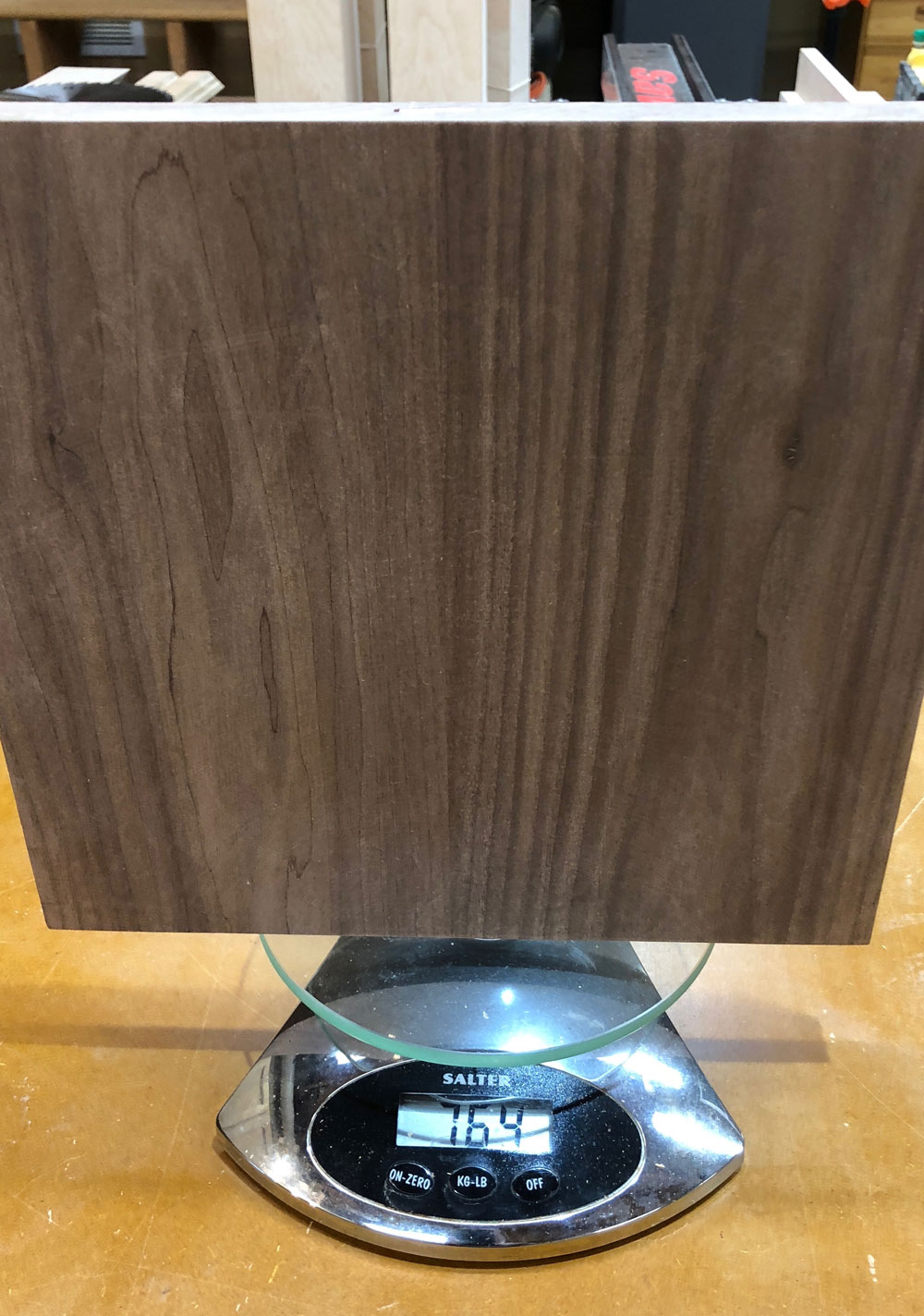
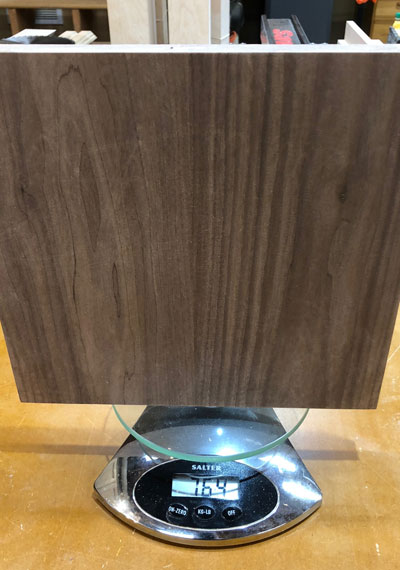
Before starting the test I weighed the board on my accurate gram scale… the same one I use for weighing shellac flakes and coffee beans before roasting. The board weighed 796 grams. After the test, the board weighed 764 grams. That means that 32 grams of wood was removed during the sanding test.
|
Figure 10 - After sanding for 3-1/2 hours, the board
weighed 764 grams
|
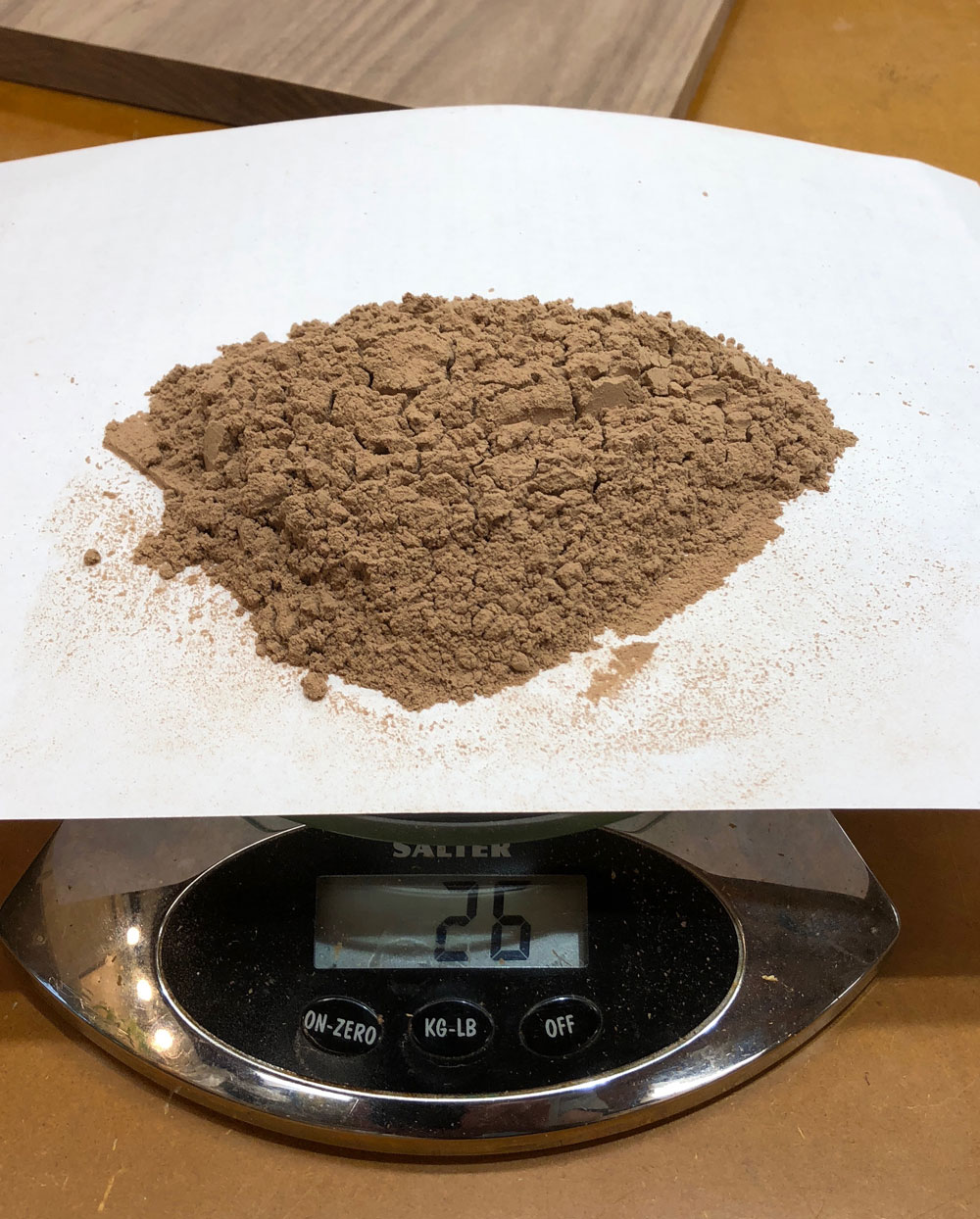
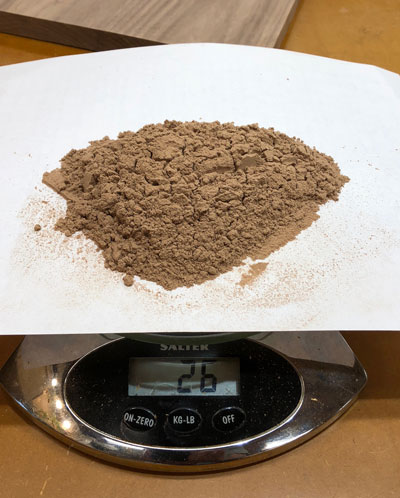
The sander I tested was brand new, as was the dust collection bag, so there was no residual dust in the bag prior to sanding. After the test I dumped out the collected dust… I really worked hard to get it all out, but of course some was left in the pores and nooks and crannies of the bag. The collected dust weighed 26 grams. A little math indicates that the effectiveness of the dust collection bag was 81.25%. I should have weighed the new dust collection bag prior to use and weighed it after cleaning it out to see how much dust was still adhered to the bag, but I suspect the amount was negligible, so I stand by the efficacy of the test.
|
Figure 11 - The dust collected in the Festool reusable
dust collection bag weighed 26 grams
|
Granted, ~81+% dust-trapping efficiency is nowhere near the almost 100% dust collection efficiency you can achieve by connecting the sander to a Festool Dust Extractor, but when you need ultra-portability, speed, and ease of use, the reusable Festool Dust Collection Bag is impressively effective and is a perfect complement to the new Festool hybrid powered sanders when using them in battery-powered mode.
(Page 2 of 3)
Previous Page
1
2
3
Next Page
Steven Johnson is retired from an almost 30-year career selling medical equipment and supplies, and now enjoys improving his shop, his skills, and his designs on a full time basis (although he says home improvement projects and furniture building have been hobbies for most of his adult life). Steven can be reached directly via email at
sjohnson@downtoearthwoodworking.com
Return to the
Wood News Online
front page
|
|
|
|
|