|
Click on any picture to see a larger version.
When I see trees being cut down while driving in and around Atlanta, I am more often than not struck by an exasperation, almost panic. The thick trunks of ancient black oaks, mockernut hickories, and tulip poplar seem to inevitably end up getting chopped apart and fed to a chipper. These woods may be relatively common, and might as well be firewood to some, but I still can't help imagining all the things they could be made into with the odd figure they might have. Last summer, I decided to act locally and salvage what I could when a logging company rolled into my neighborhood.
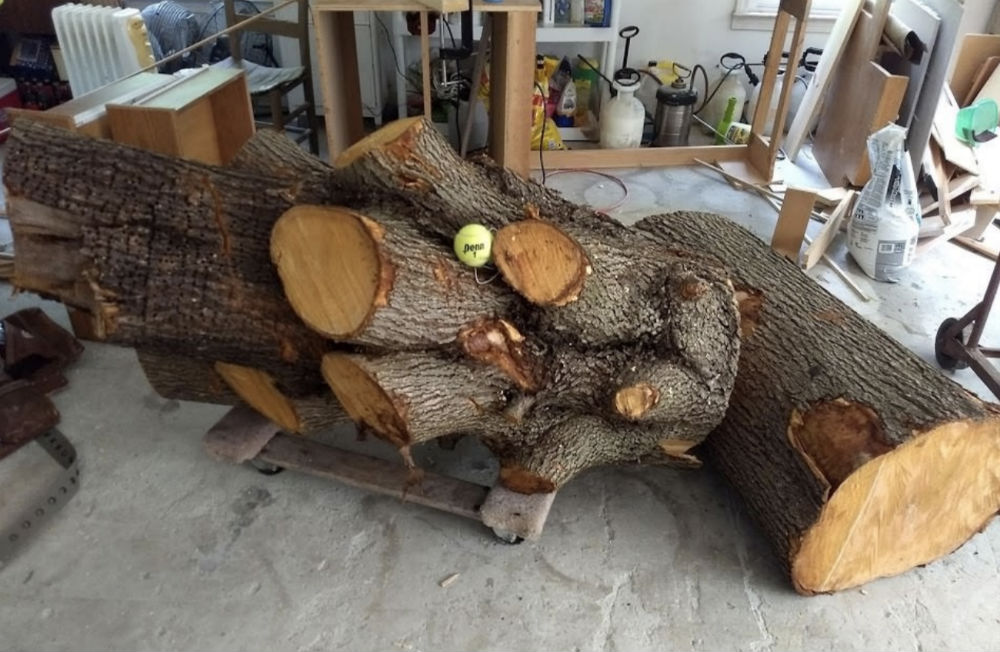
I was initially disappointed to find out that the tree they were felling was a Bradford pear, that despised tree that smells like rotting fish in the spring and collapses under its own weight in the winter. Still, the loggers were happy to drop it off in my driveway rather than spend an hour chipping it, so I was resolved to experiment on my new wood. I can today state, emphatically, that if you get the chance to get 400-500 pounds of green pear wood for free, you should take it. You don't need to park your car indoors anymore.
|
|
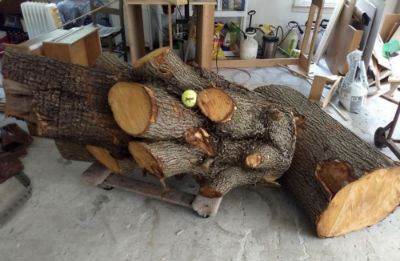
An ungodly mass of pear wood in my garage. Tennis ball for scale.
|
Bradford pear wood has some very attractive characteristics. It's this very nice creamy fruit-wood color. The grain is fine and smooth. It smells nice when you cut it. Most of all, though, it is heavy.
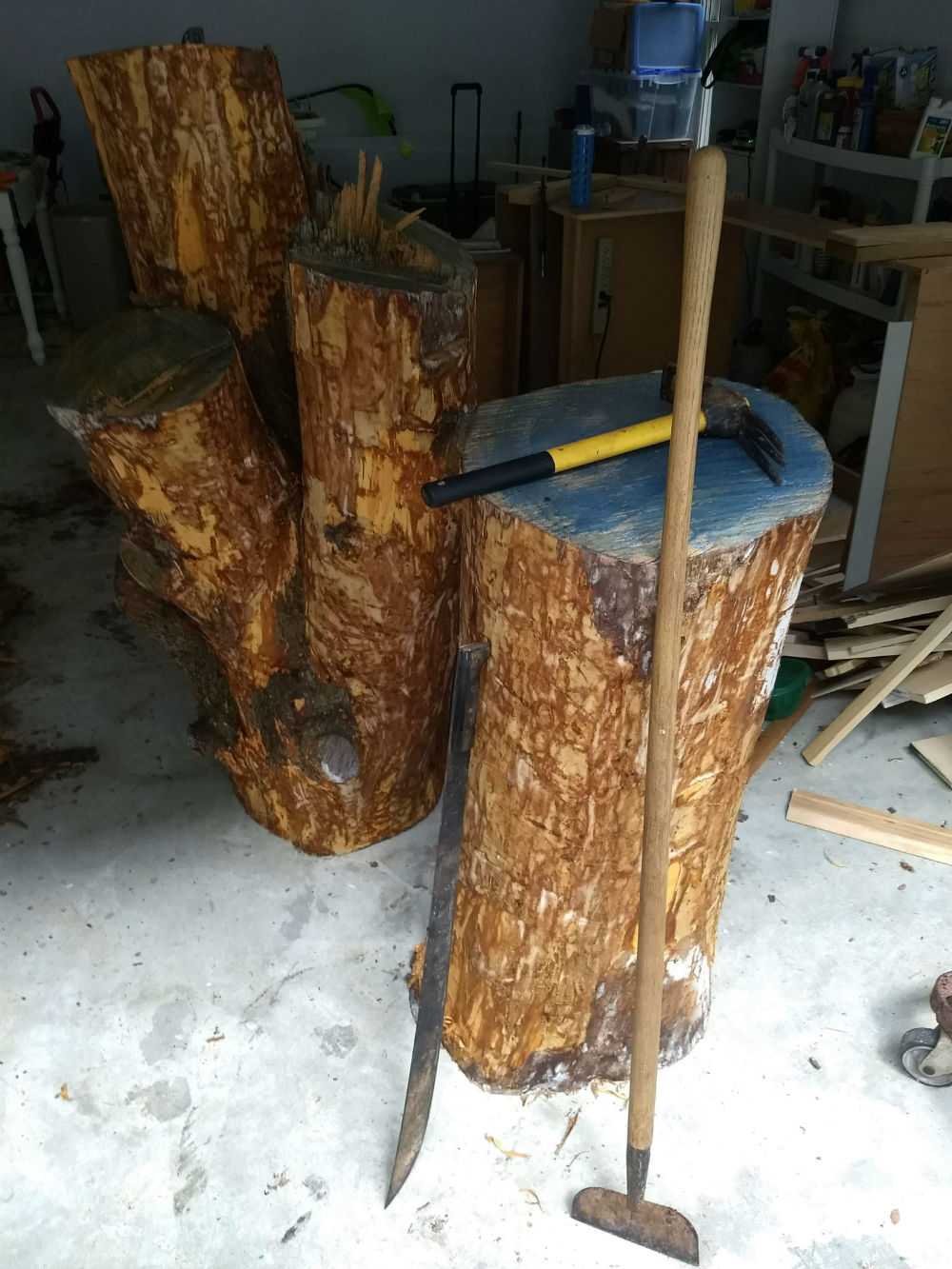
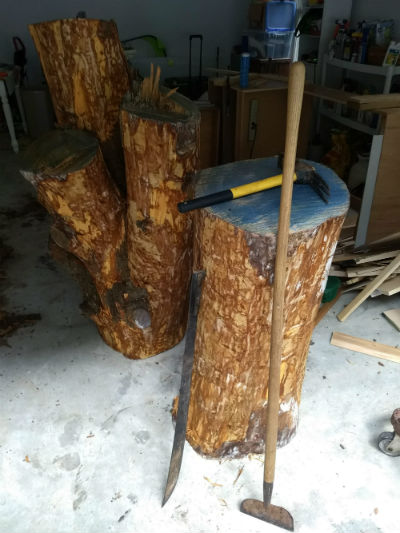
My plan was to quarter-saw the log. There are folks out there that would drive right to my house and cut this whole lot for a nominal fee, but then again there are people that would sell me wood furniture for a nominal fee. That's not why I became am amateur woodworker. I became an amateur woodworker to work wood. Using an old edger as a spud, I got to work taking the bark off.
|
Spring is the best time for de-barking, when the sap runs quick and
the bark nearly falls off by itself. Summer is second-best.
|
One of the things I like best about woodworking is the ability to practice a very old craft. The techniques used by ancient Romans still work fine and it gives me reassurance that there are some things that are just as true today as they always have been. It's with this spirit that I consulted some pictures of woodcuts and illuminated manuscripts on Wikipedia, in particular one of a monk with a frame saw, and decided to mill this wood in about the most backwards way I could.
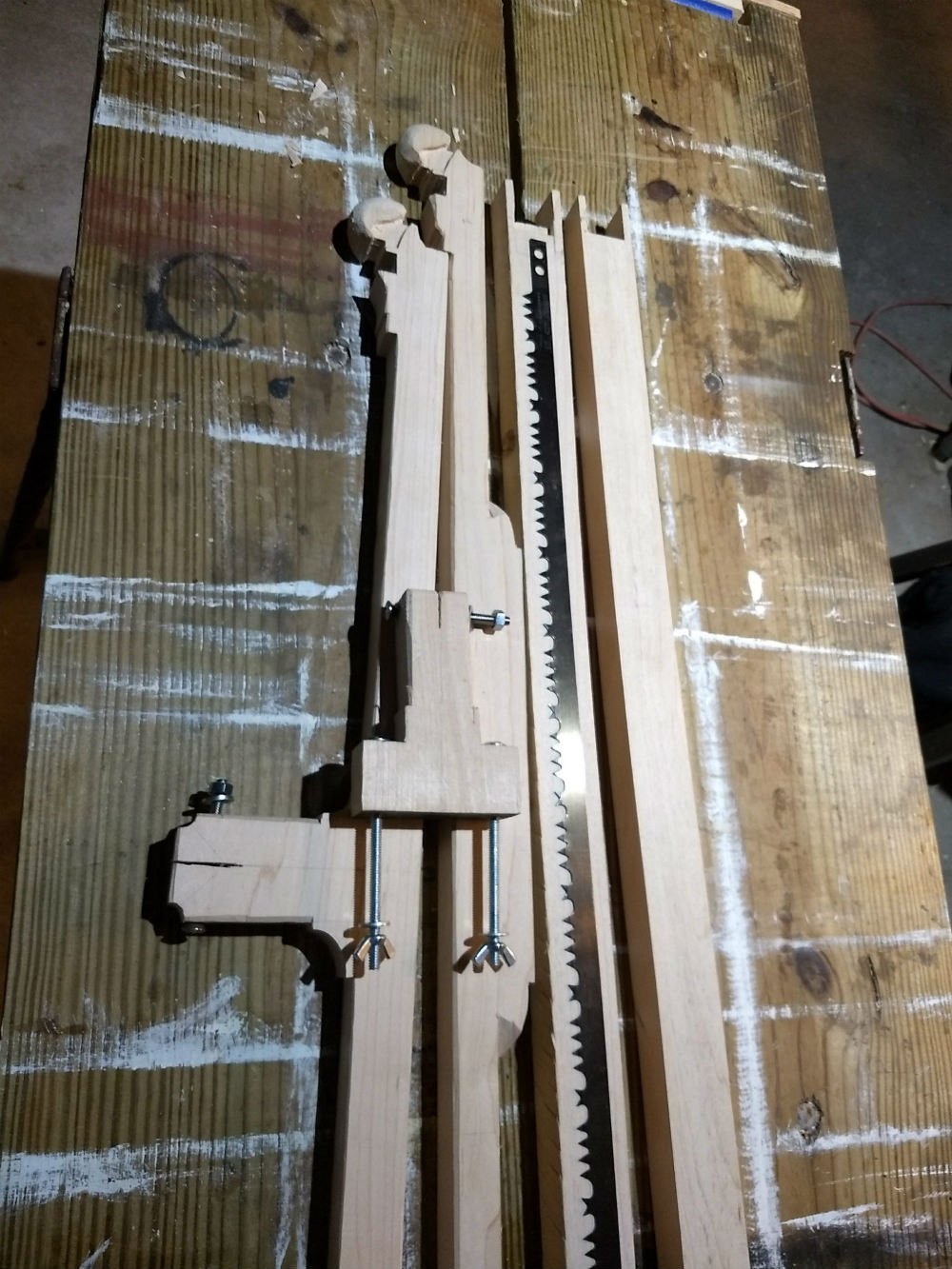
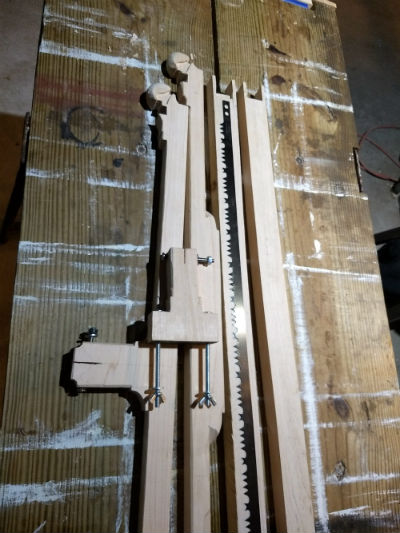
I am hoping that soon after this is published, Highland Woodworking will stock their frame saw blades in longer lengths, but I figured to cut these pieces between 18-24 inches in diameter, that a three-foot bow saw blade was going to be a bare minimum. Now, the teeth of a bow saw blade are not optimal for milling, re-sawing, or otherwise ripping. Bow saws work best for crosscutting limbs or trunks. On the other hand, nothing about this situation was particularly optimal. I figured it would make quicker work of the green wood. To build a frame around it, I took some bits of sugar maple I had at hand. I roughed out the shape with a motorized scroll saw, what I think is the most essential motorized saw, and shaped the pieces with a rasp and chisel.
|
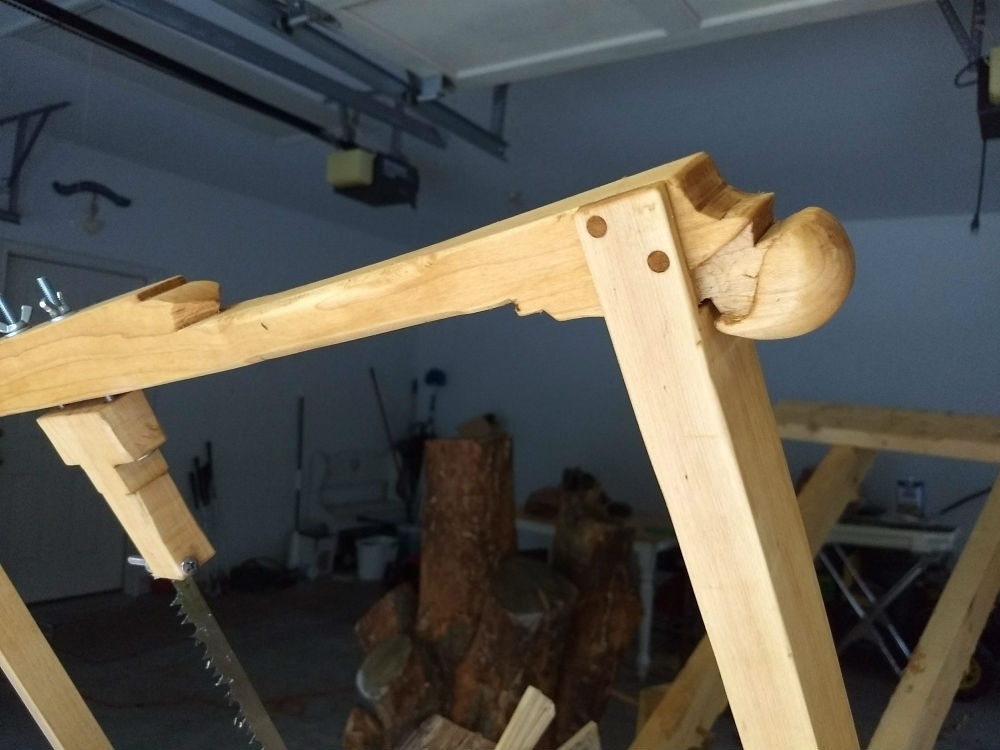
I called it the "Bone Saw" after the resemblance of the white maple
framework to femurs.
|
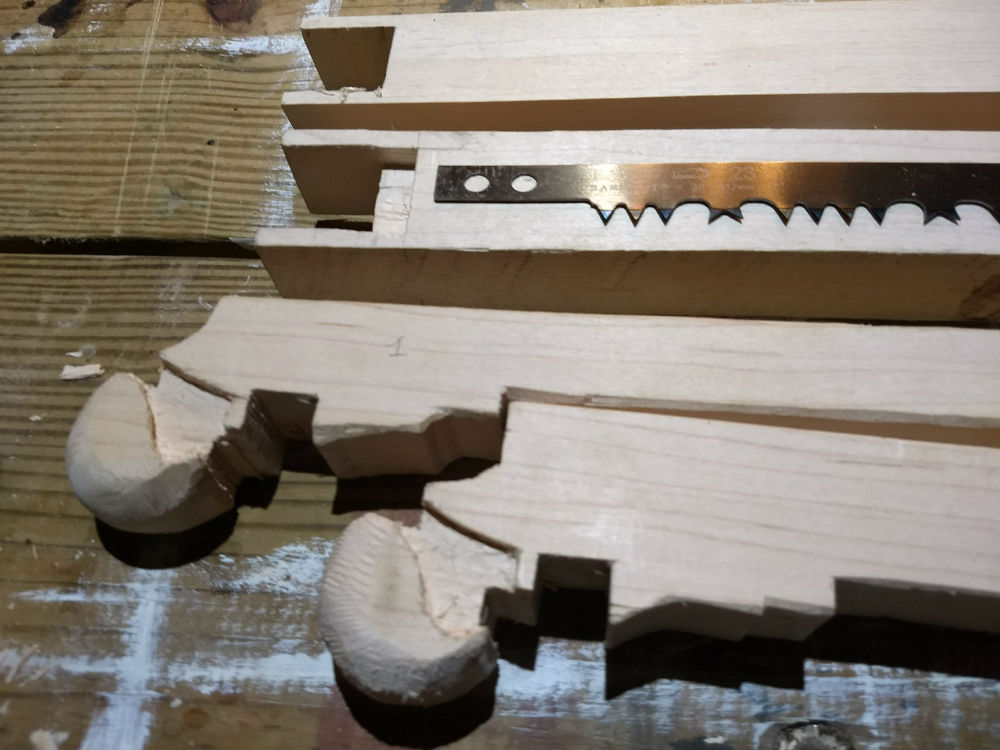
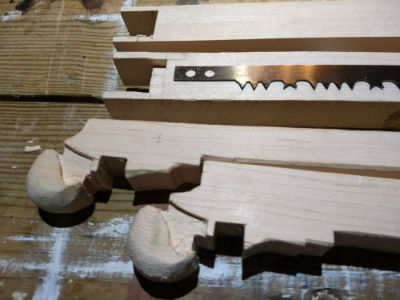
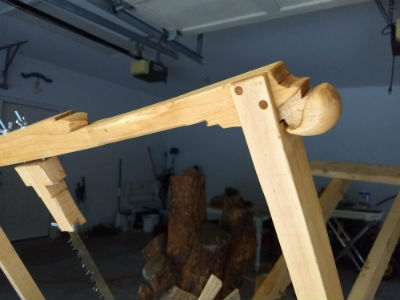
I reasoned that since the saw's frame would always be under compression from the stretched blade and in theory never under racking forces, that a modified girdle joint would be fine. I have seen frame saws with nice dovetails, but even if I were to cut on the pull stroke, I should be pulling the blade rather than the stretchers. Some glue and drawbore pegs settled the question in my mind.
|
|
A modified girdle joint holds the frame together.
|
|
Boiled linseed oil does a little to help its looks. At the very least it adds significant contrast
in the pegs' end-grain.
|
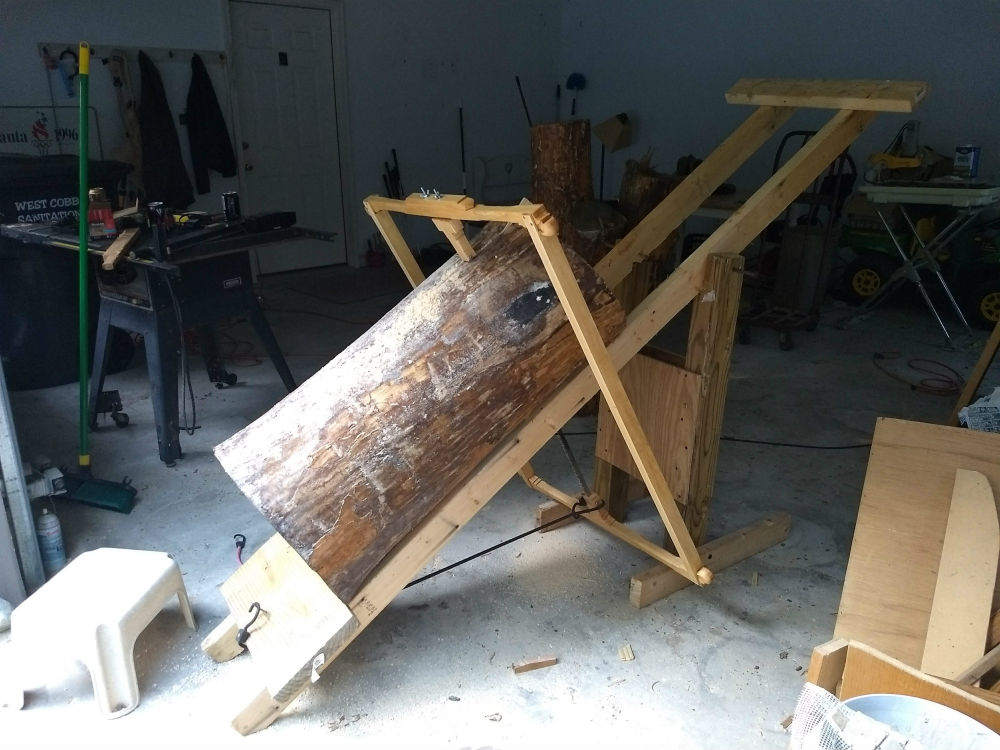
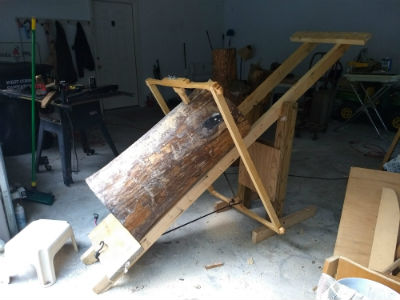
Building this saw was the easiest part of the job. I told my wife, somewhat dubious of the entire adventure, that it was my "workout saw." This was an excellent prediction on my part. If you would like some perspective on why there was so much time and attention paid to mechanical, water-powered mills in centuries past, I invite you to hand rip an 18-inch diameter log of dense hardwood.
|
I would estimate that it would take an experienced sawyer perhaps an hour to cut this
in half. I took a week and three days.
|
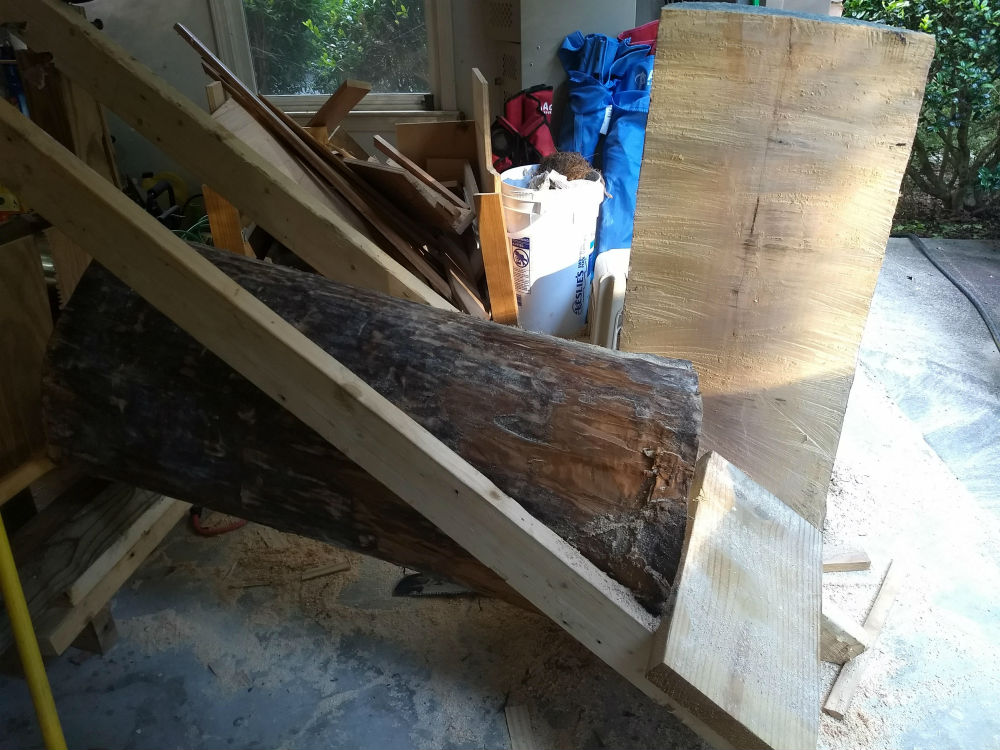
The work is hard and repetitive. It's difficult to get a good angle when cutting and, having no underdog to bark at, I took to attaching a rubber bungee on the bottom to assist in positioning. The thin bow saw blade was prone to turning in the cut, so while the kerf was very thin, I didn't save any usable wood with the wavy job I made of it. Spraying the blade periodically with liquid paraffin and hammering wedges into the cut helped, but, taking the work in shifts, I had succeeded only after ten excruciatingly hot days.
The wood was the same lovely color throughout, and I think it would make an excellent Song-dynasty
patterned side table for a friend interested in traditional Chinese joinery; however, I was not thinking
about that when this picture was taken. I was thinking about my sore hands and back. I was thinking
about the dozens of additional cuts it would take to quarter-saw this one log. I was thinking that the
experiment was a complete success in that I learned many things in the process and a complete failure
in that it took ten days to make an inferior cut. Very well then, it was time to move out of the Middle
Ages and into the Enlightenment. "My next big project," I thought, "should be a mechanized mill that
works like my scroll saw." I was to find out soon that such a thing had existed, and, in theory, should be
perfectly possible to build.
Bram Gallagher is a life-long Georgian who cuts, chops and puts wood together in his spare time. His personal philosophy of amateur woodworking is that it should be
an experiential learning process, and hey I'm not on the clock so I do whatever goofy thing I want.
You can email Bram at
bram.gallagher@gmail.com
.
Return to the
Wood News Online
front page
|