|
|
|
|
Here's My Woodworking!
By Jim Mayer
|
|
|
I guess my start with woodworking began by watching my Dad make and fix things around the house. I got more involved in 7th grade when I took a shop class. I continued wood shop classes throughout high school. This gave me a good basic knowledge of how to do things with wood. Then came the military, work, marriage and I got away from making things. For several years I did a lot of furniture refinishing as a side job. In the late 80's I needed to renovate our kitchen so I got a table saw, planer, jointer and got started. With advice from my good friend Kenny, who by the way is the finest woodworker I have ever seen, I built and installed an entire kitchen cabinet set. Then I got into cars and sold all of the big stuff to make room in the garage. In 2015 and again in 2017 I had 2 bouts with Agent Orange related Prostate cancer and found myself in need of something to take my mind off that. Another friend, Randy, and I went to an Amish lumber yard in Ohio and the woodworking bug bit me again. I started making small boxes and in a few months graduated to building furniture.
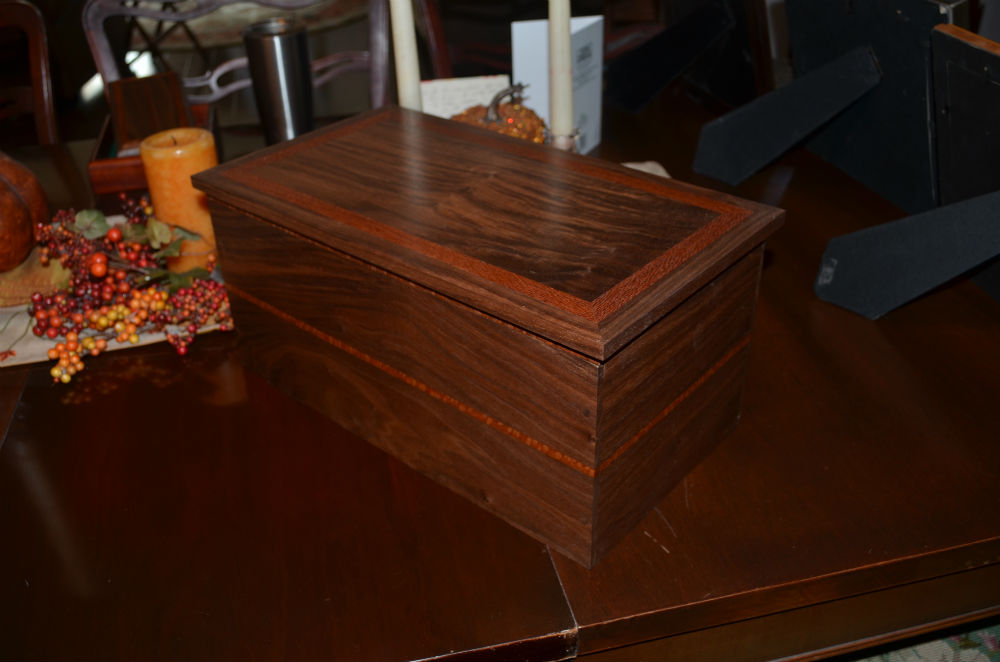
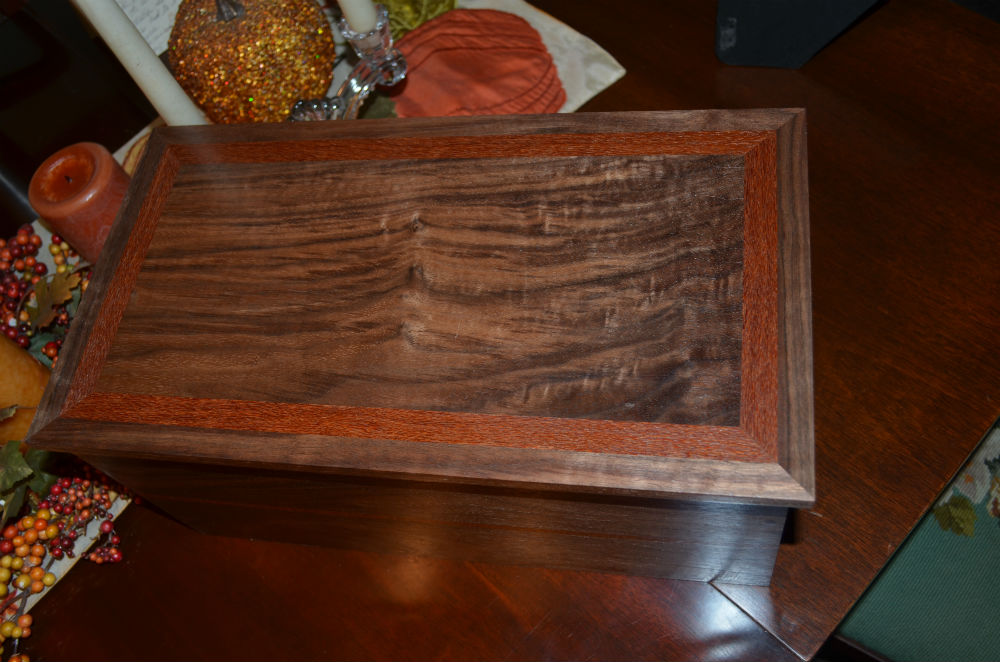
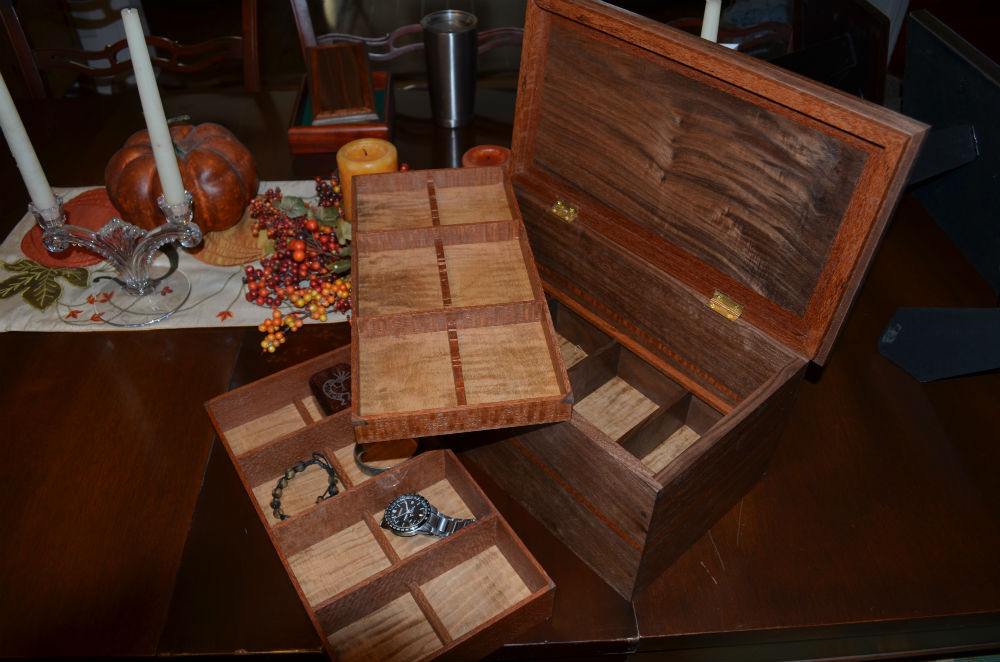
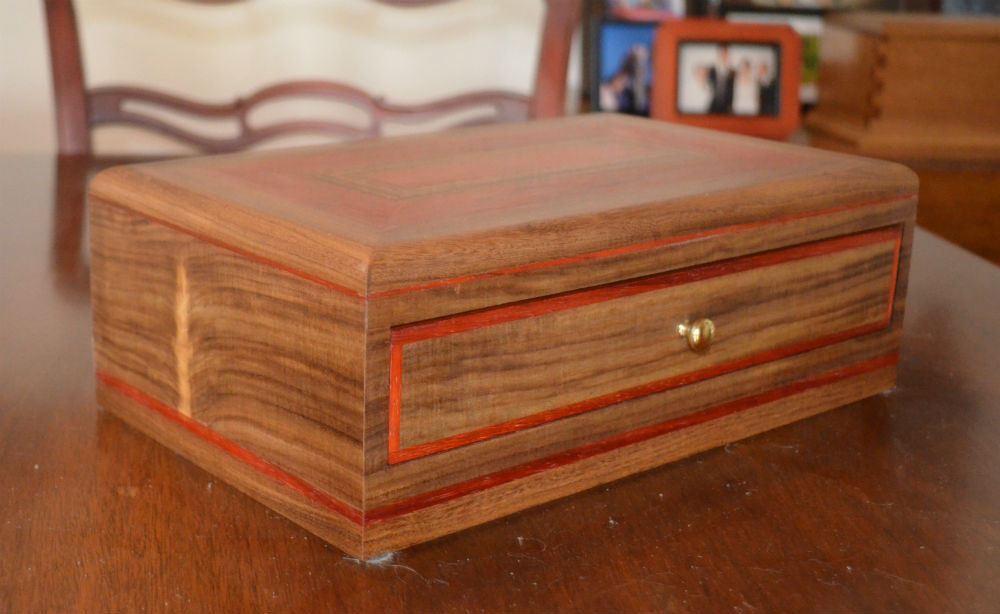
These first 3 pictures (2 above and 1 below) is a box I recently completed. It is the largest I've built, measuring 16" x 9" x 7-1/2". The box is made from American Black Walnut with Leopard Wood trim and inlays. The 2 inner trays are also Leopard Wood with Curly Maple bottoms. Note that the lid overhangs all around due to the Leopard Wood frame on the inside. This also reinforces the miter joints without the need to spline them. Hinges are 90 degree opening Brusso. I used a SawStop Cabinet Saw, Rikon Jointer, DeWalt Planer and Sander. I finished it with Formby's low gloss tung oil.
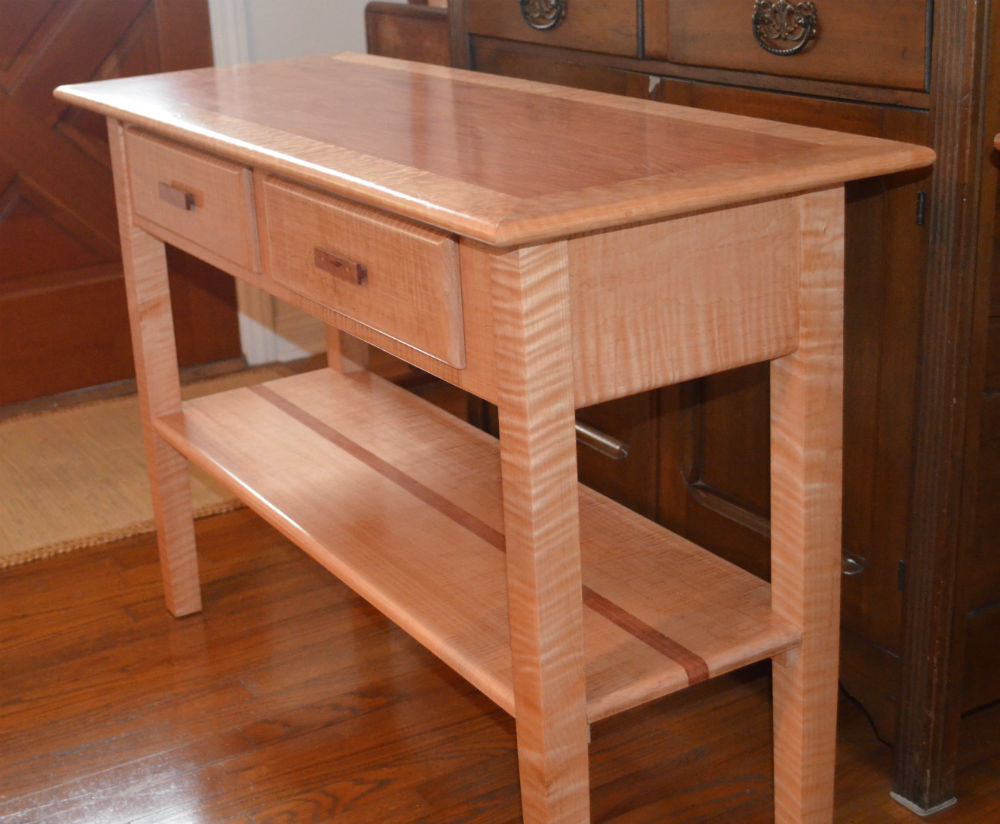
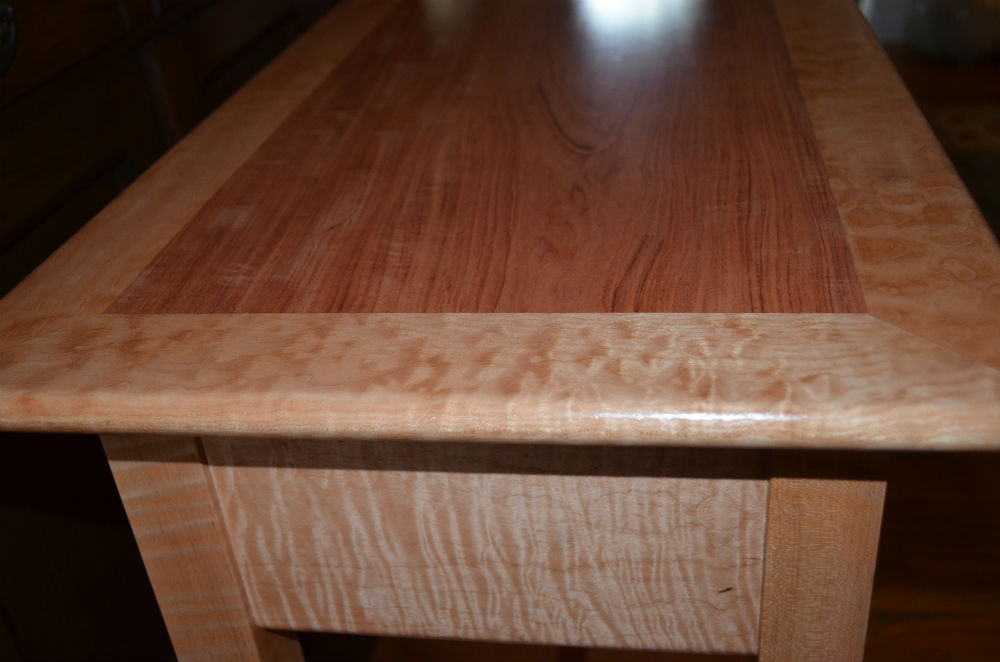
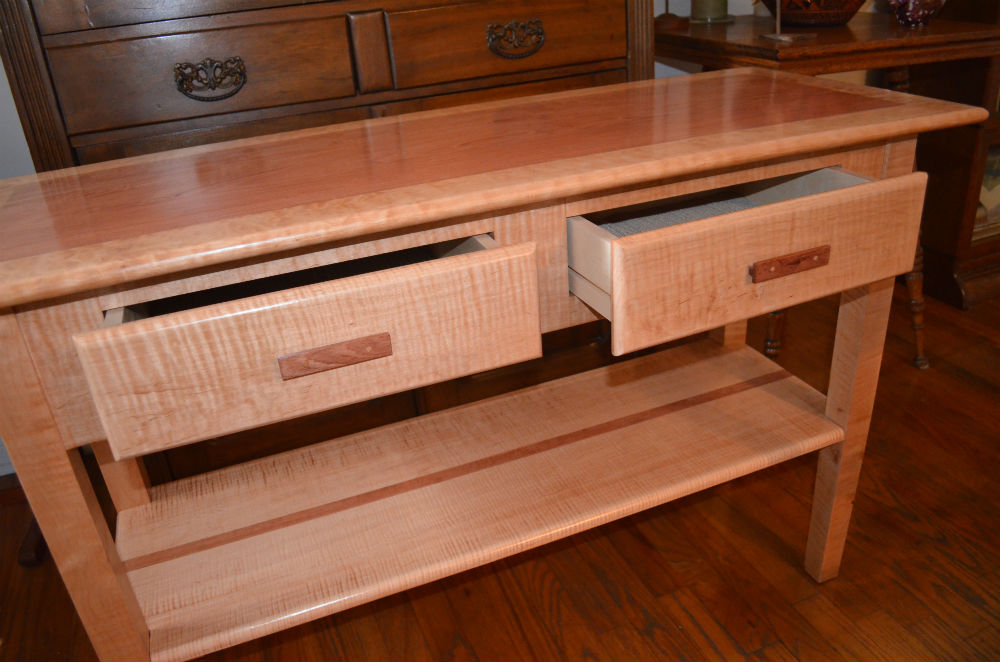
Below are pictures of an Occasional Table, which was my second attempt at furniture making. The top is Sirari Wood wrapped with Quilted Maple. The lower portion is Curly Maple which was felled, milled and kiln dried by Amish Lumbermen from Northeast Ohio. The drawer guides are shop made hard maple. It is lightly stained with ZAR Honey Maple and finished with General Finishes semi-gloss top coat. It is loosely patterned after an Amish built table I inherited from my Mother.
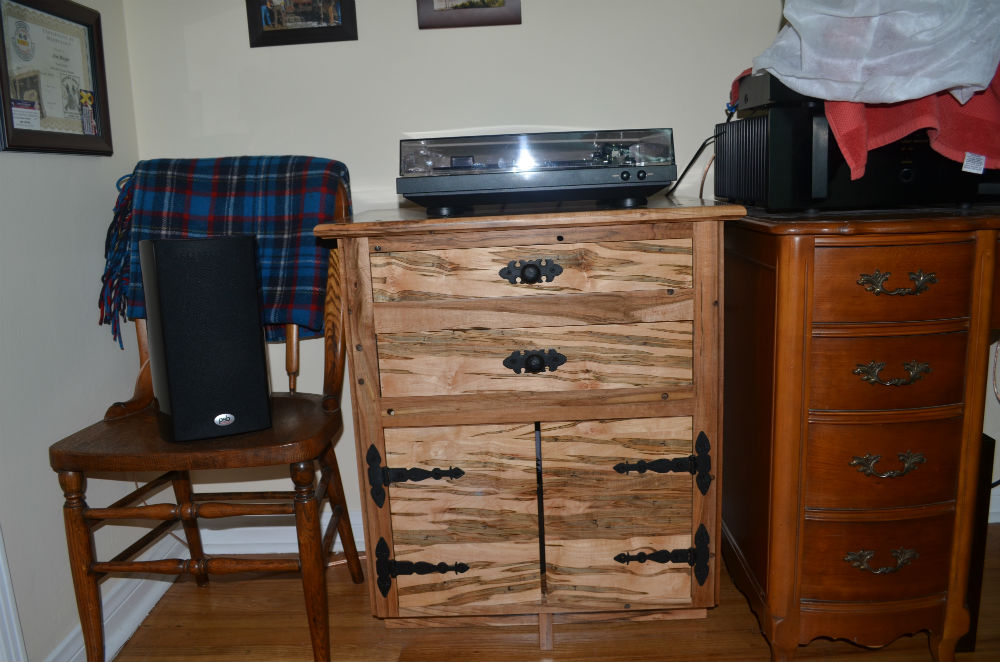
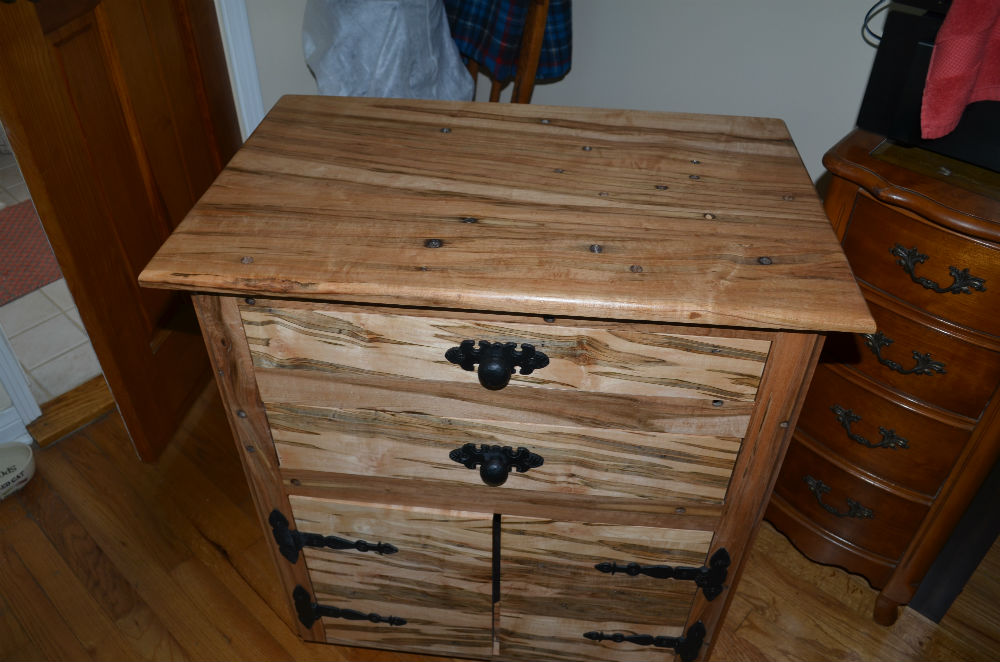
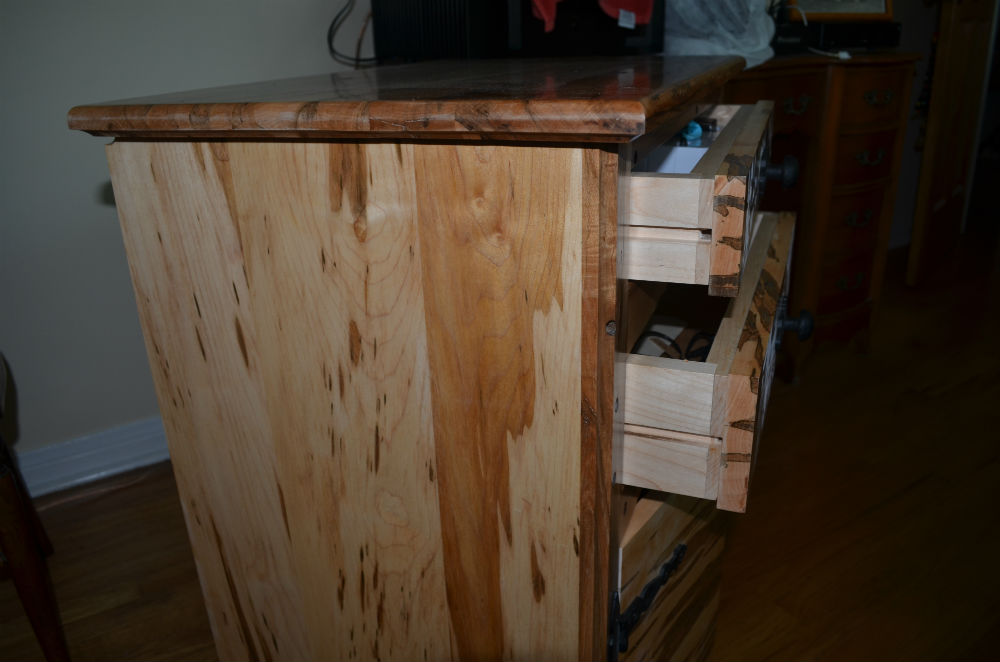
I just finished this cabinet and it is striking even if I do say so myself. It is made from three types of Maple. The top and face frame are made from Tapped Maple. It is called this due to the holes and staining which are a direct result of the tree being "tapped" for maple sap which is used to make syrup. This wood is unique and usually found in short lengths as the mature tree is usually tapped about waist high. The sides are Mineral Stained Maple. Don't really know much about this type but thought it would compliment the other two. The drawers and door fronts are made from Ambrosia Maple. The holes come from a boring insect call an Ambrosia Beetle. Very unique color pattern. I have had several friends comment that it looks like Vietnam era, Tiger Stripe camoflauge. The drawer slides are shop built Hare Maple. The hardware is from Old World Hardware. It is lightly stained with Zar Honey Maple and finished with General Finished semi-gloss top coat.
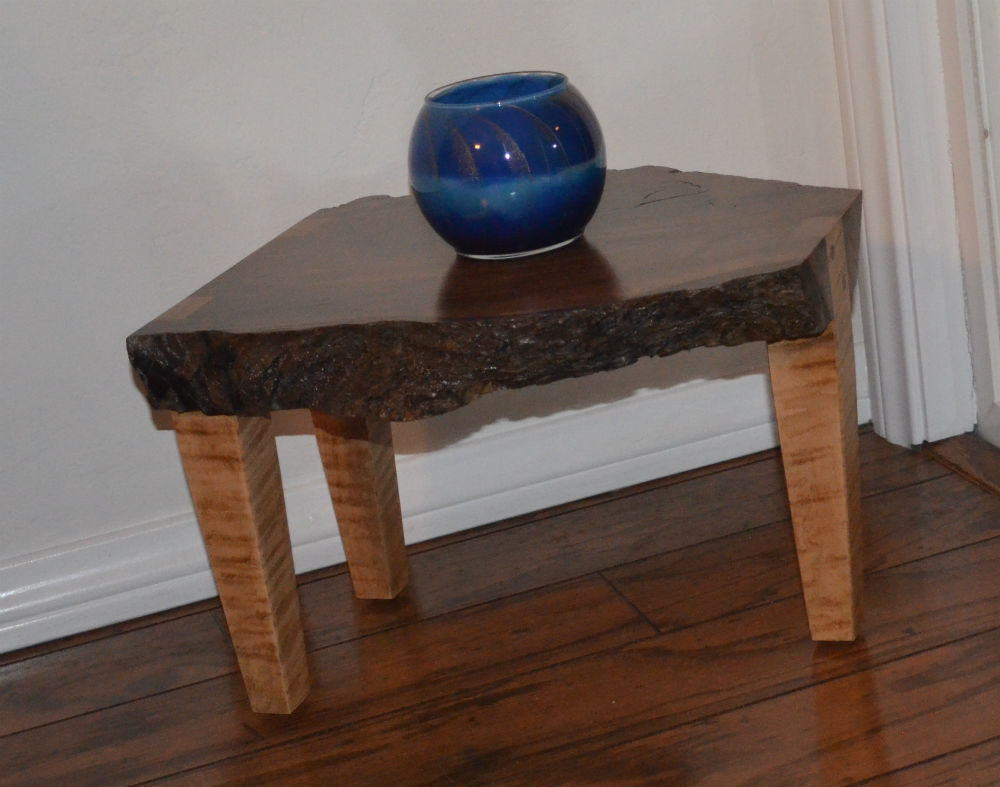
Below is something I made from an 8 quarter Walnut live edge slab and Curly Maple. The wood came from the same source as the lower portion of the Occasional Table described above. It's a fairly simple piece and finished with Formby's tung oil. I gave it to my friend Mary Louise who has a history of milking goats.
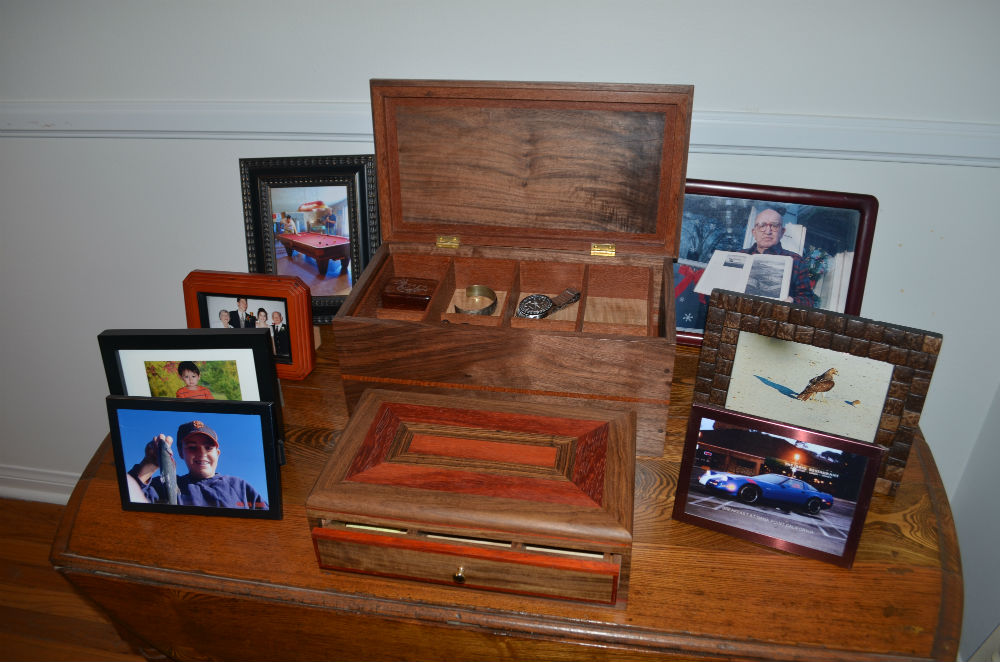
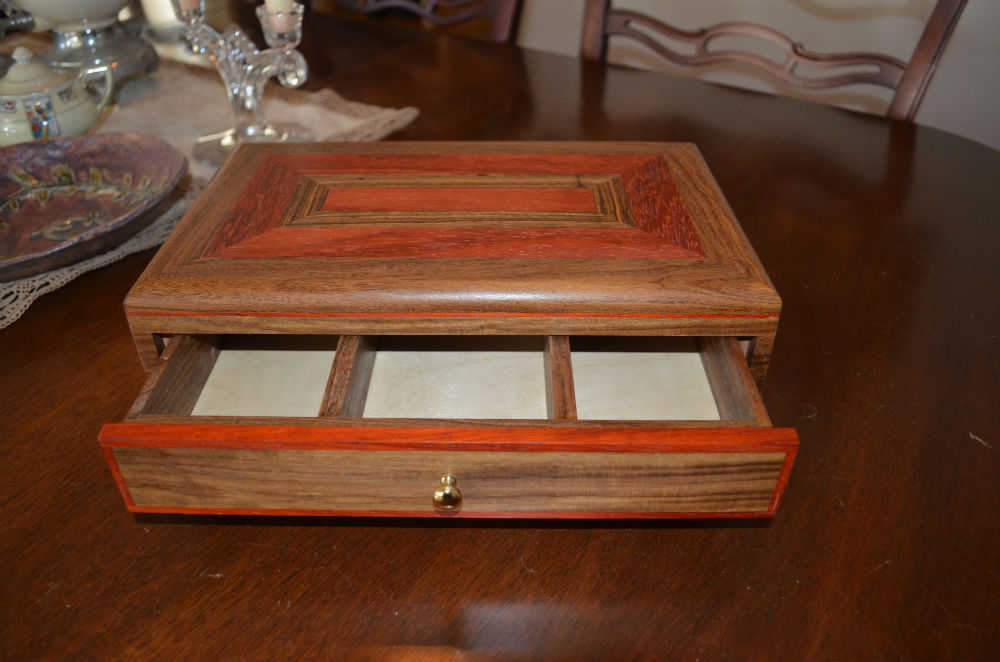
This box is made from Bolivian Ebony, AKA Bolivian Coffee Wood. The accent pieces are Sirari with some Padauk trim on the drawer and lower accents. Other than the glue, the only non-wood used was the brass knob.
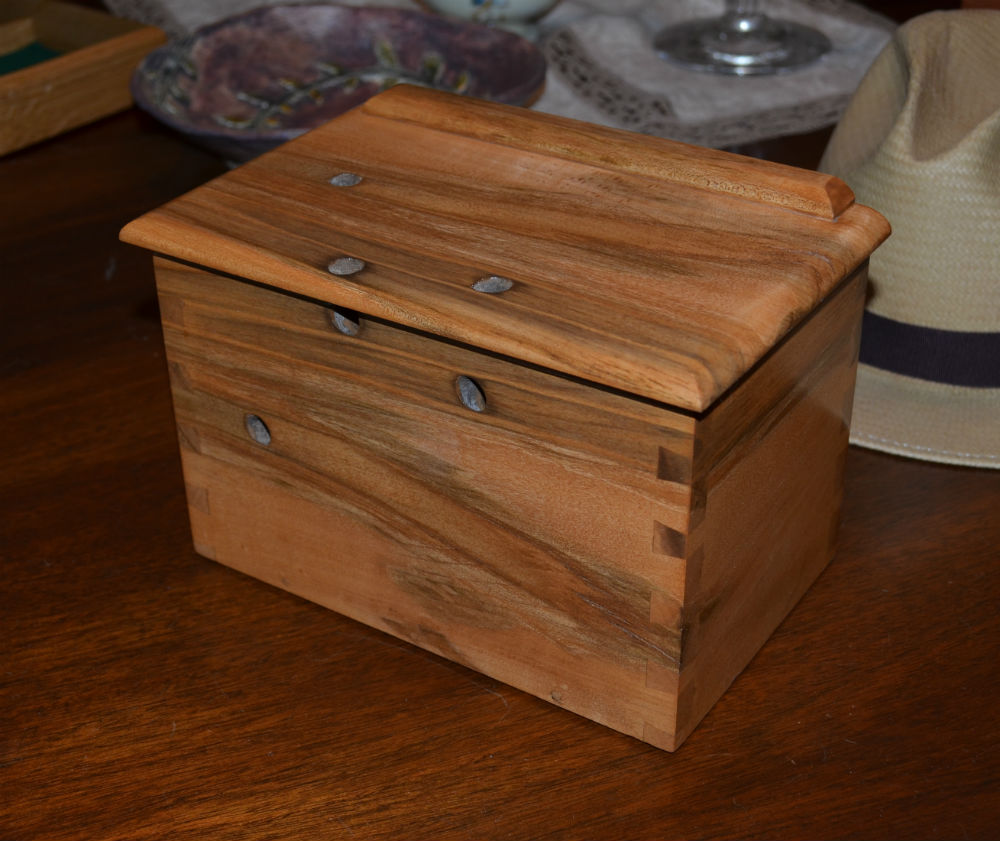
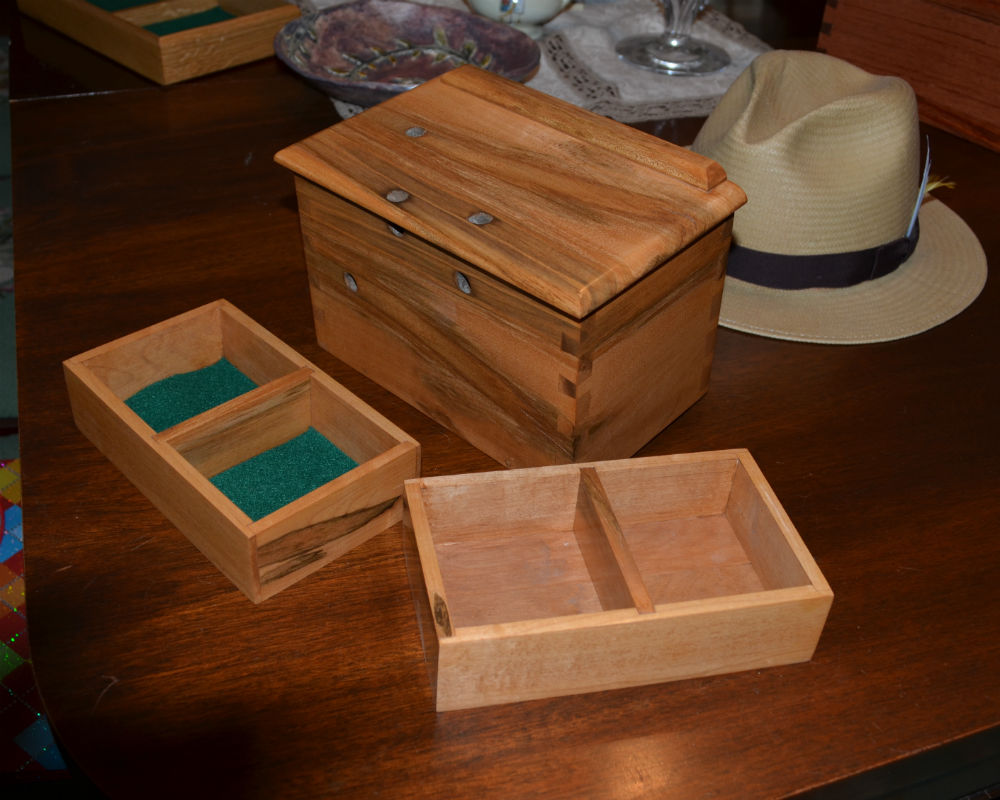
This box below is made from Tapped Maple, a fascinating wood which I also used in the cabinet piece I described above. It is similar in color to Ambrosia Maple which it is often confused with. This wood came from Amish felled trees in northeast Ohio.
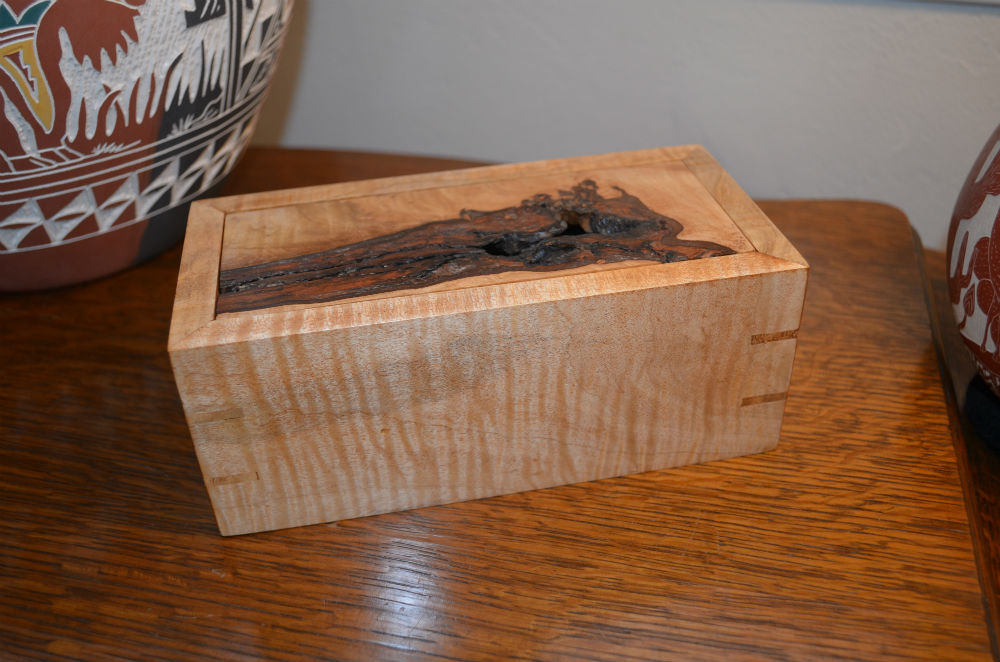
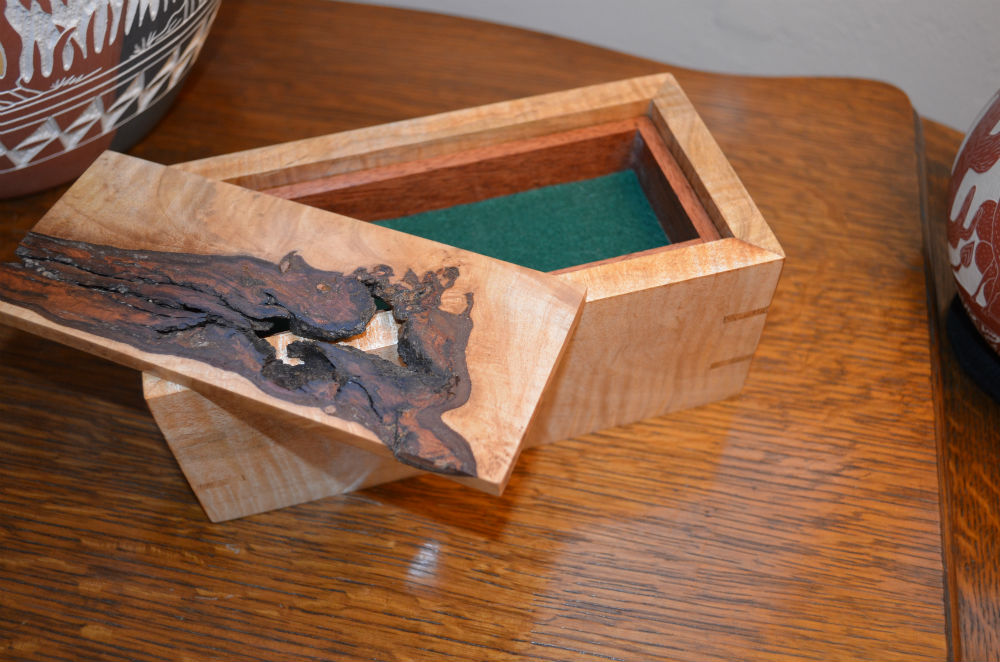
This box is made from Ohio Curly Maple. The drop in lid has a large bark inclusion. I made the first box of this design in the late 80's. I call this design a Benjamin Box as it will accommodate cash under the tray (preferably 100 dollar bills, AKA Benjamins)!
Return to the
Wood News Online
front page
|
|
|
|
|