|
Click on any picture to see a larger version.
Turning the Corner
focuses on using woodturning on the lathe as a way of enhancing cabinetry, furniture designs, and architectural installations. Each article also suggests an important woodworking book to read, reread or listen to, and a link to an appropriate article in
The Highland Woodturner
. Along the way, these articles seek to inspire woodworkers (cabinetmakers, carpenters, and housewrights) to extend their skills into basic, novice, and advanced woodturning while discovering for themselves this particularly sensual and spiritually rewarding dimension of working with wood.
After four months of stay-at-home, heath-safety confinement in the shop (a more delightful than not restriction for woodworkers) many of us have been able to make some of the shop improvements, home improvements, and advance gifting preparations...all of those "do it later" projects that we have been thinking about, sometimes for years. Given the opportunity to not travel, not host guests, not go out to dinner, and not even get a haircut, I have enjoyed the "requirement" to stay home to the fullest of my ability. Many bags of assorted flavors of woodturned chips prove my success!
One of my most popular articles for Highland Woodworking's,
The Highland Woodturner
, guides woodturners as they make a turned
String 'n Ring Puzzle
. Casting about for a similar project, I remembered the classic toy where a ball on a string should be caught on a cup-shaped shaft. A newer model of this includes a hole in the ball and a pointed end to the shaft. Either way, the toy provides endless hours of self-challenge to the player trying to catch the ball at just the right moment to be successful.
Starting the Project
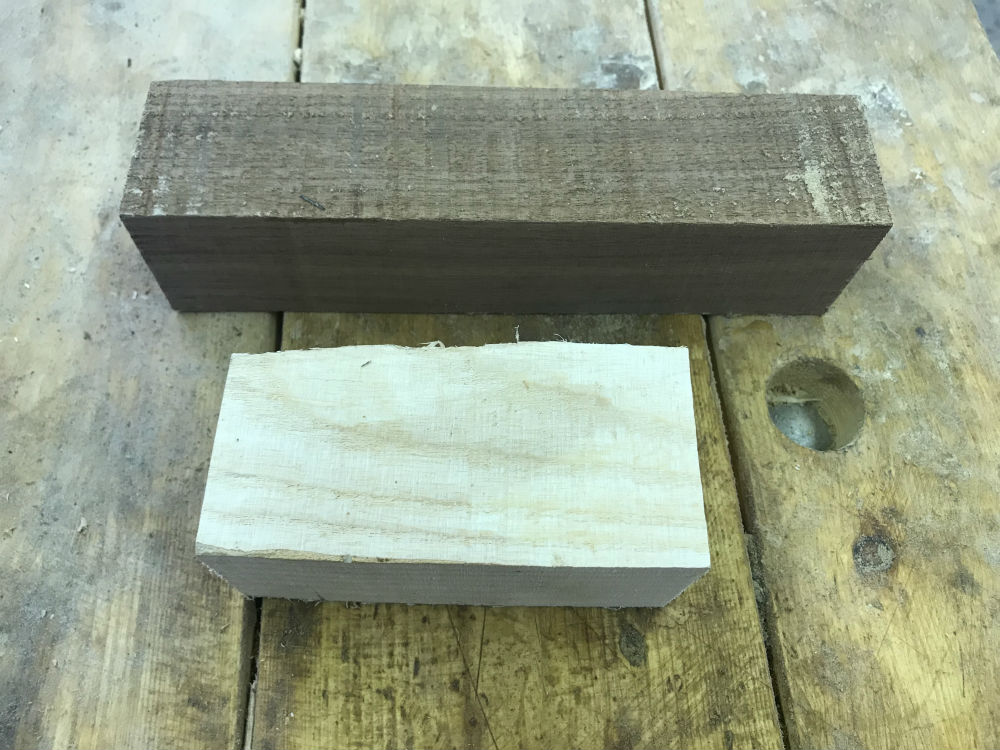
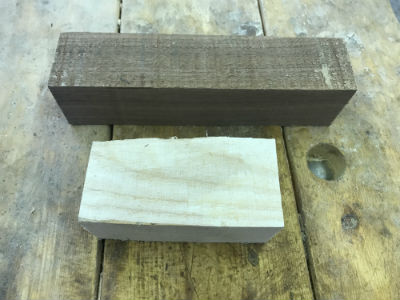
Begin with two blanks for turning. I prefer selecting wood of contrasting color and with figure rather than painting. My goal is for the toy to be innately attractive as naturally finished wood can be, and I am "color-stupid" and unskilled when it comes to painting. The blank for the 2" ball should be 2-1/4" X 2-1/4" X 5" and the blank for the handle or post should be 2" X 2" X 8".
|
Turning the Sphere
There are many marketing jigs and a variety of methods to turn the sphere (ball) for this toy. The least complicated, quickest, and most fun is to turn it free hand. This is a terrific skill-builder, takes practice, and is generally more fun and more satisfying for an avid turner than playing with the completed toy. Taking an afternoon to turn a series of different spheres of the same size or of progressively different sizes can be an enjoyable and productive exercise. The surprising thing is to learn – hand and eye – how little wood needs to be removed from a square block to create the round, balanced sphere.
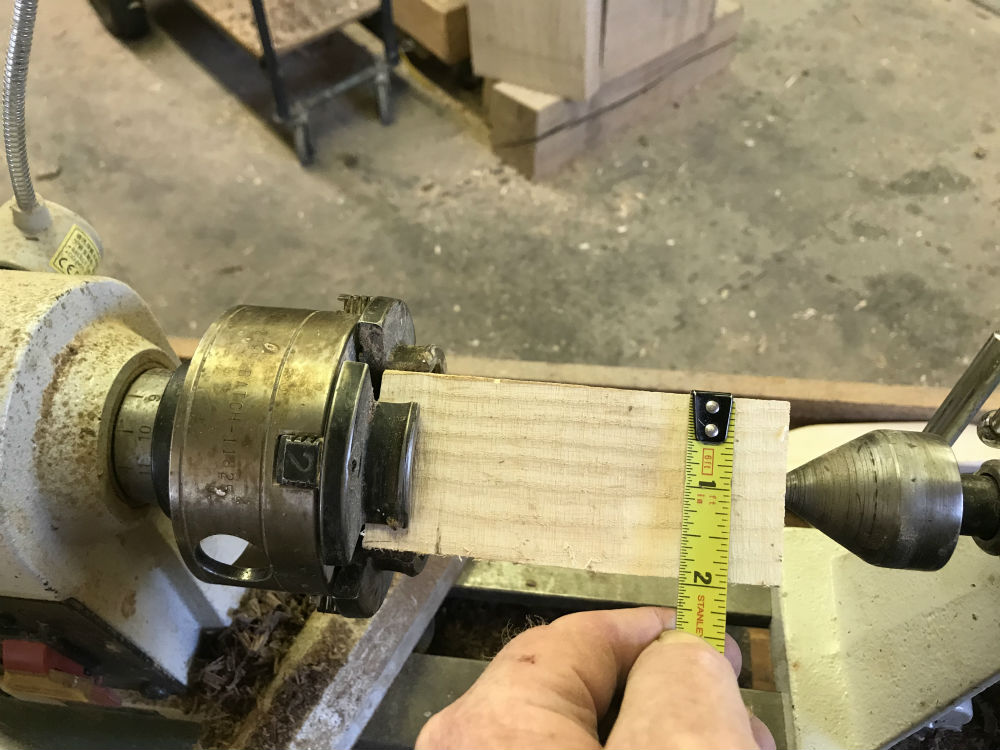
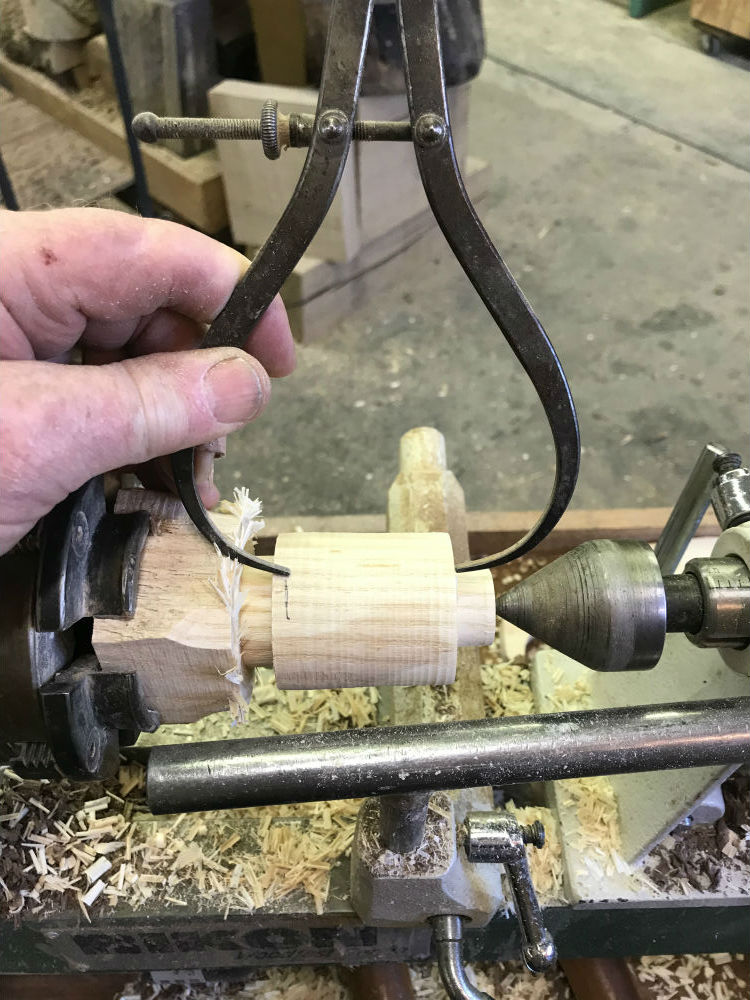
Begin by marking the 2" distance on the chuck-mounted blank.
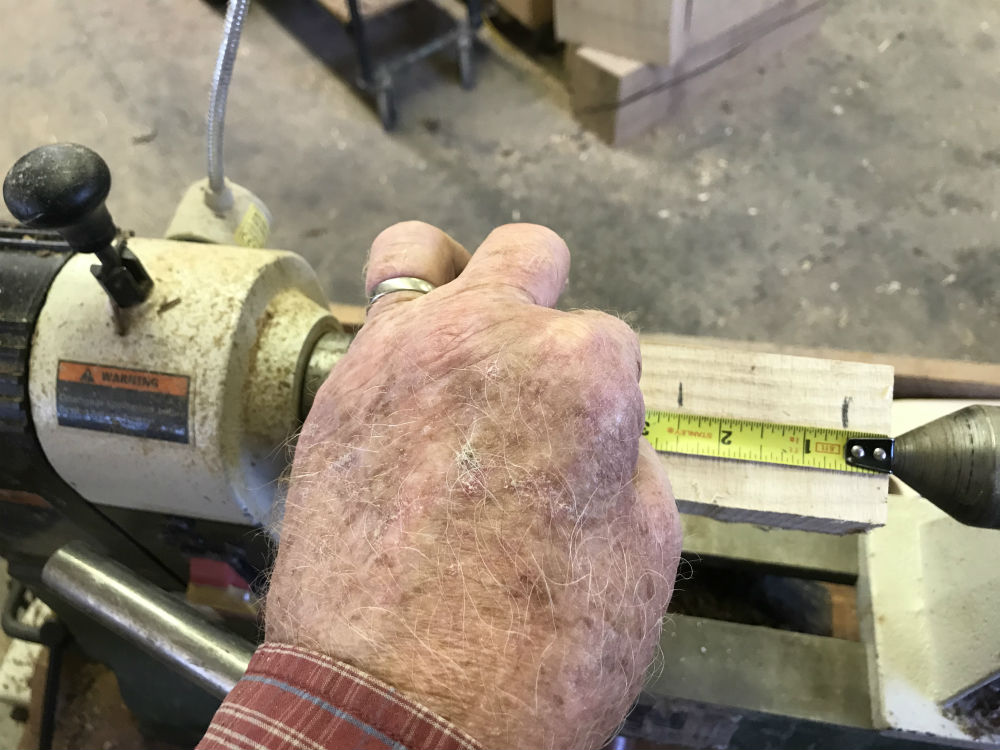
Leave about 1/2" for a wasteblock on the right (tailstock).
Cut in the wasteblocks to clearly delineate the blank for the sphere (I use my
Sorby 3/8" Beading and Parting tool
; a similar Bedan tool can accomplish the same effect).
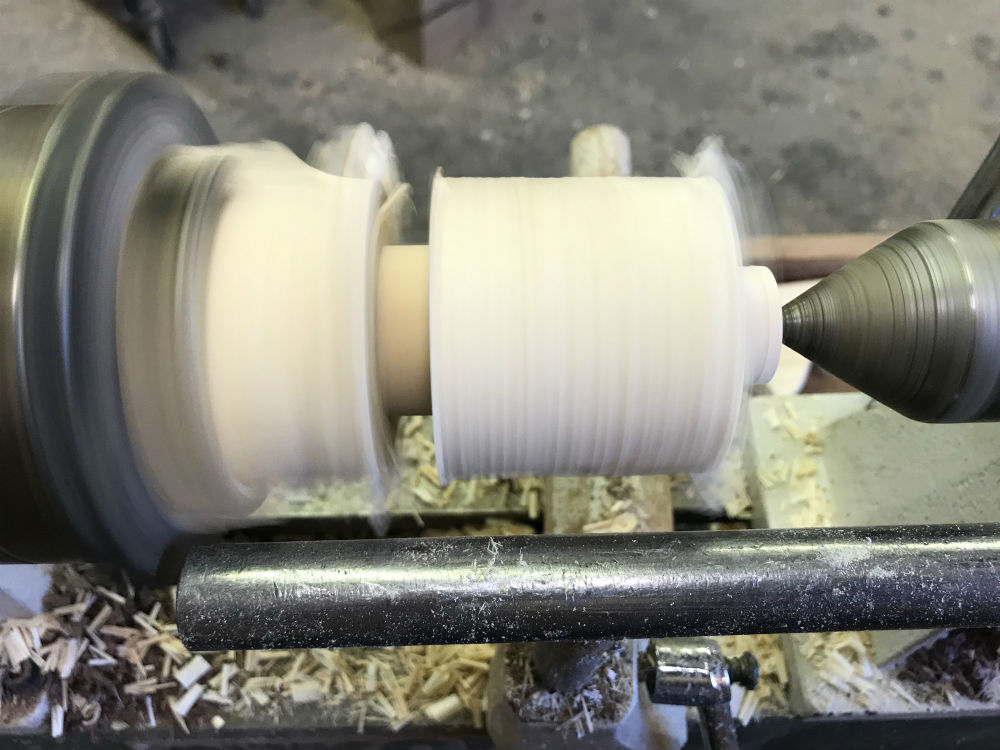
Round the piece to a finished diameter of 2" and mark the true left side 2" and center with a pencil line.
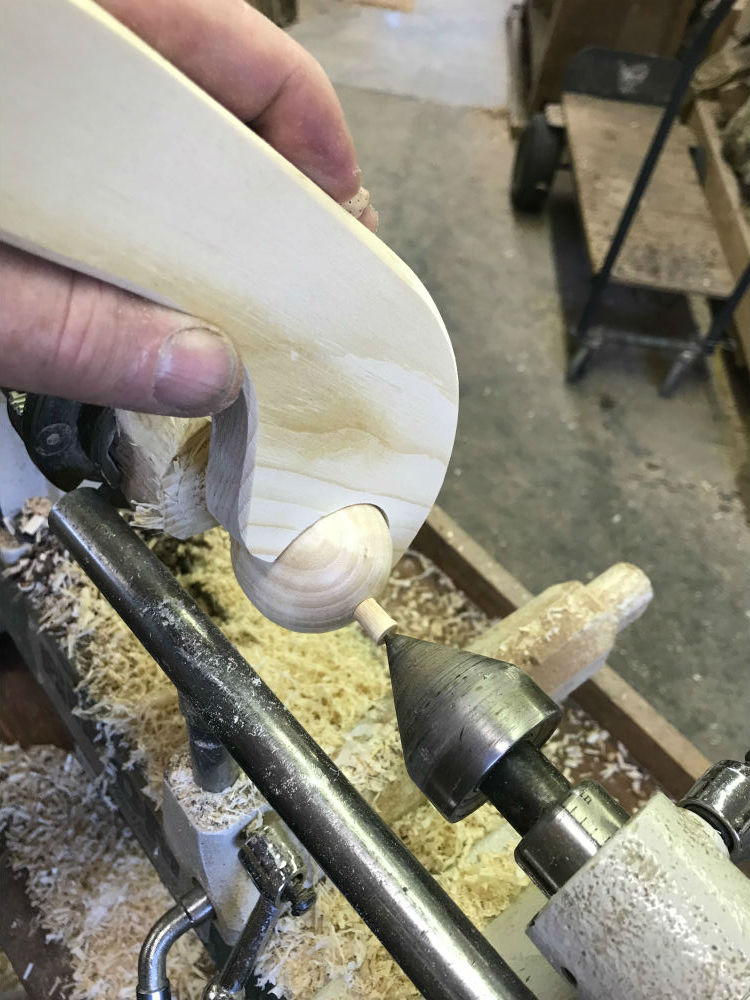
Avoid reducing the diameter as you shape the sphere with a skew or small gouge and reduce the wasteblocks to a minimal diameter (courage and practice make this an excellent exercise). It can help your eye and judgement to make a try-gauge using a 2" drill bit to help you sustain the roundness of the sphere as you shape the blank.
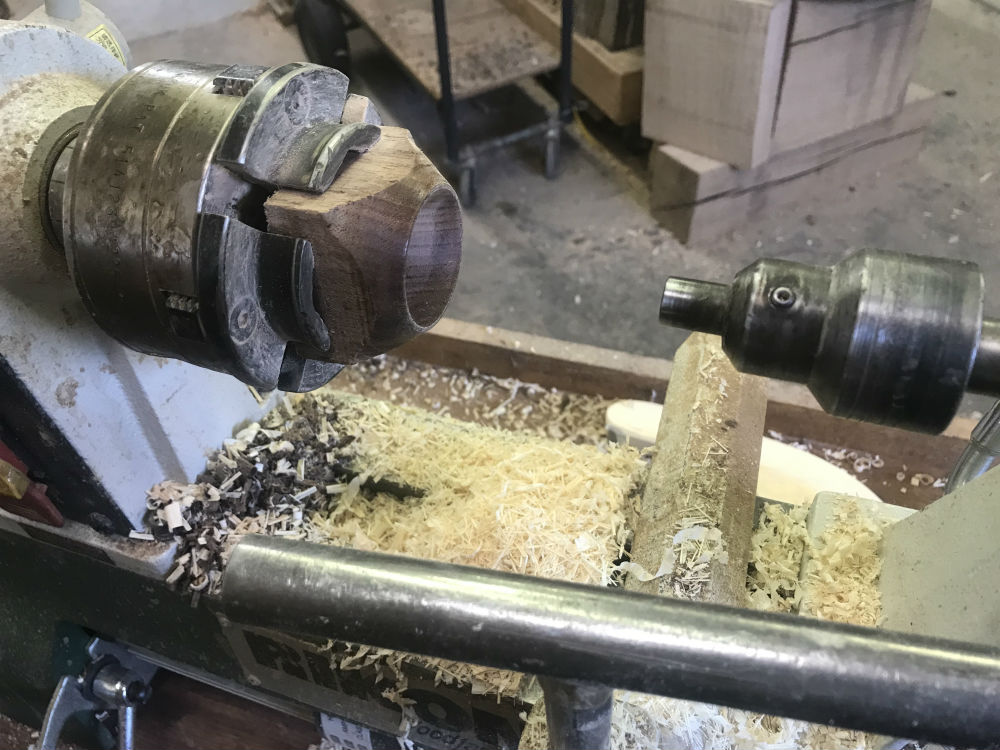
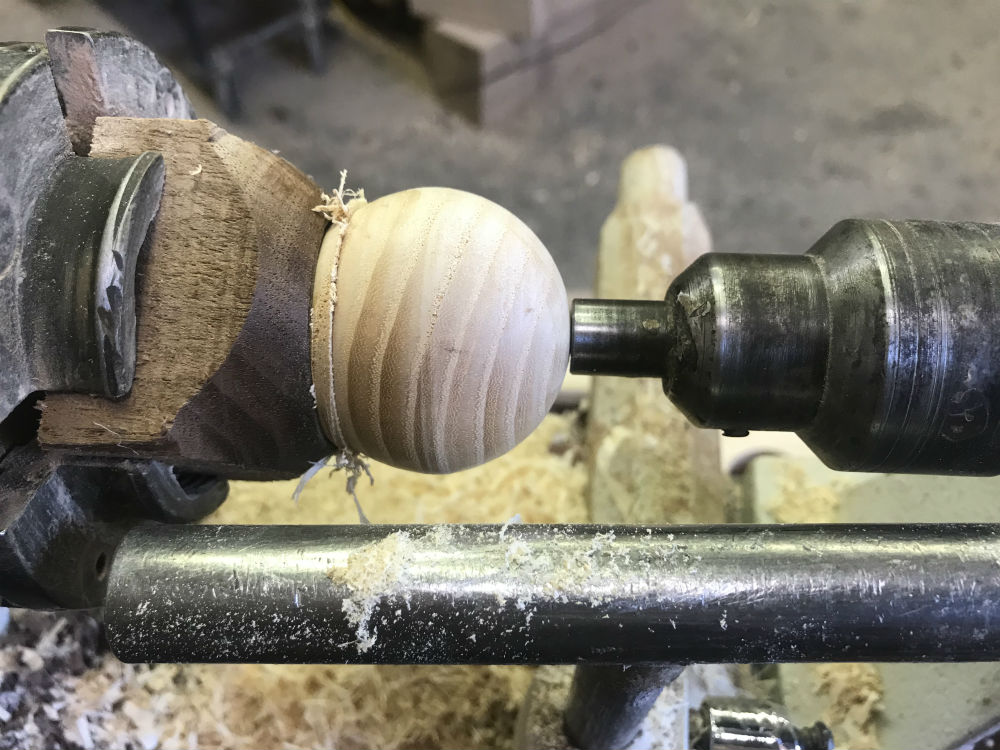
Once complete, saw off the wasteblocks close but without marking the sphere. Turn a cup-chuck jig and add a blunt live-center to the tailstock to finish rounding the sphere.
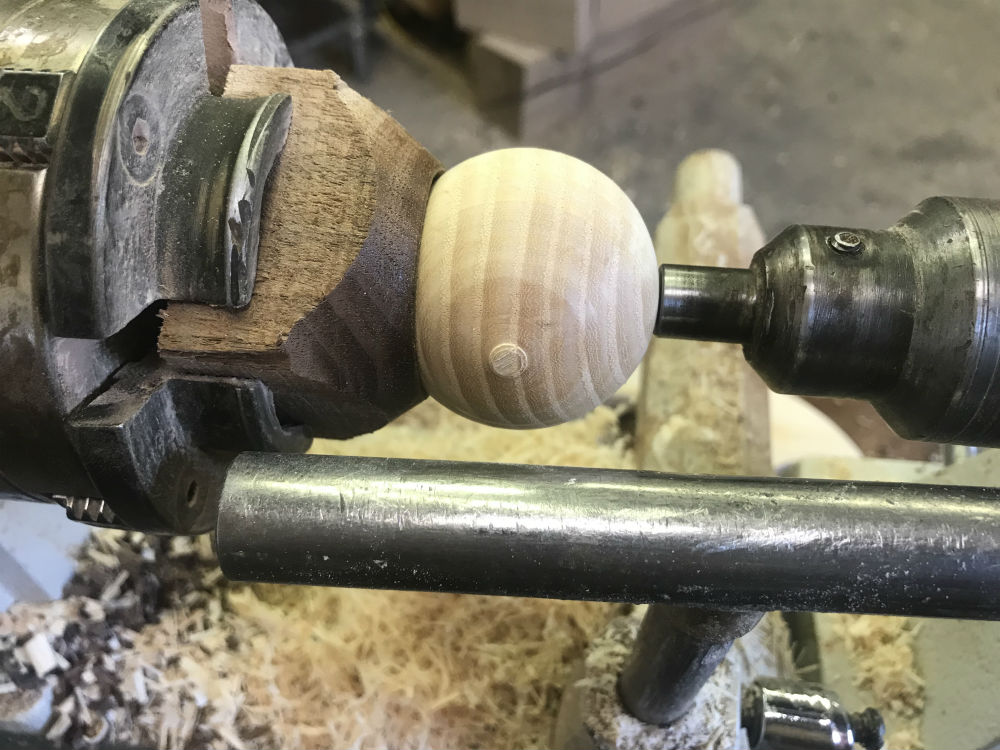
Remount the sphere blank about 90 degrees to expose the ends of the wasteblocks.
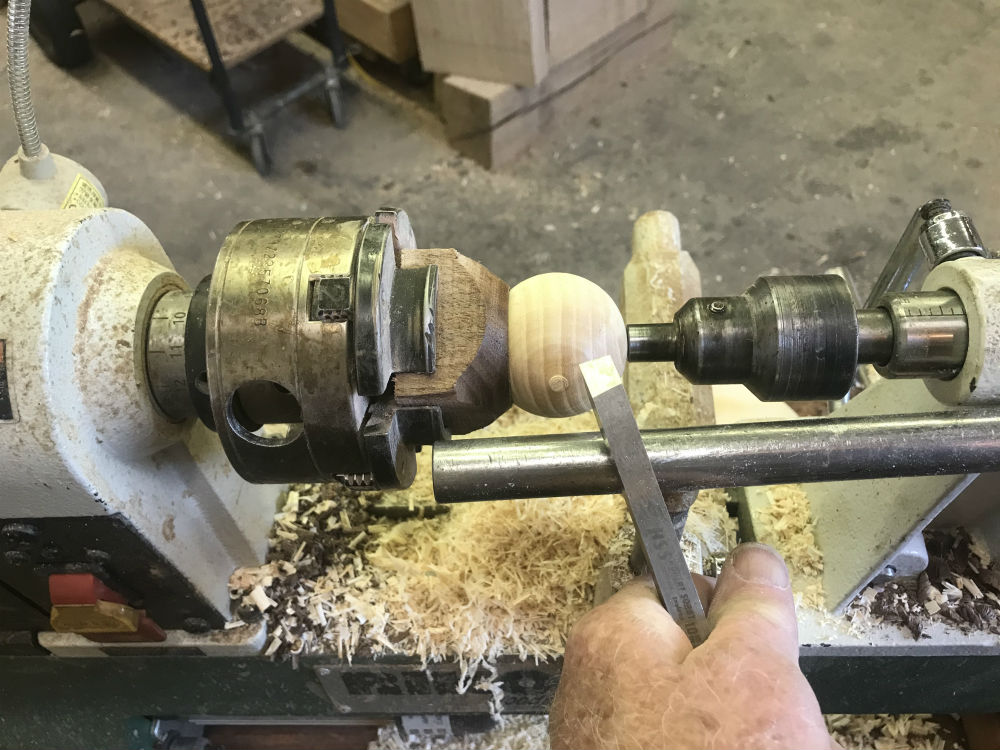
Use whichever tool you feel most comfortable with (a beading and parting tool is pictured here, but you can also use a small gouge, or Bedan).
Turn away the wasteblock nib and any shadowing or ghosting images.
By stopping and repositioning the sphere in the jig, sand the sphere to final prep. This piece of white ash was sanded to 400 grit and finished with the friction polish.
Turning the Handle/Post
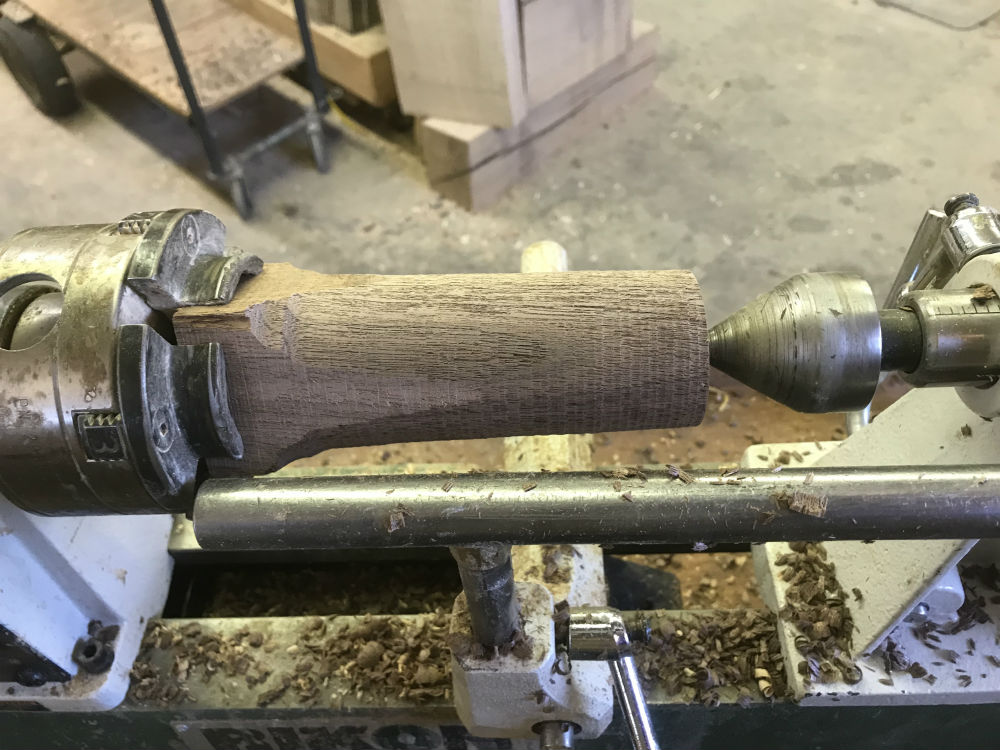
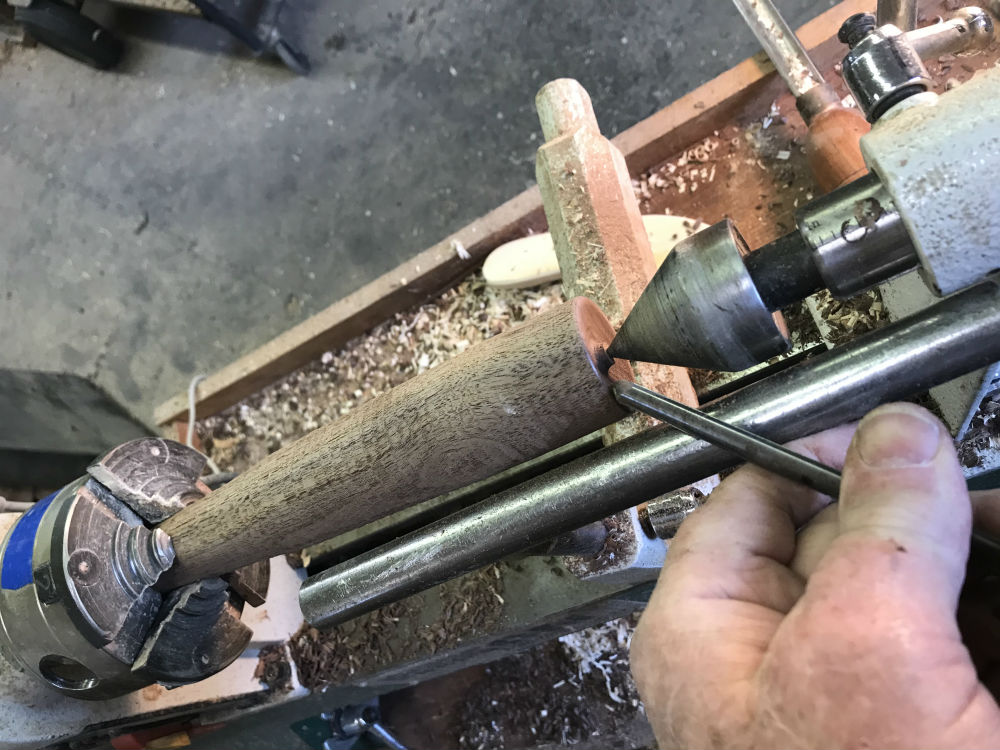
After mounting the block for the handle, turn it round.
Roughly shape it.
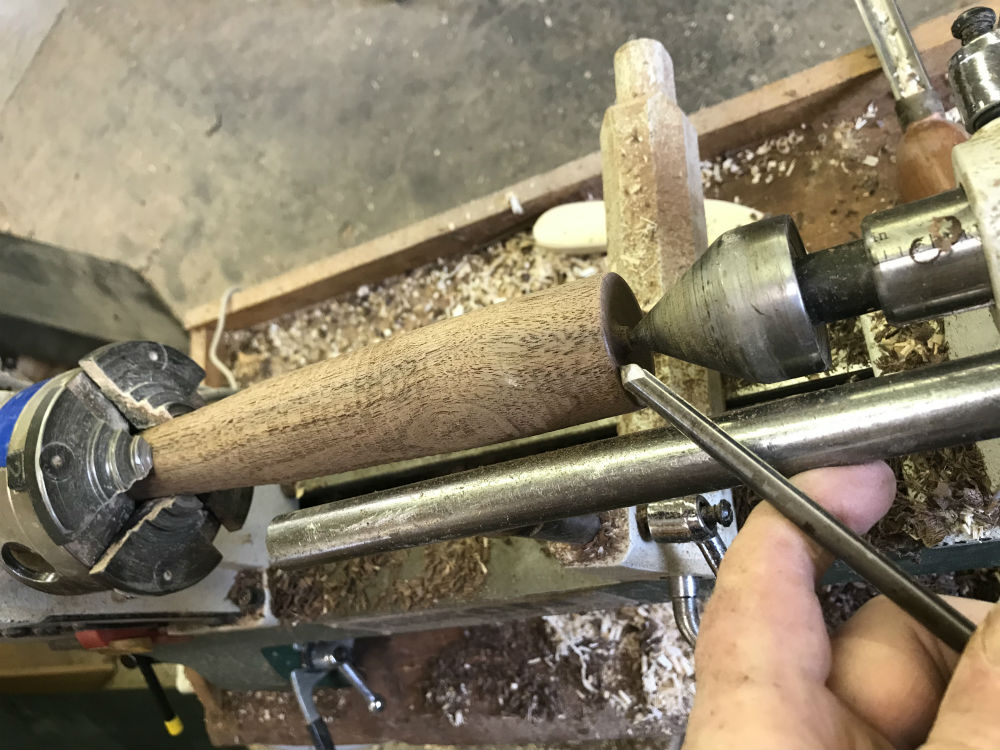
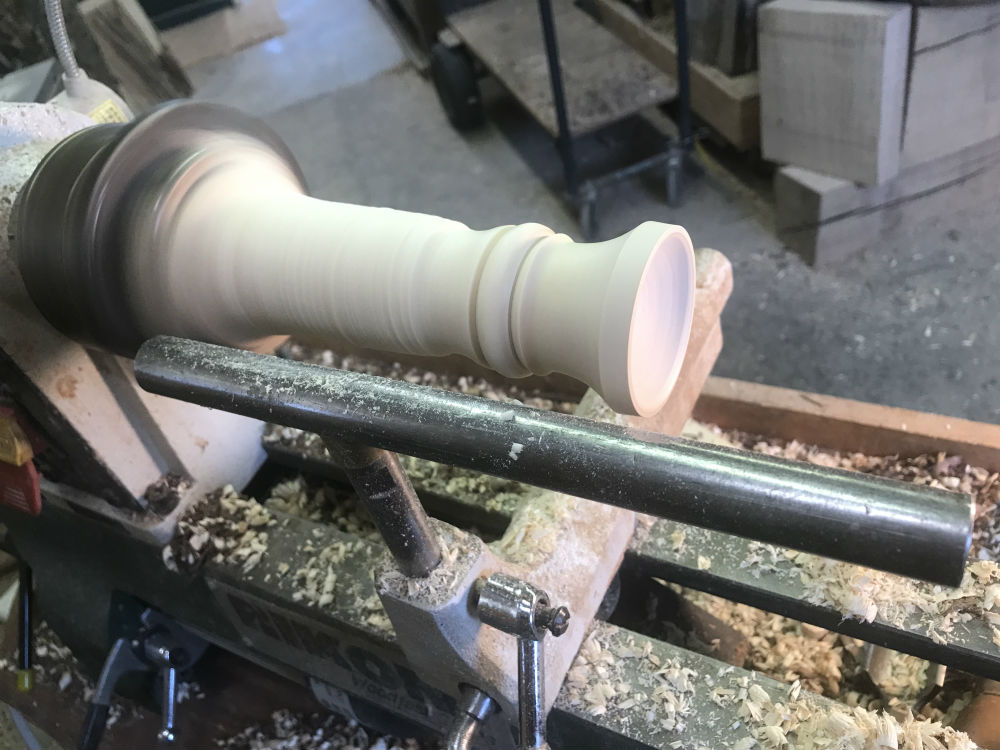
Begin shaping the cup that will become the target for the gamer to catch the ball that will hang from the string.
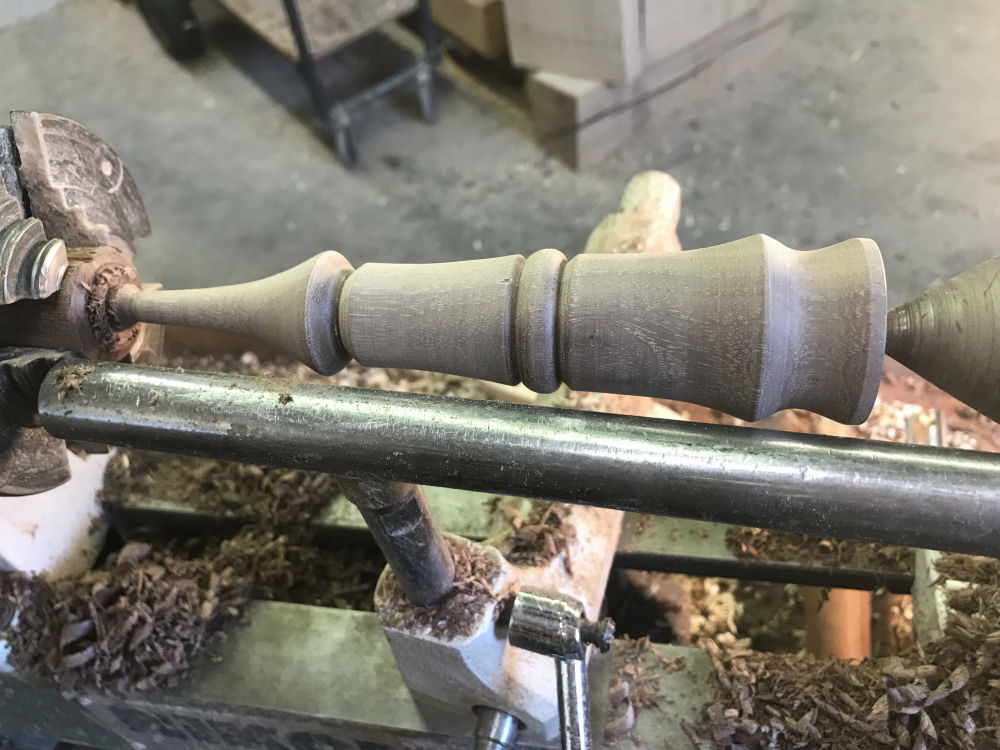
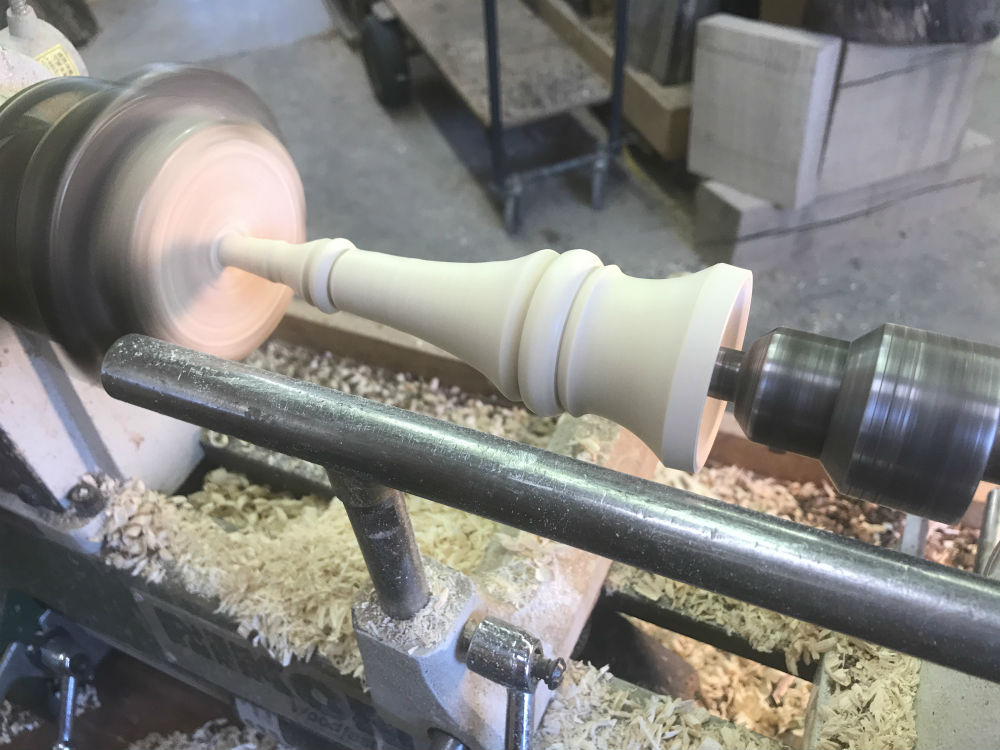
The final shape is now complete.
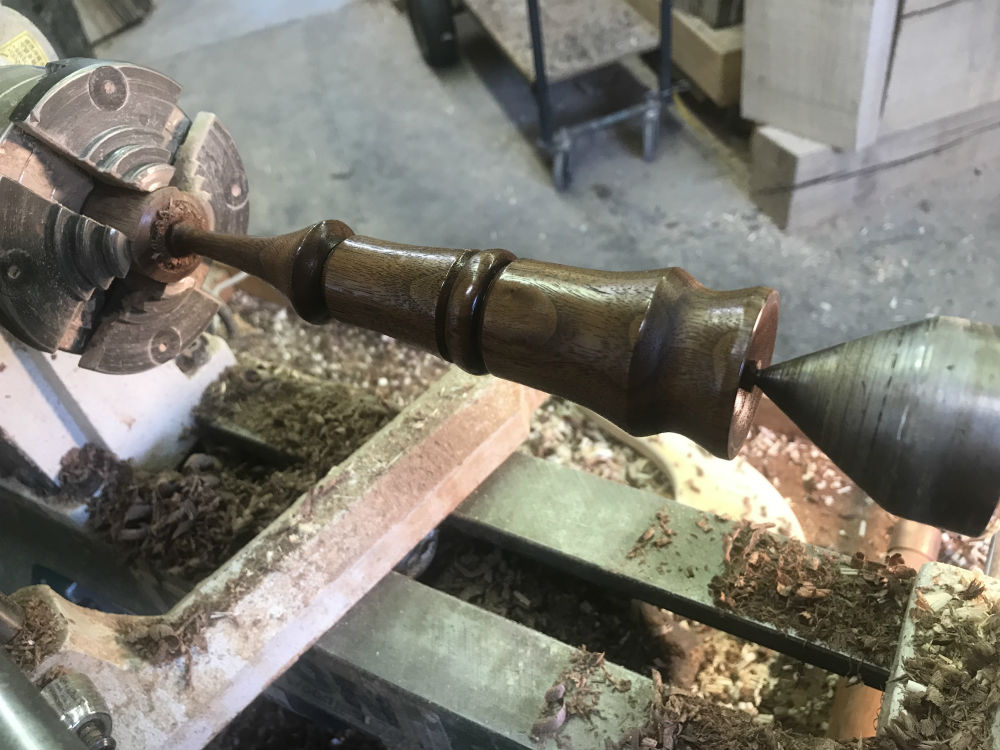
Sand and finish the piece.
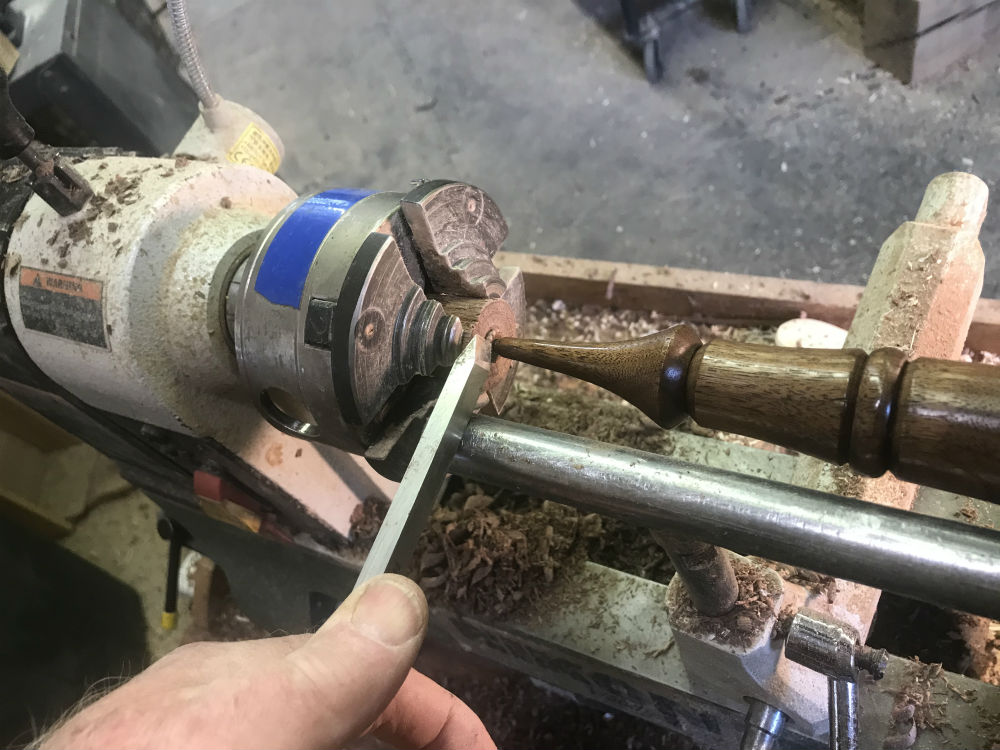
Then part off.
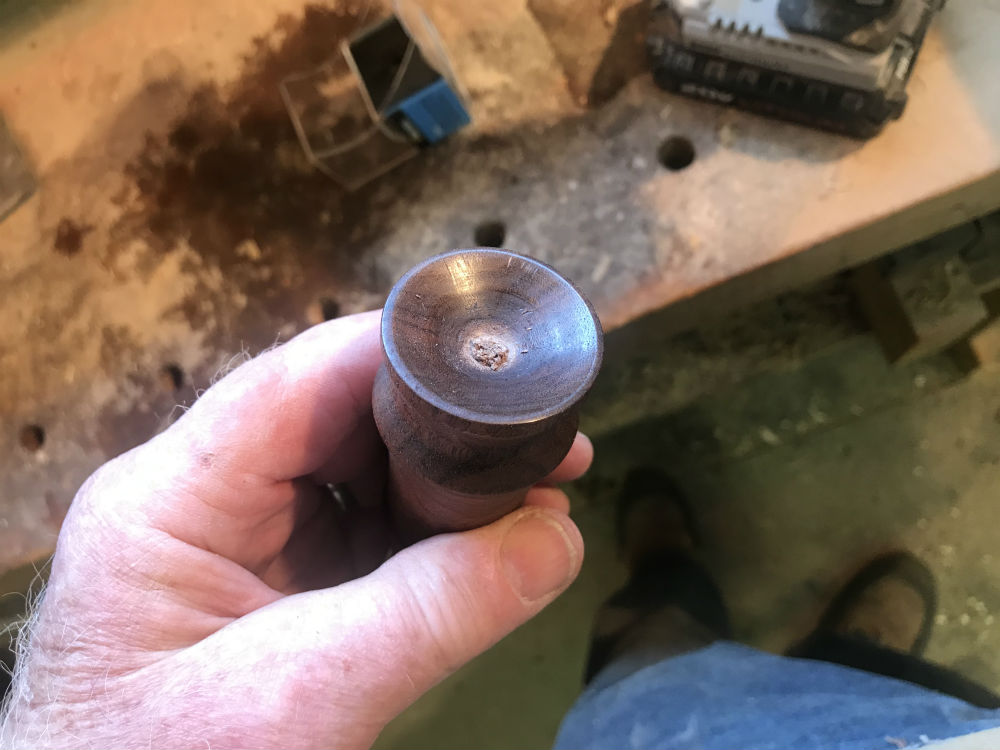
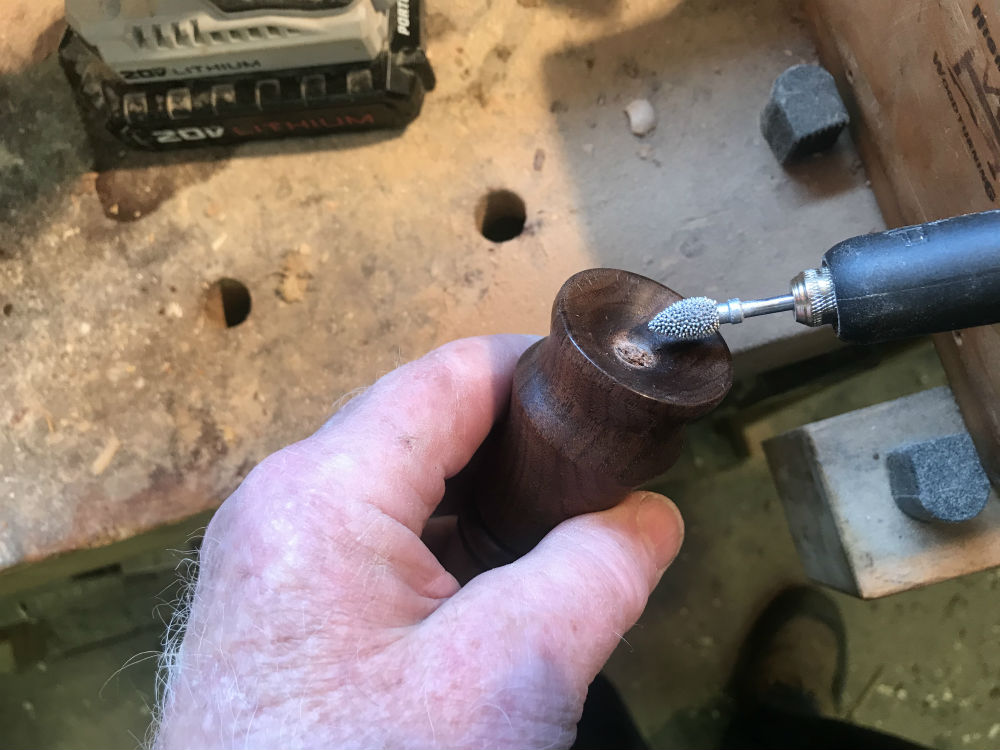
Once off the lathe, remove the live center wasteblock in the emerging cup, and finish shaping.
Sand, and add finish to the open cup.
Another method for this would be to complete the cup before shaping the handle.
Then shape, sand, and finish the piece using the blunt-end live center to stabilize it.
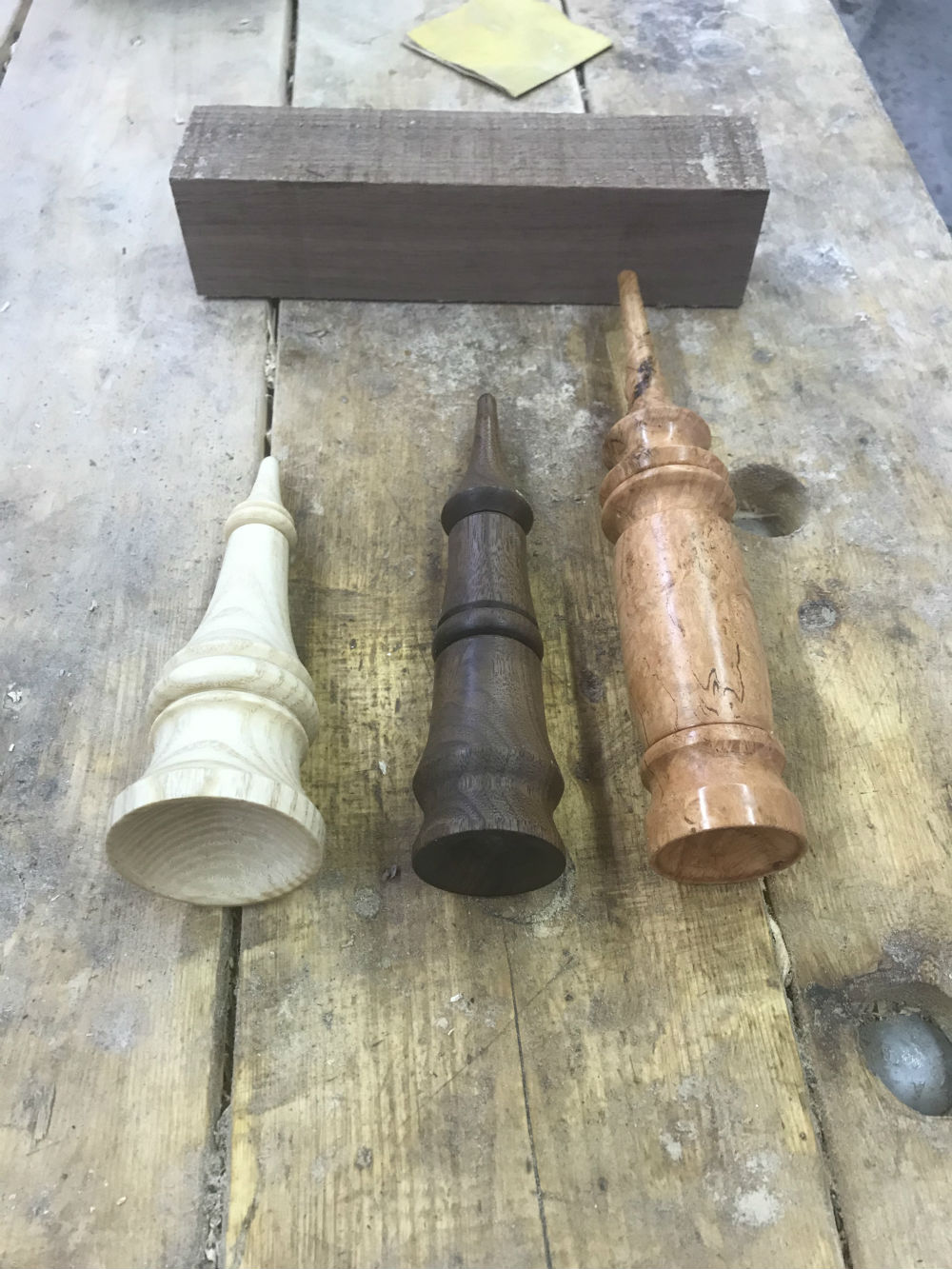
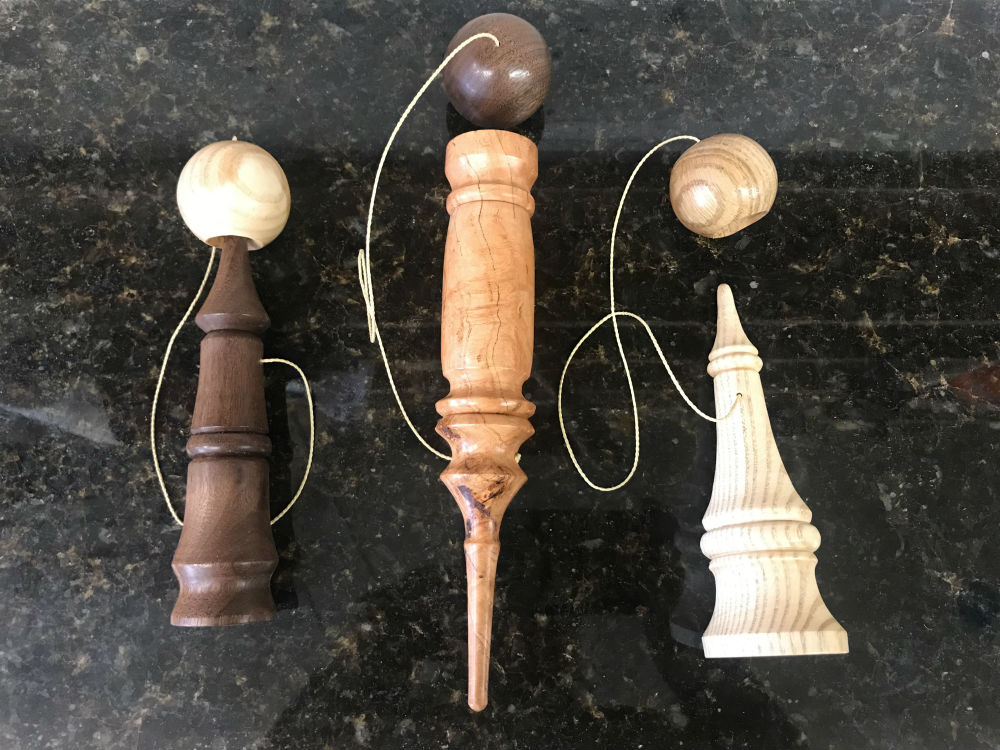
The handle(s) and sphere(s) seen completed below.
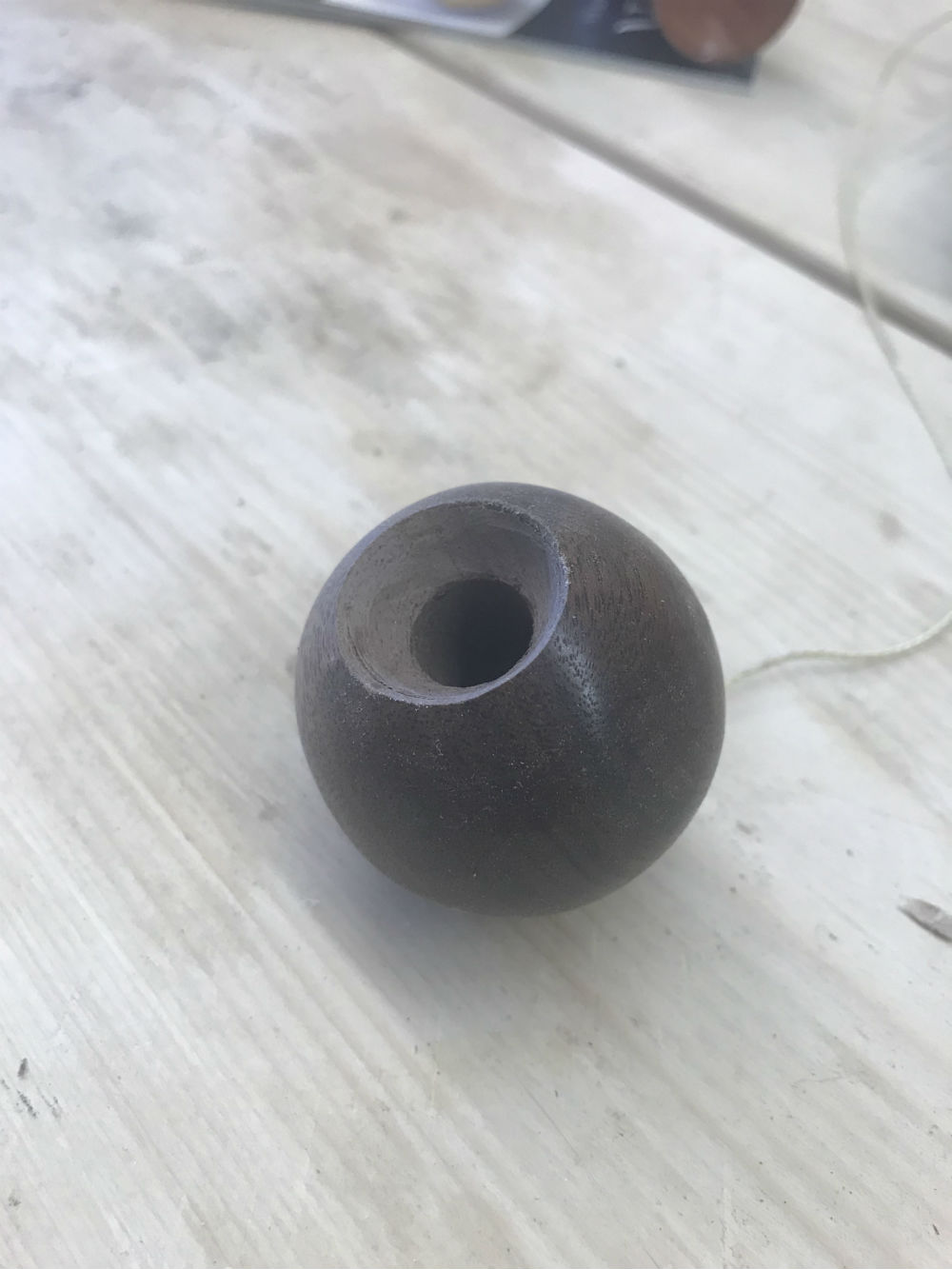
Prepare the spheres by drilling with a 3/4" forstner bit just deep enough to mark the outer circle. Using the center mark from that bit, drill a 5/8" hole (or sized slightly larger than the diameter of the point on your newly turned handle) a little more than half way through the sphere and flare this hole to the wider mark from the forstner bit. Finally, drill a small hole through the sphere's diameter (this needs to be the diameter of the string you plan to use).
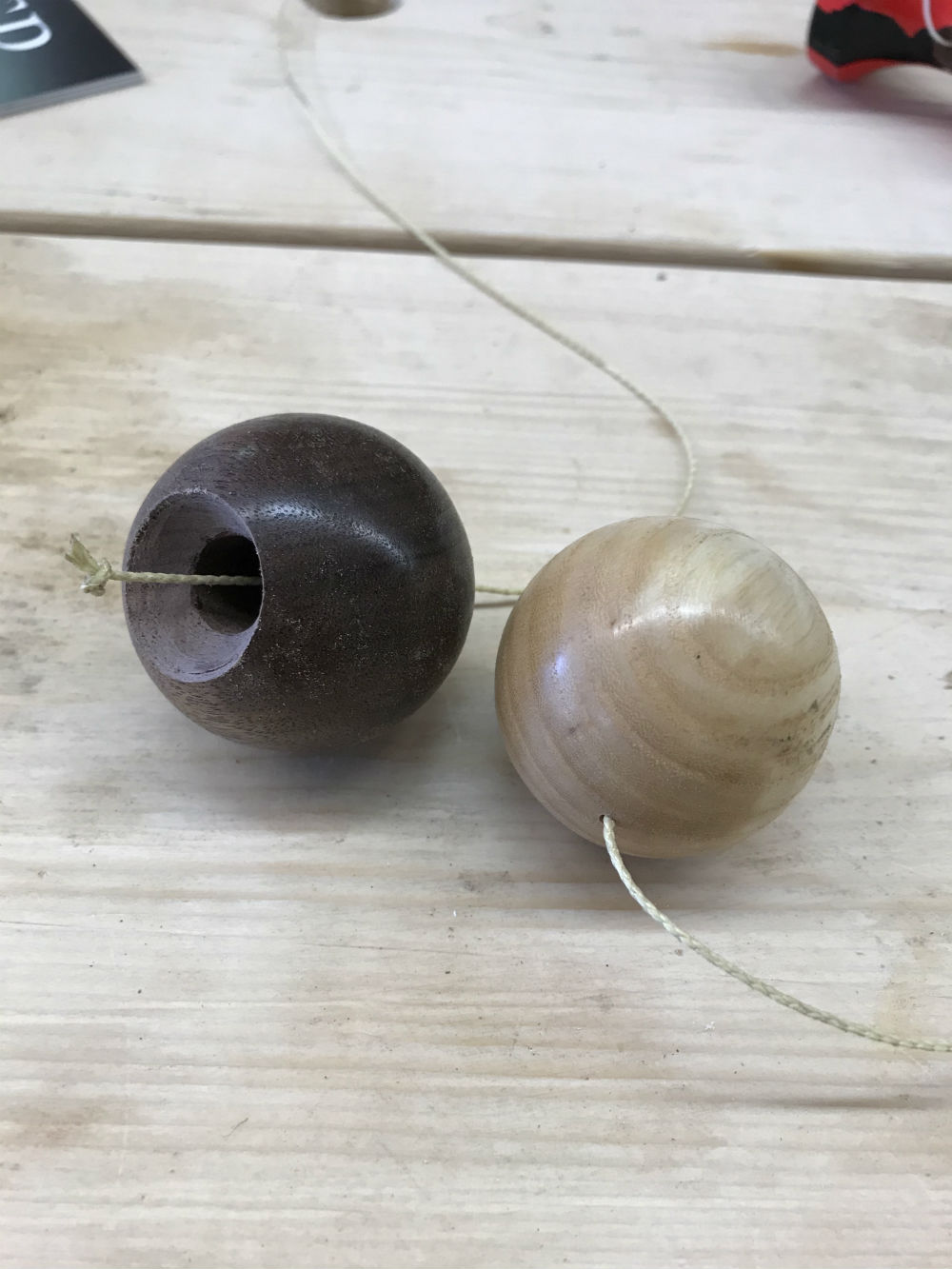
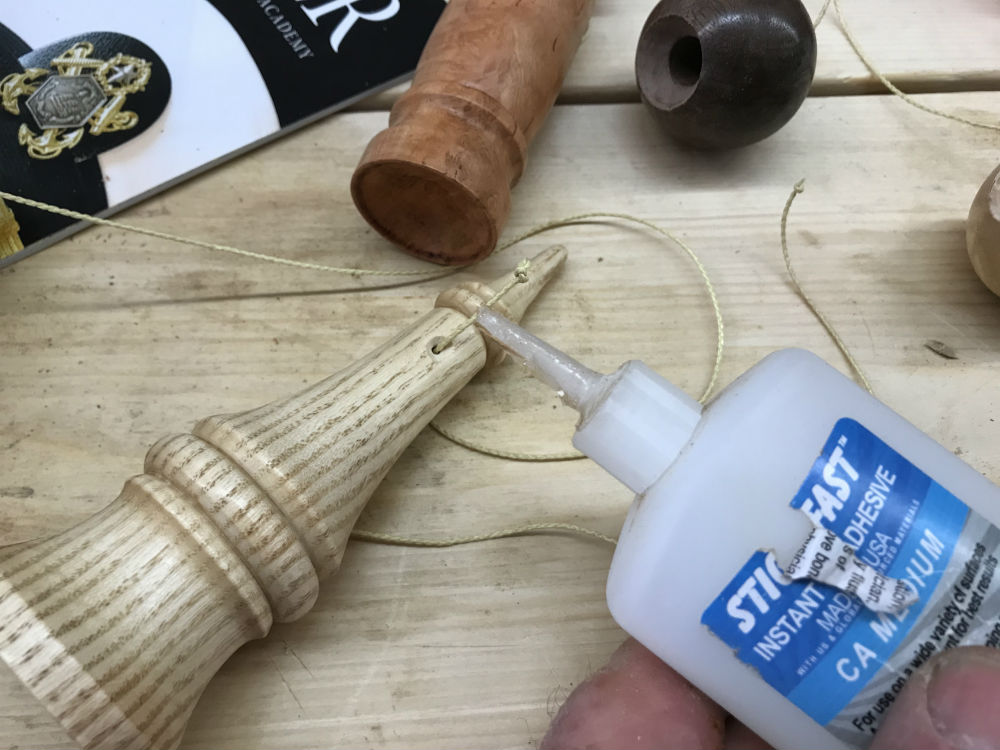
After threading the string through the sphere, knot one end (sailor's figure 8 or similar) and pull it tight. A drop of medium CA glue down the inner shaft will hold it in place at the bottom of the 5/8" drilled hole inside the sphere.
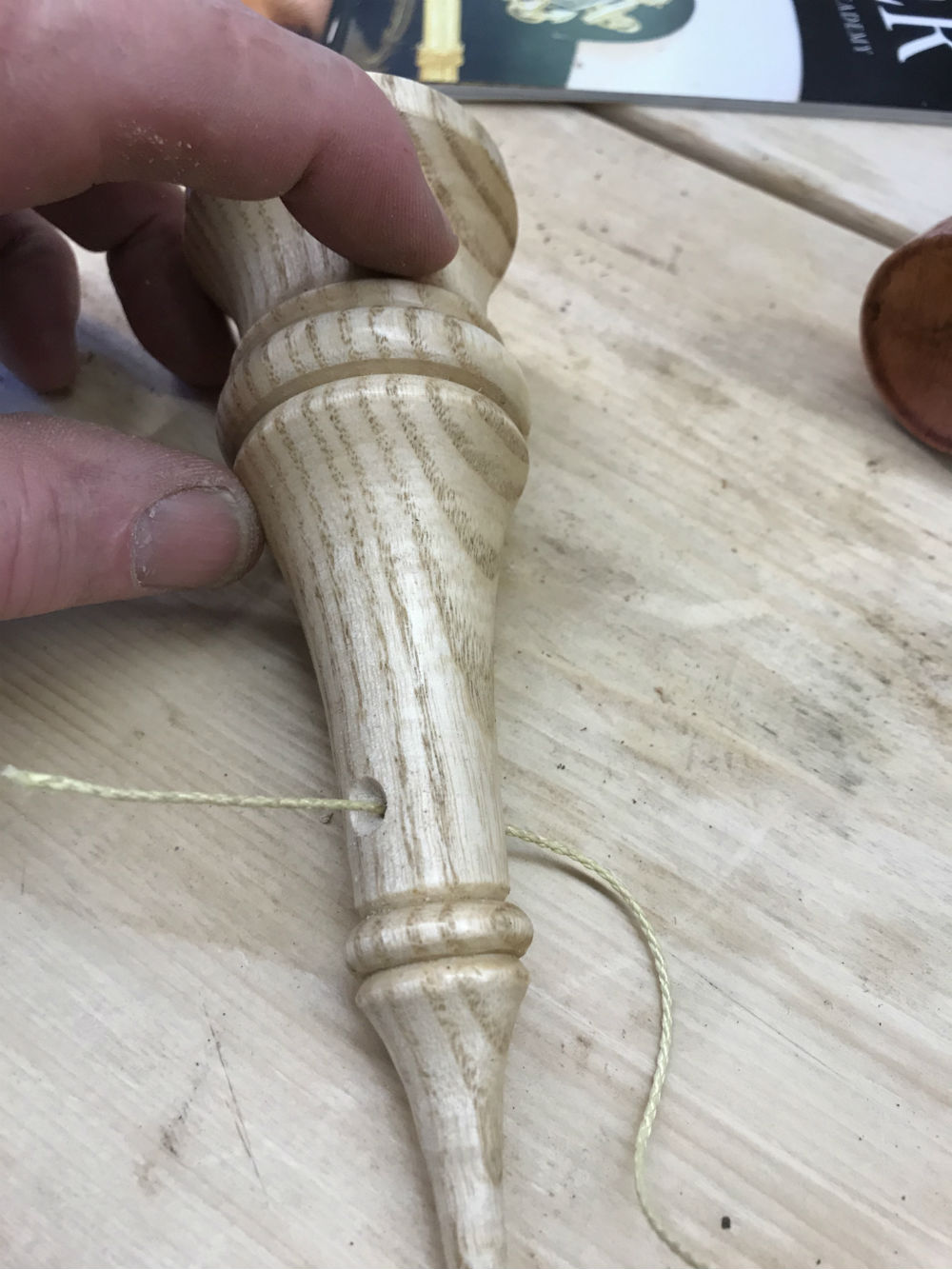
Using a countersink bit, mark a spot about two-thirds down the handle. Then use the smallest bit (string diameter) to drill through. Thread the string through.
Knot it, and after pulling it back tight, add a drop of
Medium CA Glue
to the countersunk portion where the knot can nest out of the way.
With the two parts of the toy complete, enjoy the challenges of either swinging the ball up to land in the cup or flipping the ball up and over to catch it on the pointed end.
At the end of the project, the turner gains two important things, a fun gift for kids of all ages, enhanced woodturning design, and hand/eye skills.
More Woodturning Articles:
The
Highland Woodturner Archive
includes a broad array of excellent articles dedicated to woodturning and woodturned projects that you might find interesting.
Click here to browse through Highland Woodworking's Woodturning department
Located in Castine, Maine, Highlands Woodturning gallery and shop offers woodturning classes and shop time, a gallery of woodturned art, custom woodturning for repairs, renovations, and architectural installations. You can email Temple at
temple@highlandswoodturning.com
. Take a look at Temple's Website at
http://www.highlandswoodturning.com/
Return to the
Wood News Online
front page
|