|
|
|
Snidley
|
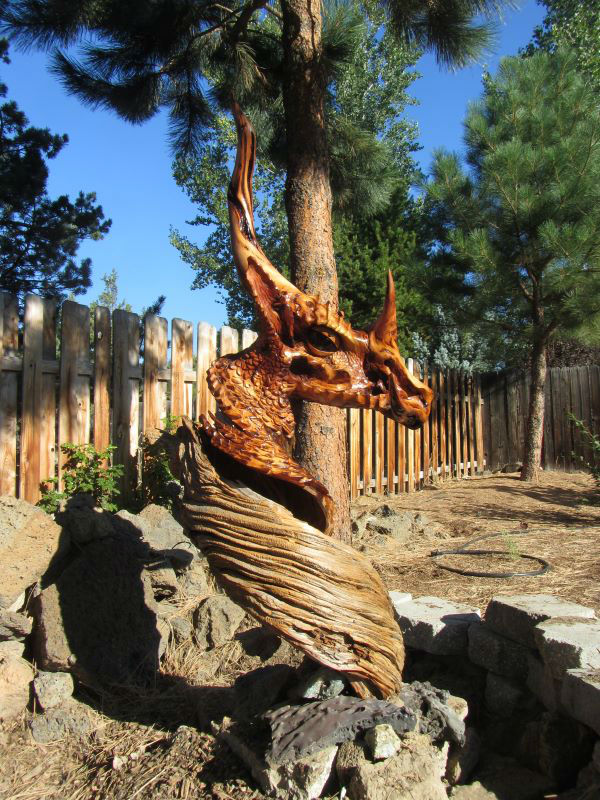
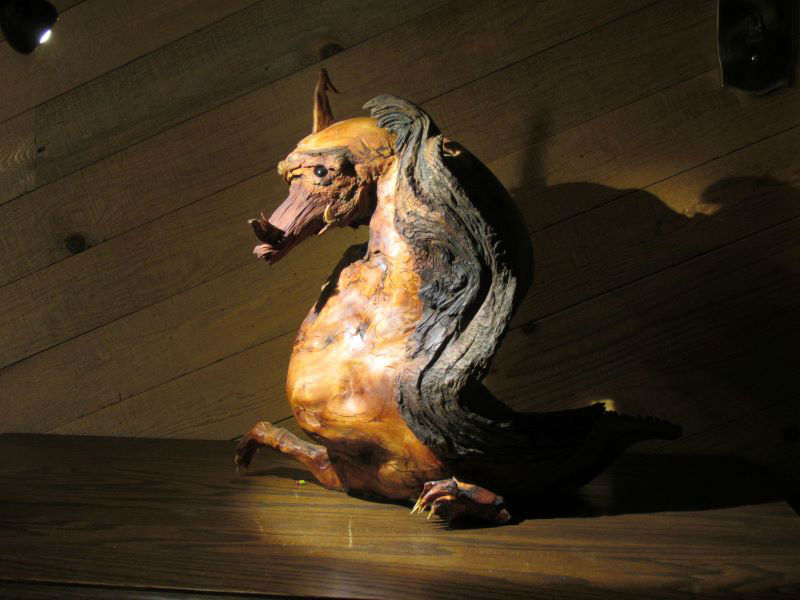
Found wood may be described as weathered, rotted, dirty, and past its prime for being of use. I prefer
to say that it is seasoned, much like me.
I took up woodcarving shortly after retiring from a career as a forester. There is something about
having extra time, no need to build more furniture, and a habit of hauling home interesting pieces of
wood that just made wood carving an attractive hobby.
|
|
Chris
|
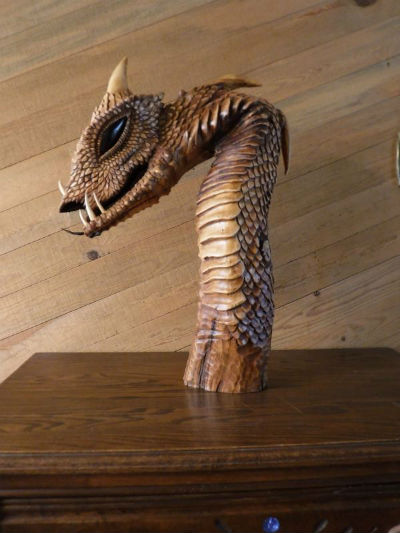
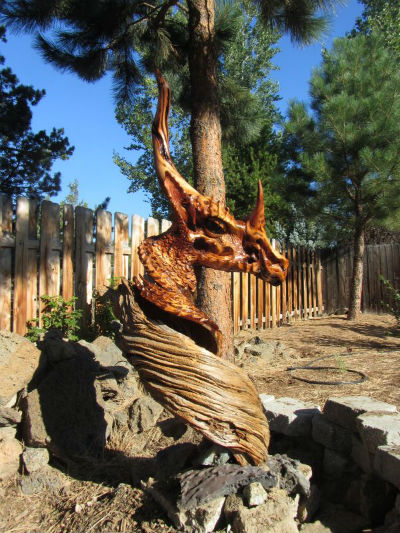
Central Oregon receives relatively little rainfall compared with Western Oregon due to the rain shadow
effect of the Cascade Mountain Range. The Cascades and the buttes around Bend, Oregon are all
volcanoes or cinder cones from past eruptions. The forests of pine and juniper at lower elevations and
those of fir and hemlock at higher elevations grow upon past lava flows and in pumice soils deposited
during the eruption of Mt. Mazama (aka Crater Lake) and other volcanoes. The trees growing in this
environment sometimes have a tough time surviving. As we used to say on the Fort Rock Ranger District,
"Life is hard on the Rock". This hard life does make for interesting shaped trees, branches and roots. It
also results in the wood not rotting so much as eroding away.
|
|
Dennis
|
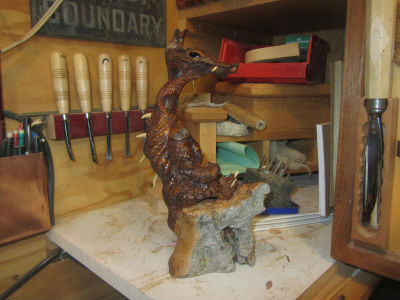
Back in the garage/shop, the first order of carving is to remove most of the weathered wood. This first
stage sometimes is also the last stage of the carving as the weathered wood is all that's holding the piece
together. This disappointment is tempered by the fact we now have another piece of firewood for
camping.
|
|
George
|
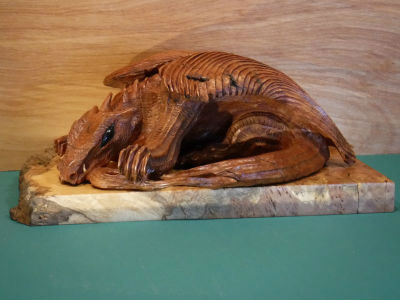
Even with the removal of the weathered wood, the remaining carcass is often cracked, hollow and
imbedded with pumice rock and dust. Keeping knives and gouges sharp is a bit of a challenge. I host a
group of other carvers once a month. The other carvers are meticulous and their tools are well
maintained. When I'm asked, "When's the last time you sharpened this gouge?" My standard answer is,
"Sharpen?" However, I serve cookies so they take pity on me and will re-condition an abused tool or
make me a new one as some of their other skills include blacksmithing.
|
|
JD
|
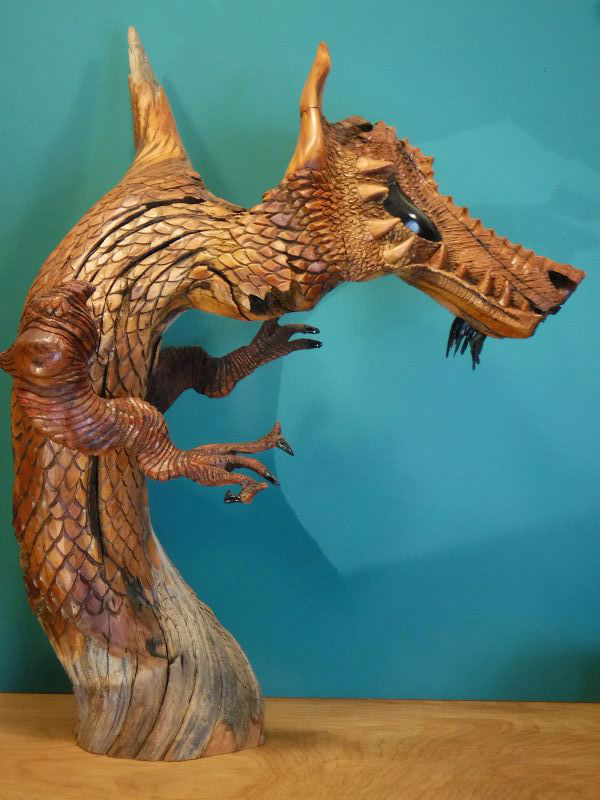
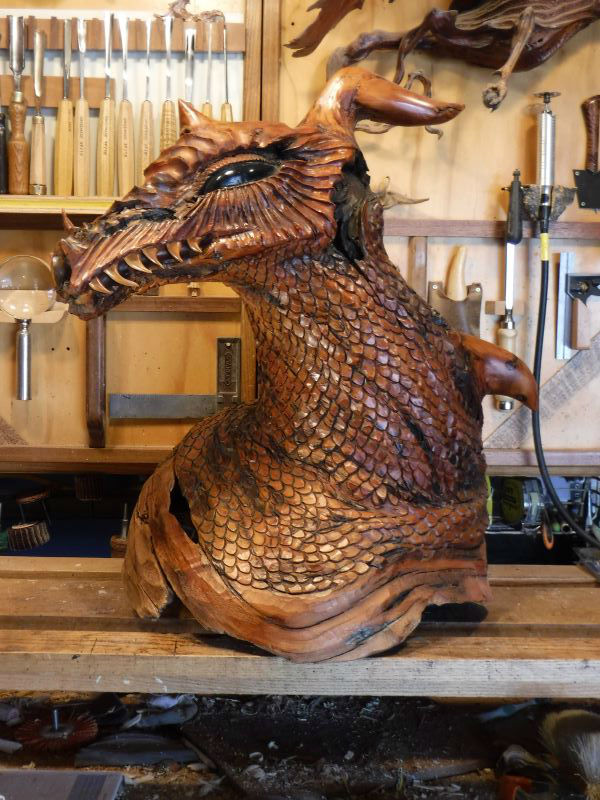
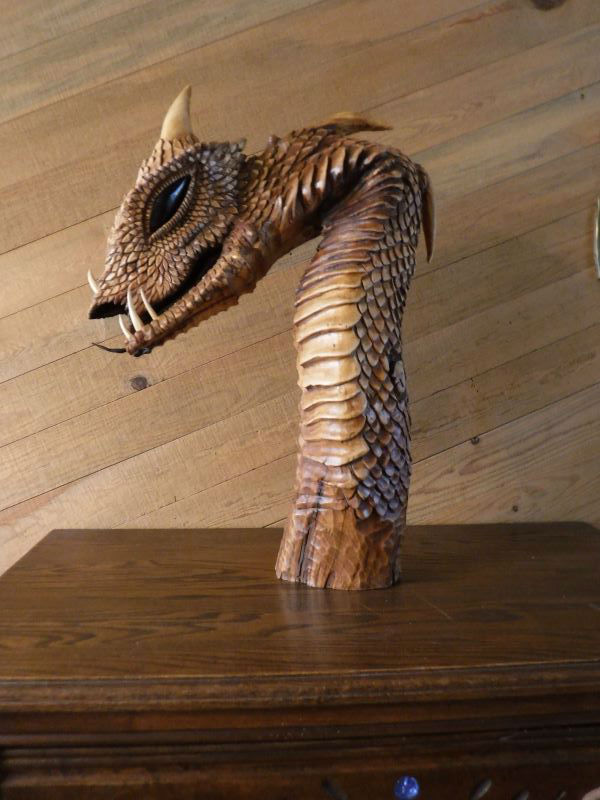
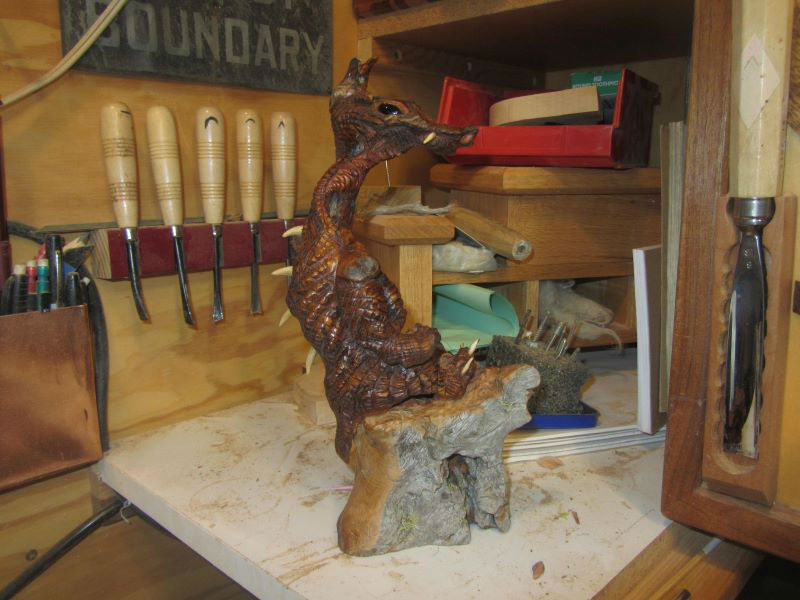
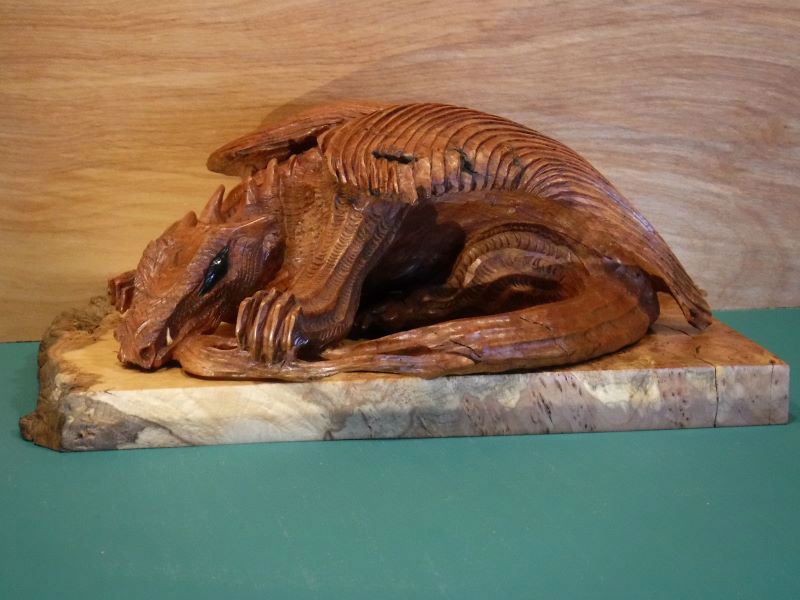
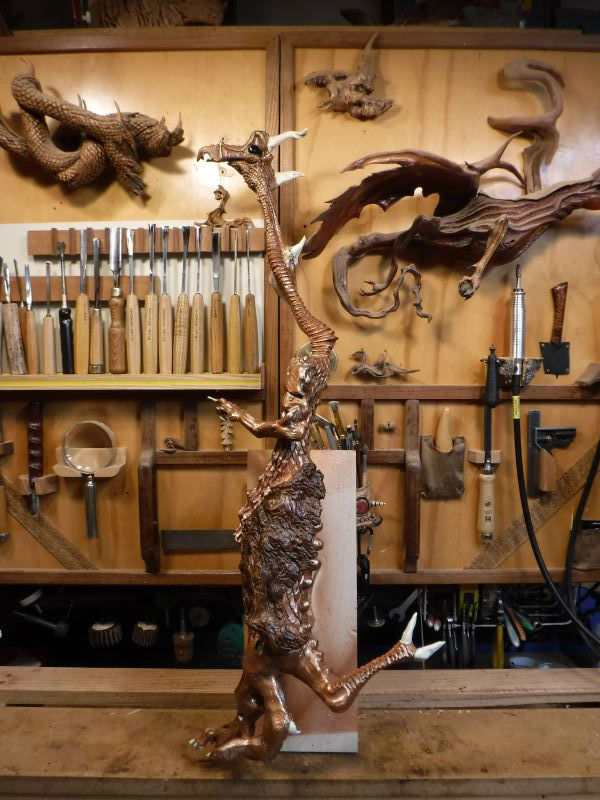
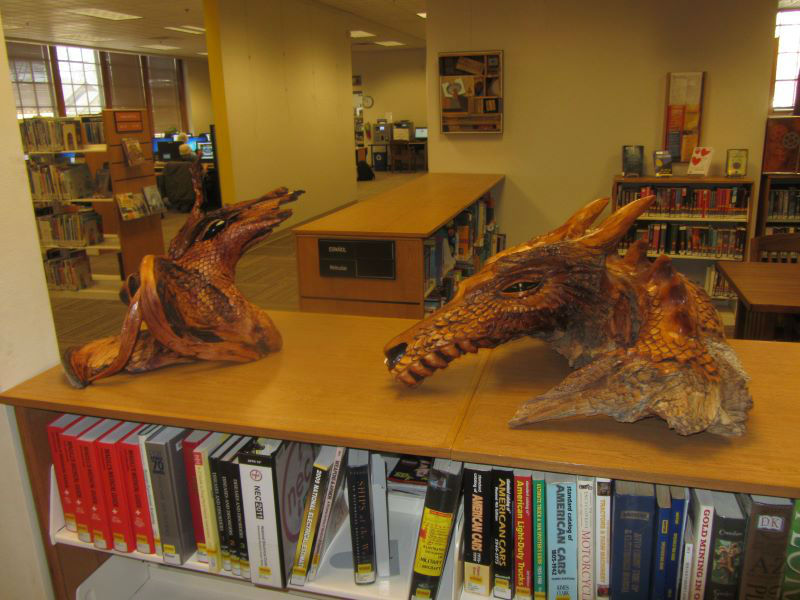
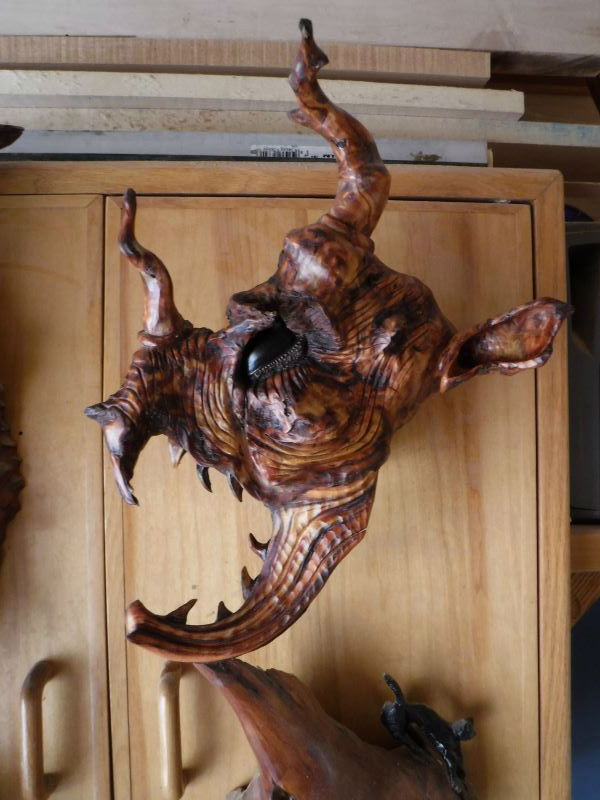
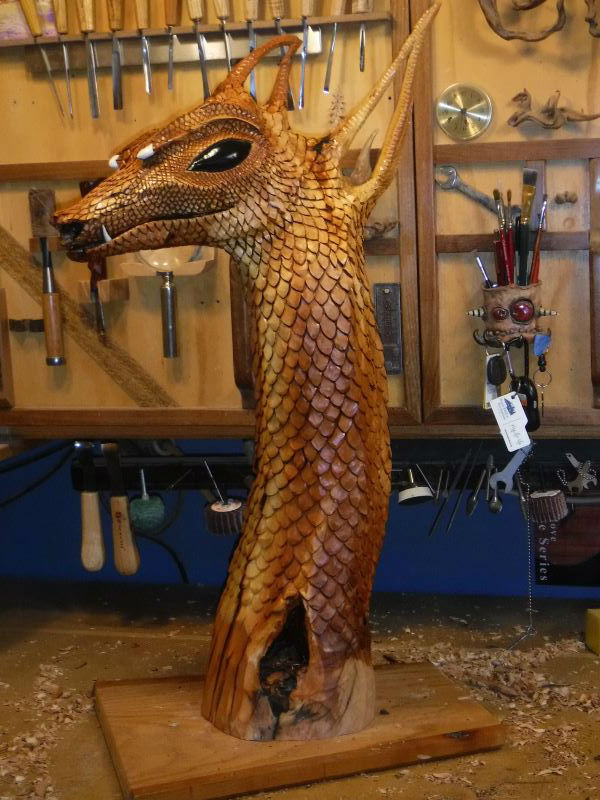
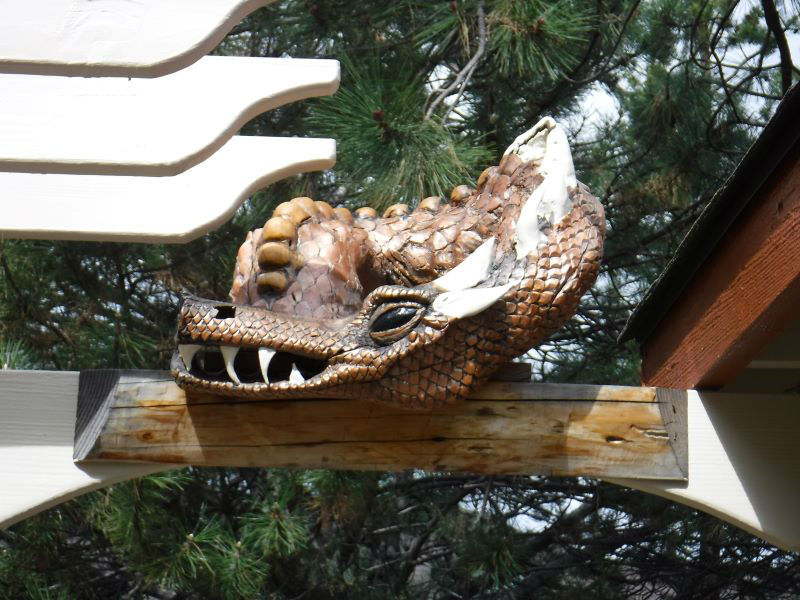
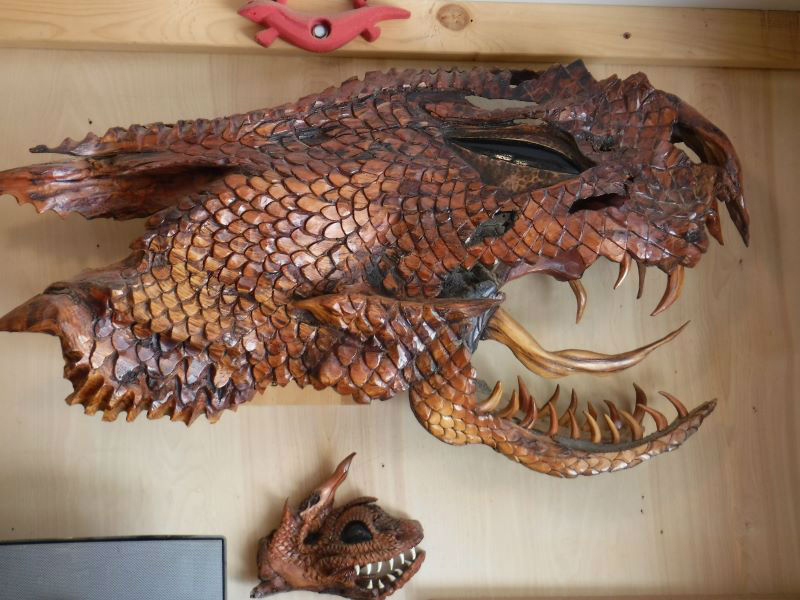
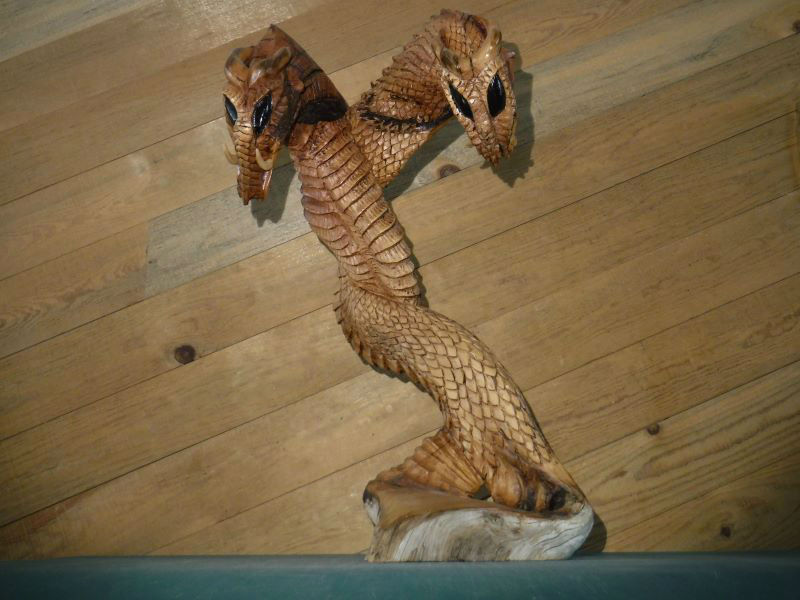
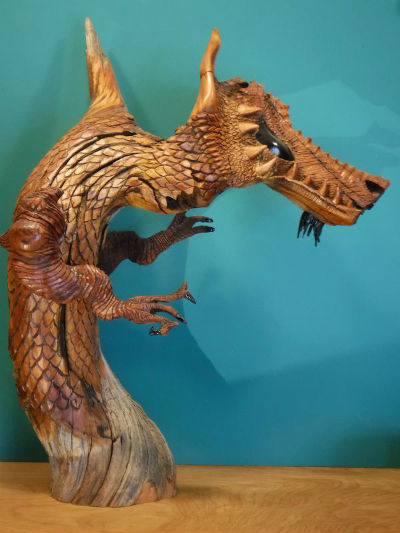
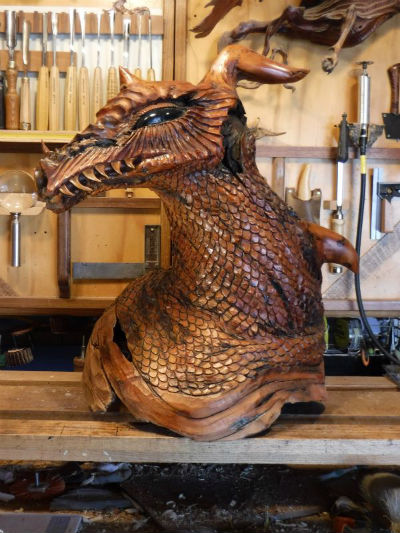
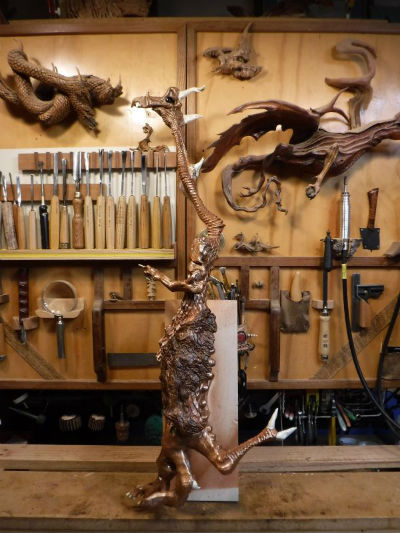
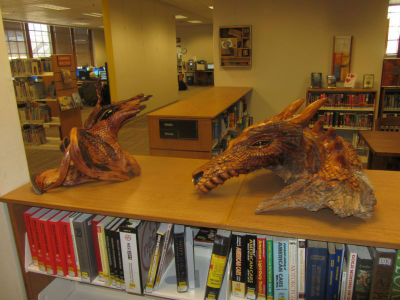
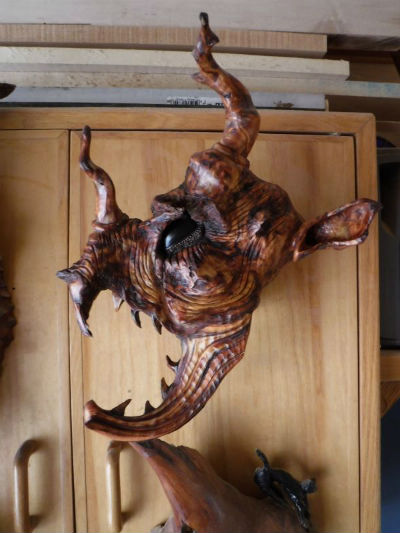
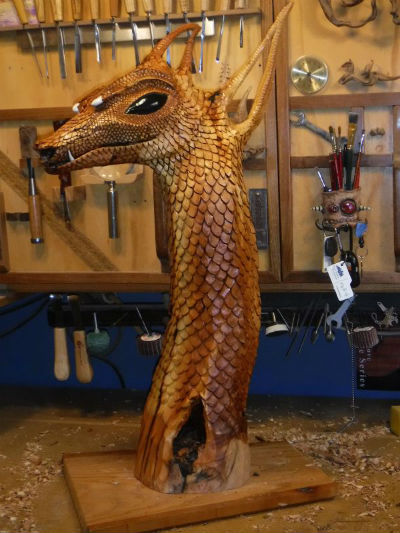
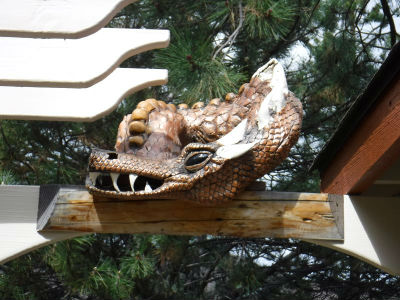
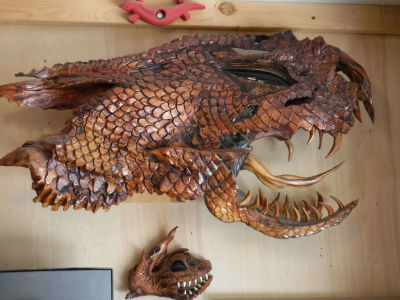
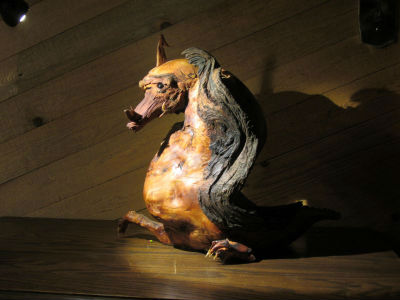
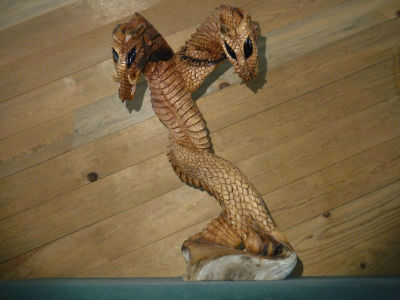
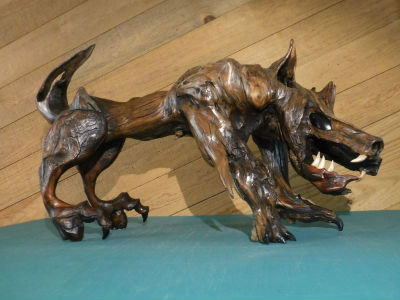
The advantage of found wood is it's already designed. Roughing-out is easy and glue ups rare. With
most of my carvings ending up as dragons, most of the actual carving is optometry, dermatology and
dentistry (eyes, scales, and fangs). Disaster happens at any stage and so probably a third of the pieces
become firewood. Often, nature has left it to me to add an arm, lower jaw, etc, but this is where the pile
of firewood has a second chance by providing salvageable material. The end results are as much as a
surprise to me as to others.
|
|
Knobby
|
I have tutored one apprentice. My advice to him as he carved was to just carve, "You can't make a
mistake, just have fun." This pretty much summarizes my approach to woodcarving and is probably why
my apprentice decided to keep his day job at Google.
|
|
Mike and Randy
|
|
|
Orc
|
|
|
Pambo
|
|
|
Rita
|
|
|
Snapper and Son
|
|
|
Avyl
|
|
|
St. John
|
|
|
Twines
|
|
|
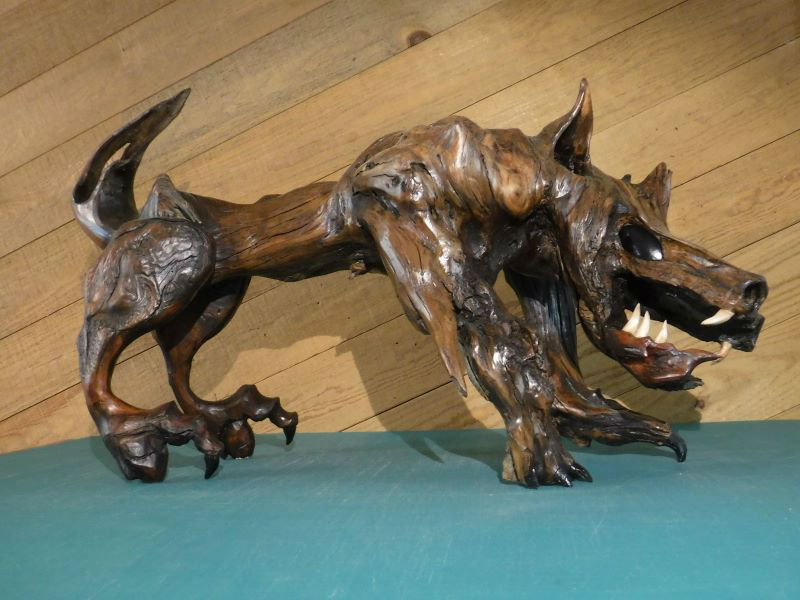
Warg
|
Scott can be reached directly via email at
dxdrevolt@gmail.com
.
Return to the
Wood News Online
front page
|