|
|
|
|
Here's My Woodcarving!
By Paul Wee
Collinsville, OK
|
|
|
My name is Paul Wee, but I'm better known as Littlepaw. I became an award winning carving artist after retiring from being a business owner.
Carving was not in my mind at all before moving into my new home in Collinsville, OK in December, 2008. While unpacking some very old boxes, I found some rusty knives and tools I had forgotten I had since college. I refurbished my old knives and started whittling on anything I could get my hands on including kitchen knife handles, brush handles, broom sticks and even knitting needles.
My enthusiasm and love for carving in wood and gourds improved steadily and quickly, especially after joining Eastern Oklahoma Wood Carvers Association. I met and learned a great deal from all the wonderful artists at EOWA.
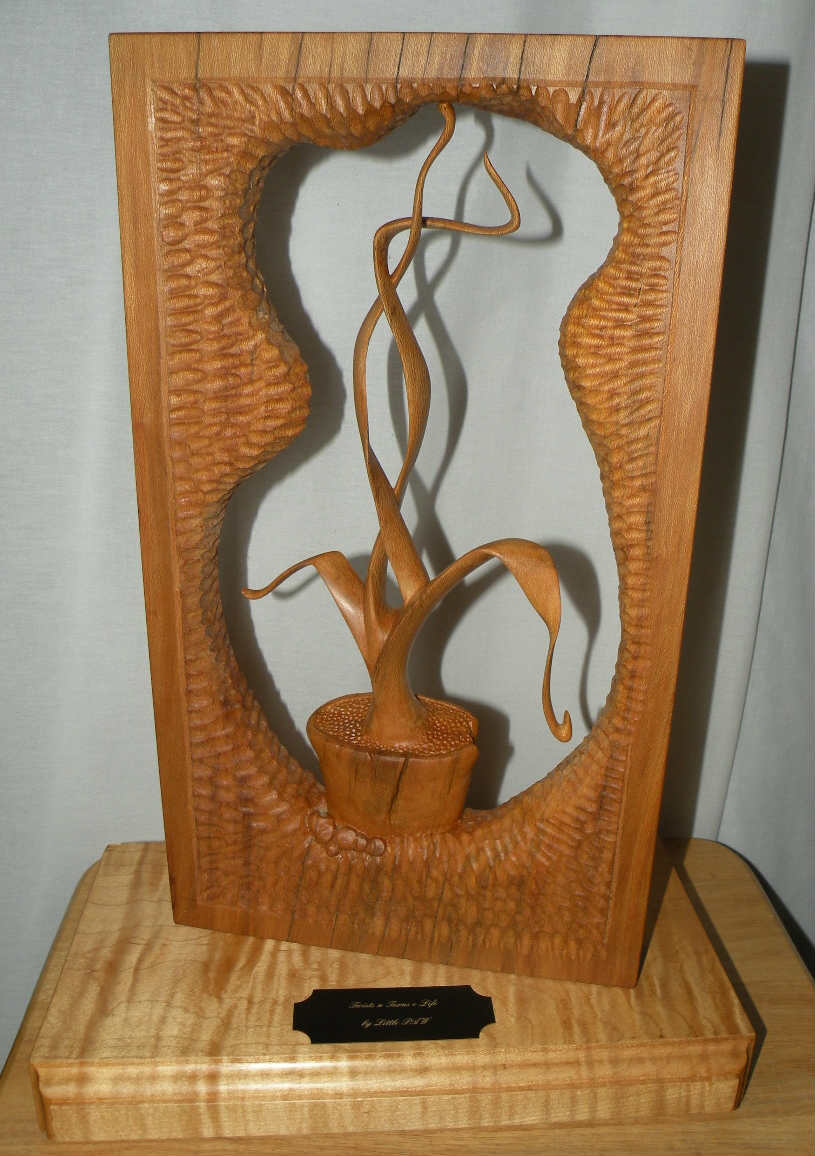
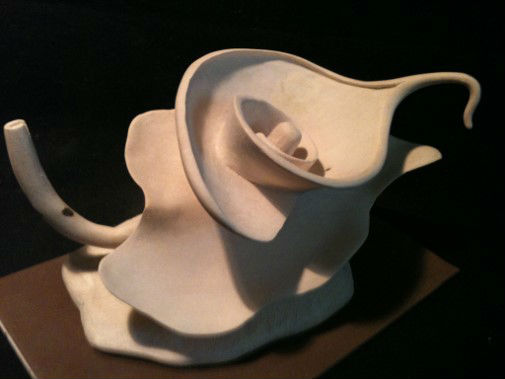
In 2013, my project, "Twist & Turns of Life" won Best of Show in Oklahoma City's 46th Annual Artistry in Wood Competition, while my piece, "Calla Lily" won Best of Show in the North Arkansas Woodcarving Show. I was named Carver of the Year by EOWA in Tulsa, OK.
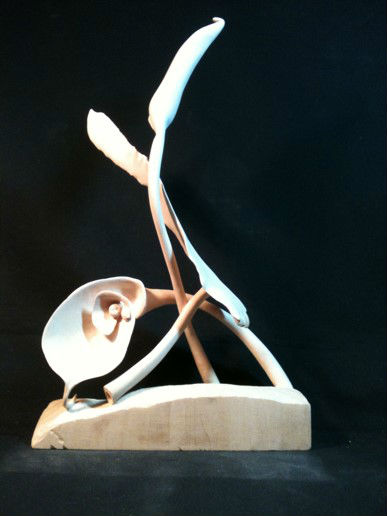
The Calla Lily flower petal and the leaf it sits on are both about 1.5 mm in thickness. It is carved out of one piece of basswood and remains un-painted so that it cannot be mistaken for a resin cast from China.
The Calla Lily with two leaves below was donated to Tulsa's Rotary Club Fund Raising Event for Autistic Children.
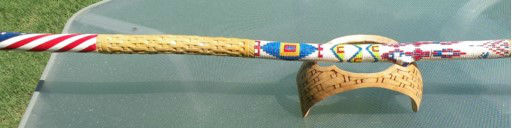
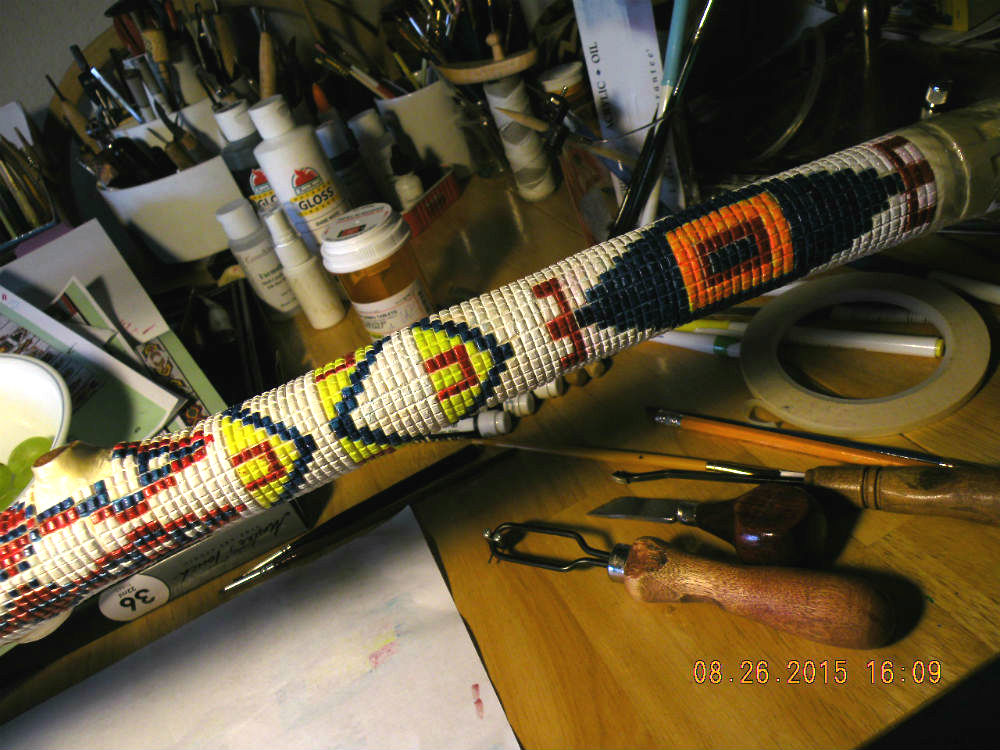
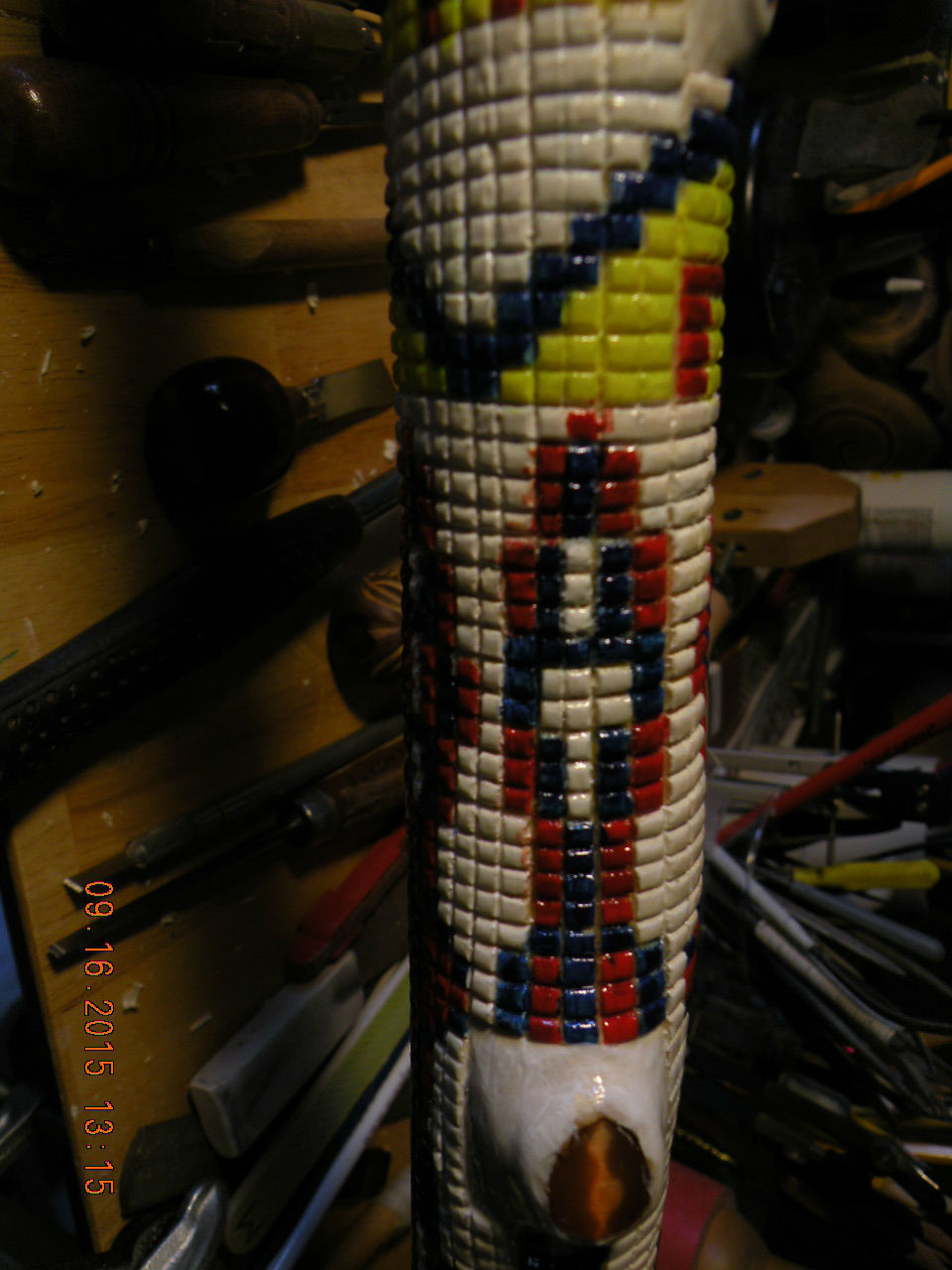
One of my main projects is the "beaded" hiking staff which is actually made without beads. One day I saw my wife RoAnn making a beaded Native American headdress and I got the idea to carve a "beaded" hiking staff! Three months later I finished my first one with Blackfoot design. Since then, I've been asked numerous times, how such a stick is made. So, here is the run down:
After debarking and sanding the stick (maple, walnut, basswood or aspen) down to a smooth surface with up to 220 grit sand paper, I pencil vertical lines about an eighth of an inch apart. I then use a 1" chisel and tap along the line as a guide for running fine V files up and down. At that point, the top between the valleys is still flat. I use various sizes of U and V shape files to round out the flat top. When I'm satisfied that the top is rounded like beads, I cut horizontal lines that separate the beads.
Next, I draw my design on paper, make changes and then color the dots from my design onto the stick. I then paint each bead with the finest make-up brush available. I then check for over-runs, scrape them off and retouch wherever necessary. I then apply three or four coats of polyurethane to protect the stick. Voila!
It's a long, detail process that demands high concentration. When I start to become cross-eyed I have to get away from it for a while. But the end result is super rewarding! Very often I'll have a group people gathered around me saying, "You're kidding me, right? They're not beads?" or "Carved? Incredible!"
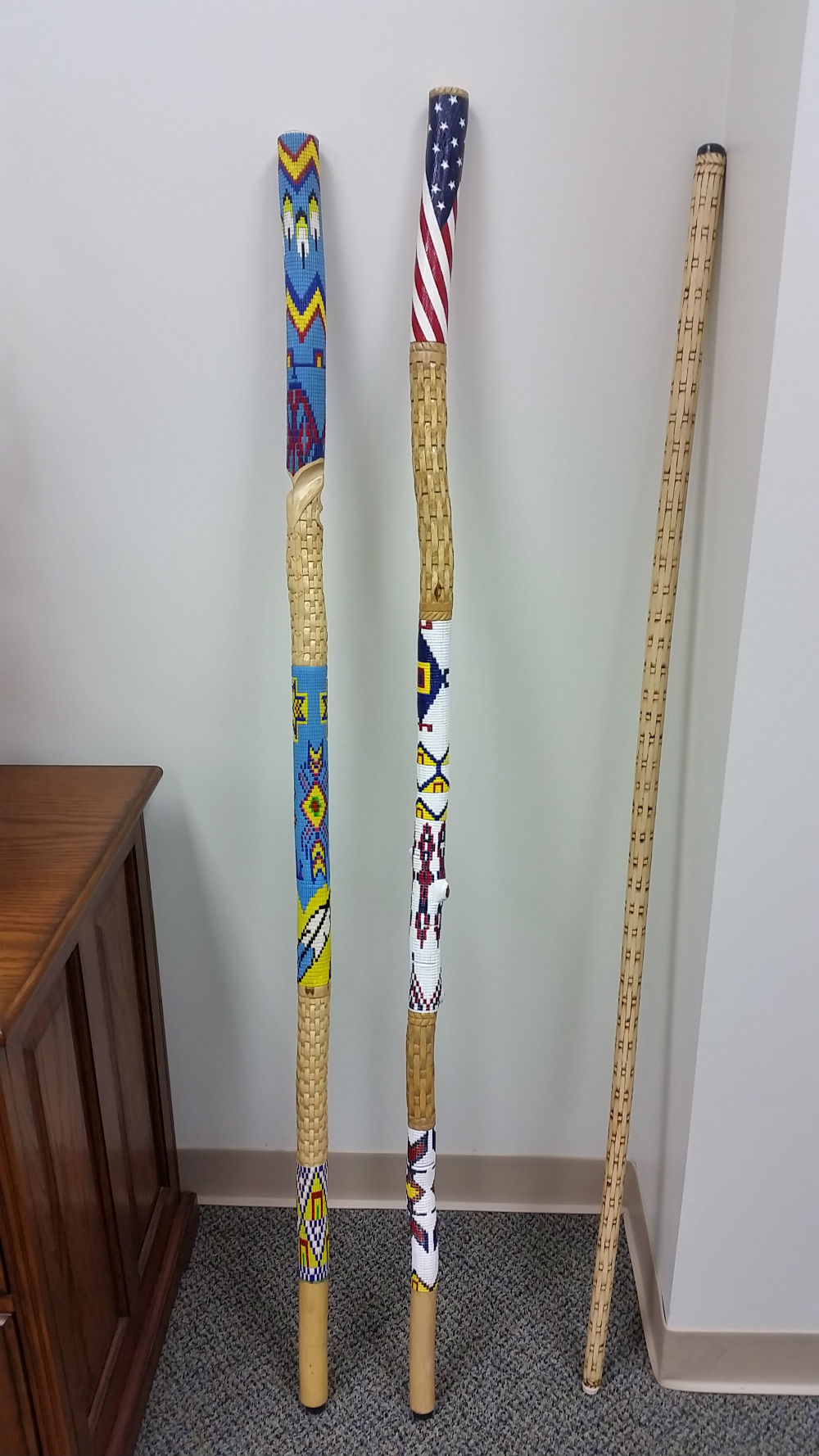
In the below picture, the left one is a Cherokee design and the one in the middle is Blackfoot, which was sold last month.
Return to the
Wood News Online
front page
|
|
|
|
|